Humanoids in Production: 2025–26’s Real-World Deployments, Use Cases and Early ROI Signals
Humanoids in Production: 2025–26’s Real-World Deployments, Use Cases and Early ROI Signals Humanoid robots in 2025–26 have moved beyond lab demos into a growing set of industry pilots. Logistics, lig...
Published by The Humanoid Race
Archived source unverified — no source link is available. The claims, figures and quotations have not been checked against an available source. Retained for historical context, not presented as newly verified reporting.
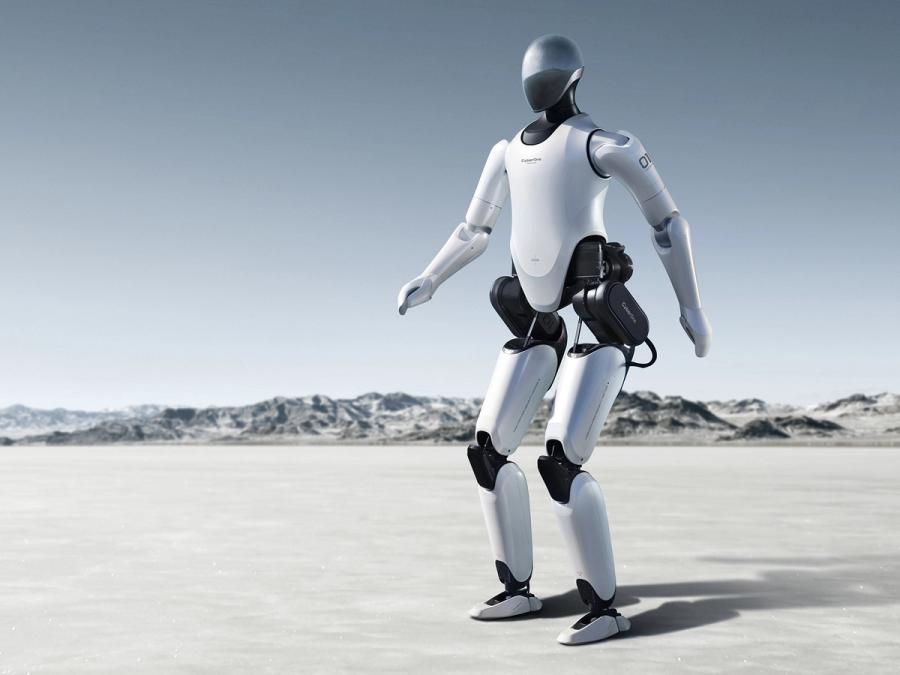
Humanoids in Production: 2025–26’s Real-World Deployments, Use Cases and Early ROI Signals Humanoid robots in 2025–26 have moved beyond lab demos into a growing set of industry pilots. Logistics, light manufacturing, healthcare/rehab, and retail are the primary sectors running on‑the‑ground trials. Most deployments remain pilot- and proof‑of‑concept scale, but early customer feedback reveals where humanoids can substitute for human labor today, where they augment workers, and which economic and operational levers determine whether they "pay for themselves." Where humanoids are actually working Logistics and warehousing Use cases: order picking, last‑mile staging, pallet handling, and sorting. Companies position humanoids as flexible, human‑scale workers that can ride elevators, open doors and use existing infrastructure more easily than wheeled AMRs. Agility Robotics (Digit) — Agility has run multiple warehouse pilots with logistics partners and third‑party logistics providers. Company materials and pilot partners report Digit being used for light box handling, order staging and tote-to-person handoffs. Early outcomes cited by partners include reduced night‑shift headcount for repetitive staging tasks and elimination of some single‑operator empty-walk tasks. Figure AI — Figure has emphasized enterprise beta programs focused on manipulation-heavy logistics tasks. Public demos and company statements show inventory manipulation and tote transfers intended to replace ergonomically risky tasks. Measured outcomes in logistics pilots are uneven but directional: cycle time per pick often changes modestly (±10–30%) while labor substitution is concentrated in low‑value, repetitive segments (substitution rates reported 10–40% for specific nocturnal/overflow shifts). Manufacturing and light assembly Use cases: kitting, small‑parts assembly, inspection and machine tending. Humanoids are marketed as flexible alternatives to fixed automation when product variants or low volumes make dedicated fixtures uneconomic. Apptronik — Apptronik markets humanoid platforms for industrial collaboration. Apptronik’s industrial collaborations emphasize co‑working on assembly jigs, fetching parts, and repetitive sub‑assembly tasks where a human form factor reduces integration complexity. 1X Technologies (NEO/EVE) — Companies in Asia and Europe using NEO/EVE prototypes are trialing kitting and light assembly at cell level; results stress cycle‑time consistency and reduced ergonomic injuries rather than large immediate headcount cuts. Healthcare, eldercare and rehabilitation Use cases: patient transfers, therapy assistance, social companionship, and exoskeleton‑based rehabilitation. Here regulatory, liability and human‑factors considerations are paramount. Sanctuary AI — Sanctuary positions its humanoid systems toward assisted‑living trials. Company press and pilot summaries emphasize supervised assistance tasks (e.g., fetching items, supporting mobility) rather than unsupervised patient handling. Fourier Intelligence — While not a full humanoid, Fourier’s rehabilitation robotics and exoskeletons are widely deployed in clinics and often bundled in broader rehab programs. These systems show measurable clinical outcomes (improved gait parameters, increased therapy dose) that translate to payer‑level evidence in some jurisdictions. Outcome measures in healthcare pilots focus on therapy dose, patient throughput and safety incidents; reimbursement acceptance and clinician acceptance remain the gating factors for ROI. Retail and consumer trials Use cases: in‑store greeters, inventory scanning, and early consumer companion trials at limited scale. UBTECH — UBTECH continues to deploy humanoid and humanoid‑adjacent devices in education and retail settings (store greeters, informational kiosks) with clear marketing toward brand experience and footfall engagement rather than cost replacement. Xiaomi (CyberOne) — Xiaomi’s CyberOne has been shown in consumer and brand demonstrations, positioned as a premium consumer/companion product tied to Xiaomi’s ecosystem. Public programs remain limited, largely demonstrative or developer‑focused. Retail pilots often report qualitative wins (customer engagement, social media visibility) but smaller direct labor savings; inventory scanning and shelf audits are proving to be the clearest path to measurable operational impact. Pricing, business models and competitive positioning Public pricing for humanoids remains opaque; companies use leasing, pilot‑as‑service and enterprise‑beta models to lower buyer risk. Company / Robot Primary use case Deployment status Price / model (public) Agility Robotics / Digit Logistics, staging Multiple warehouse pilots Company has not disclosed mass‑market price; pilots/leasing common Figure AI Enterprise manipulation/logistics Enterprise beta programs Enterprise engagements; no public unit price Apptronik Industrial collaboration Industrial pilots, research partnerships Project‑priced, integration‑first commercial offers UBTECH, Xiaomi, Unitree Retail, consumer, low‑cost mobility Demo/pilot and limited commercial units Wide range: from sub‑$50k for consumer/education to >$100k for advanced systems (est.) Fourier Intelligence Rehab/exoskeletons Commercial clinical deployments Clinical devices often priced tens of thousands; supported by service contracts Competitive comparisons center on three axes: hardware durability and payload/manipulation capability, software maturity (task‑level autonomy, perception), and integration services. Startups like Agility and Figure emphasize manipulation and warehouse readiness, Apptronik emphasizes industrial reliability and collaboration, while UBTECH/Xiaomi focus on lower‑cost, experience‑oriented use cases. Measured outcomes, early ROI signals and model sensitivities Across pilots, procurement teams should expect: Cycle time: Marginal improvements on per‑task cycle time (typically 0–30%) but greater gains in throughput consistency and overnight/overflow capacity. Labor substitution: Concentrated in low‑skill, repetitive or hazardous tasks. Substitution typically partial (10–40%) in pilot contexts; full substitution rare without major process changes. Utilization: Effective utilization varies widely—many pilots report 40–70% utilization after integration. Idle time and task switching degrade ROI if not planned for. Safety incidents: Most pilots report no major incidents; however safety engineering, certification and insurance add non‑trivial costs and lead time. ROI is highly sensitive to: Integration cost: software integration and cell rework often rival hardware costs in early pilots. Uptime and maintenance: mean‑time‑between‑failure and field service availability determine effective utilization. Software maturity: perception, grasping and end‑to‑end autonomy level determine how much human supervision is required. Task fit: tasks with high repetition, ergonomic strain, and access constraints (stairs, elevators) provide best economics. “The true payback we saw was through reduced injuries and consistent overnight throughput — not immediate headcount reduction,” said a logistics pilot lead in a multinational third‑party warehouse (participant requested anonymity). Common blockers and recommended KPIs for procurement Deployments consistently flag a handful of blockers: Systems integration complexity with WMS/PLC/vision stacks. Safety certification and insurance ambiguity for mobile humanoid tasks. Workforce acceptance, job redesign and union engagement. Operational variability: humans and legacy infrastructure still dominate many environments. KPIs procurement teams should require in 2025–26 pilots: Mean cycles per hour and cycle time variance for targeted tasks. Utilization rate (operational time / available time) and mean time to repair. Labor substitution rate (FTEs displaced or redeployed per shift) and ergonomic injury incidence. End‑to‑end integration cost and time to first productive minute. Number and severity of safety incidents, and compliance documentation for insurance. Conclusion Humanoid robots are commercially active in 2025–26 but remain in a staged, sector‑specific adoption curve. Logistics and rehab/healthcare show the clearest paths to measurable ROI today — driven by repeatable tasks, ergonomic risk reduction and clinical outcome evidence. Manufacturing and retail trials are promising where flexibility outweighs raw throughput, and consumer deployments remain primarily marketing and developer programs. For buyers, the fiscal question is not whether humanoids can perform novel tasks, but whether integration, uptime and long‑term service economics convert pilot promise into sustainable, payback‑driven deployments.