Beyond the Motors: How Hardware Choices, Autonomy Stacks and Service Models Determine Which Humanoids Win Commercially
Introduction Humanoid robotics in 2025 sits at the intersection of engineering trade-offs and go-to-market strategy. Actuator architecture, sensor suites, compute placement and autonomy tiers are not...
Published by The Humanoid Race
Archived source unverified — no source link is available. The claims, figures and quotations have not been checked against an available source. Retained for historical context, not presented as newly verified reporting.
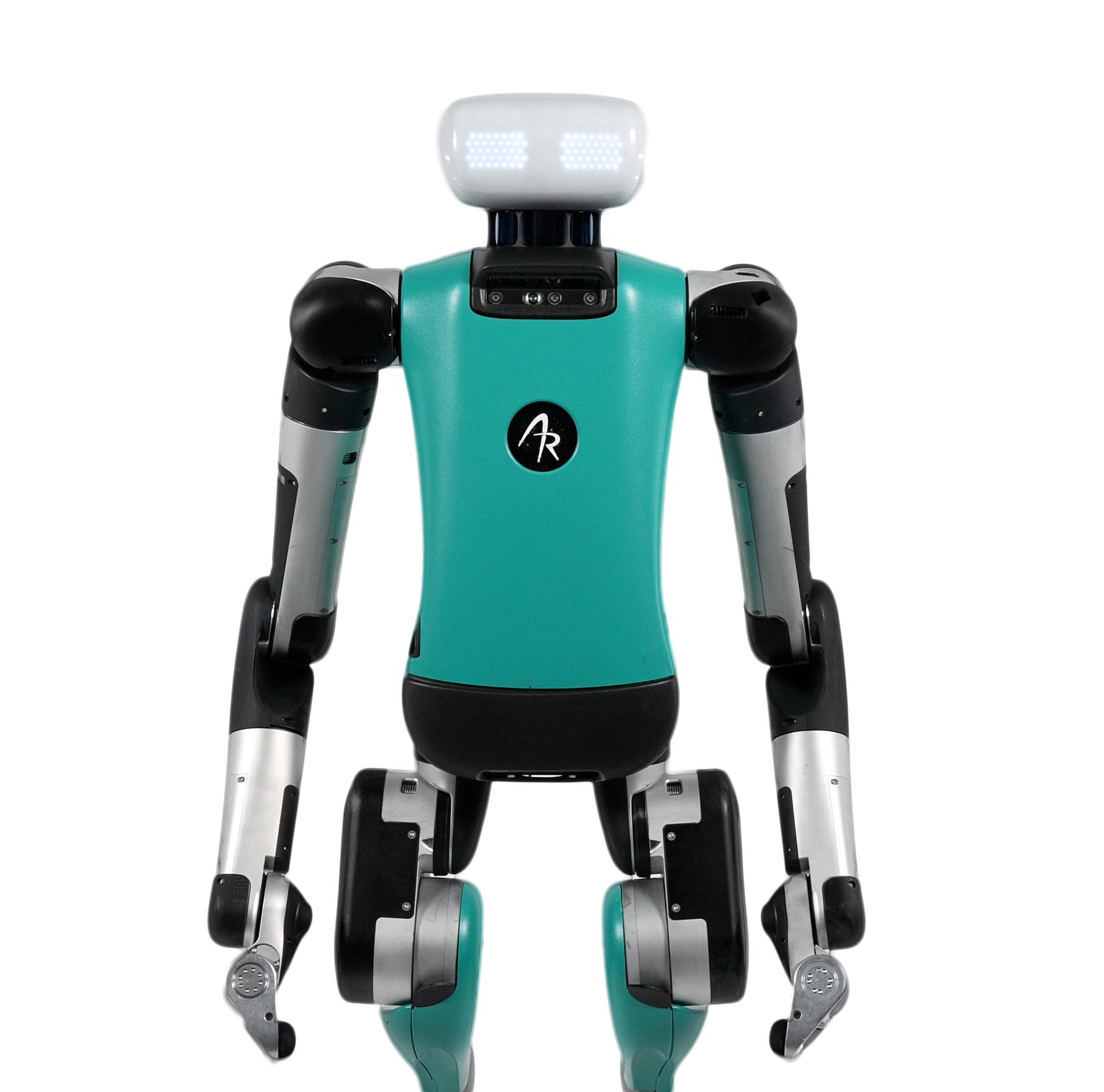
Introduction Humanoid robotics in 2025 sits at the intersection of engineering trade-offs and go-to-market strategy. Actuator architecture, sensor suites, compute placement and autonomy tiers are not purely technical choices — they shape regulatory exposure, integration cost and the unit economics that determine which customers buy, scale and renew. This report maps those design decisions to commercial outcomes, comparing leading players — Boston Dynamics, Tesla (Optimus), Apptronik (Apollo), Figure AI, Agility Robotics, 1X Technologies, Unitree and Fourier Intelligence — and presents a buyer’s decision framework for 2025–26. Core engineering trade-offs and their business consequences Four engineering axes matter most: Actuation and payload — compliant, low-inertia joints prioritize safety and adaptability; high-torque, stiff actuation prioritizes payload, speed and deterministic repeatability. Sensing suites — camera-only stacks reduce cost but increase perception risk in cluttered or safety-critical settings; multi-modal suites (LiDAR, stereo, time-of-flight, force/torque sensing) boost reliability at a premium. Compute and cloud dependence — on-board processing reduces latency and regulatory exposure; cloud reliance lowers device cost but raises privacy, uptime and telemetry SLAs. Autonomy tier — teleop-assisted systems minimize software risk but keep labor costs; semi-autonomous systems reduce operator burden; full autonomy promises lower labor OPEX but requires heavy investment in perception, mapping and edge compute. How vendors map technical choices to market positioning Company Engineering emphasis Autonomy Target markets / positioning Boston Dynamics High-performance dynamics (Spot, Atlas R&D); robust locomotion, industry-grade sensors on Spot Teleop-assisted to semi-autonomous Inspection, logistics pilots, enterprise robotics integrators — positions as premium, rugged platform with strong field support Tesla (Optimus) High-torque motor design claimed; camera-first perception (leveraging Tesla vision stack) Ambition toward semi/full autonomy within factory contexts Volume manufacturing and factory automation, long-term consumer ambitions; marketed as low-cost, high-scale device leveraging Tesla ecosystem Apptronik (Apollo) Compliant actuators, human-safe control; modular payloads Teleop-assisted to semi-autonomous Human-robot collaboration, research/enterprise pilots; selling safety and integrability Figure AI High-performance humanoid aimed at industrial manipulation; emphasis on full automation R&D Development toward full autonomy Industrial automation, advanced material-handling pilots; premium pricing target for early adopters Agility Robotics Mid-range torque with focus on modular grippers and predictable repeatability (Digit) Teleop-assisted / semi-autonomous for warehouse pick-and-place Logistics and intralogistics where human-like form factor reduces retrofit cost 1X Technologies / Unitree Cost-optimized actuation, simplified sensors to hit lower price points Primarily teleop-assisted / close-operator Education, research, lower-cost enterprise pilots and consumer-adjacent use cases Fourier Intelligence Rehab-focused actuators and force sensing; safety-centric designs Semi-autonomous with clinician-in-the-loop Healthcare rehabilitation and assistive devices — positioning on certification and clinical utility Industry use cases and real-world deployments Warehouse automation is the most immediate commercial use case. Agility Robotics’ Digit and Boston Dynamics’ Stretch experiments (and Digit pilots) focus on box handling and shelf-to-conveyor transfer because a biped can interface with infrastructure built for humans, reducing integration costs versus conveyor redesign. Vendors that prioritize stiff actuation to carry payloads and deterministic control minimize per-site engineering spend — a major driver of buyer ROI. Healthcare and assisted-living demand compliant actuation, force sensing and conservative autonomy tiers. Fourier Intelligence and Apptronik position toward regulatory-heavy clinical contexts by emphasizing patient-safe hardware and clinician control loops — an approach that reduces certification risk and liability exposure, albeit at higher per-unit cost and lower throughput. Consumer and home-assist markets push toward low-cost actuation and camera-centric perception to hit sub-$10k–$20k price points in the long term. Unitree and 1X-style architectures sacrifice payload and autonomy for affordability; they can scale faster but deliver narrower feature sets. Service, spares, and software — the invisible cost drivers Service models — Boston Dynamics uses a hybrid model (in-house plus certified partners) for Spot; Agility leverages systems integrators for Digit. Tesla’s vertically integrated approach implies in-house service at scale, but that depends on Optimus hitting volume. Spare-parts strategies — modular, field-replaceable joints (Apptronik) reduce downtime and inventory cost; proprietary, sealed actuators increase OEM control but raise spare-parts SKUs and lead times. Software updates & SLAs — enterprise buyers demand 99.9% telemetry and update windows that avoid disrupting operations. Vendors offering enterprise SLAs and remote monitoring (Boston Dynamics, larger incumbents) command premium recurring revenue and reduce churn. These service choices directly affect pricing and lifetime value: high-touch field service raises gross margins but lowers churn. Platform vendors aiming for low unit prices must offset higher churn risk with software subscriptions and partner support networks. Competitive implications and which designs win for each buyer Warehouses seeking minimal integration cost — choose platforms with human-form factor, moderate-to-high payload and deterministic control (Agility, Figure trials, Boston Dynamics integrations). These reduce fixed engineering to retrofit conveyors and shelving. Healthcare providers needing low liability — prioritize compliant actuation, force sensing and clinician-in-loop autonomy (Apptronik, Fourier). These architectures simplify certification and lower malpractice exposure. Consumer/home markets — favor low-cost motors, camera-first stacks and cloud services for heavy compute offload (Unitree-like entrants, long-term Tesla ambition). These designs enable aggressive price points but narrow use reliability. Interviews and validation targets Proposed interview targets to validate commercial claims and pilots: CTO, Agility Robotics — on Digit pilots and integration costs Head of Robot Program, Boston Dynamics — on enterprise SLAs and field service Head of Controls, Apptronik — on compliant actuator lifecycle Product Lead, Figure AI — on autonomy roadmap and pricing assumptions Procurement Officers at two-tier logistics operators and a regional healthcare system — on certification and TCO Systems integrator leads (e.g., Honeywell/SSI Schaefer integrator partners) — on retrofit engineering effort across platforms Decision framework for buyers (2025–26) Define the primary KPI — throughput, safety/incident rate, or cost-per-task. Choose payload/actuation by required KPIs. Match autonomy to risk — safety-critical settings favor compliant joints + clinician/operator-in-loop; throughput-focused sites accept semi-autonomy with redundancy. Assess total cost — include integration engineering, spares inventory, SLA pricing and software subscriptions over a 5–7 year horizon. Validate support model — insist on clear MTTR, spare-part lead times and whether the vendor has in-house or partner field service. Plan for upgrades — prefer modular stacks that allow sensor/compute add-ons to extend autonomy without forklift replacements. In 2025–26, there will be no one-size-fits-all humanoid winner. The commercial victors will be those whose engineering choices align with a clearly defined customer problem and whose service model turns hardware into predictable, contractable outcomes. Buyers that map technical trade-offs to their operational KPIs and procure with full lifecycle costing will be best placed to select platforms that truly deliver ROI.