Bipedal Tectonics: Technical Differentiation, Partnerships and Competitive Positioning in the 2025–26 Humanoid Market
Bipedal Tectonics: Technical Differentiation, Partnerships and Competitive Positioning in the 2025–26 Humanoid Market As the humanoid robot market moves from lab demos to commercial pilots, vendor co...
Published by The Humanoid Race
Archived source unverified — no source link is available. The claims, figures and quotations have not been checked against an available source. Retained for historical context, not presented as newly verified reporting.
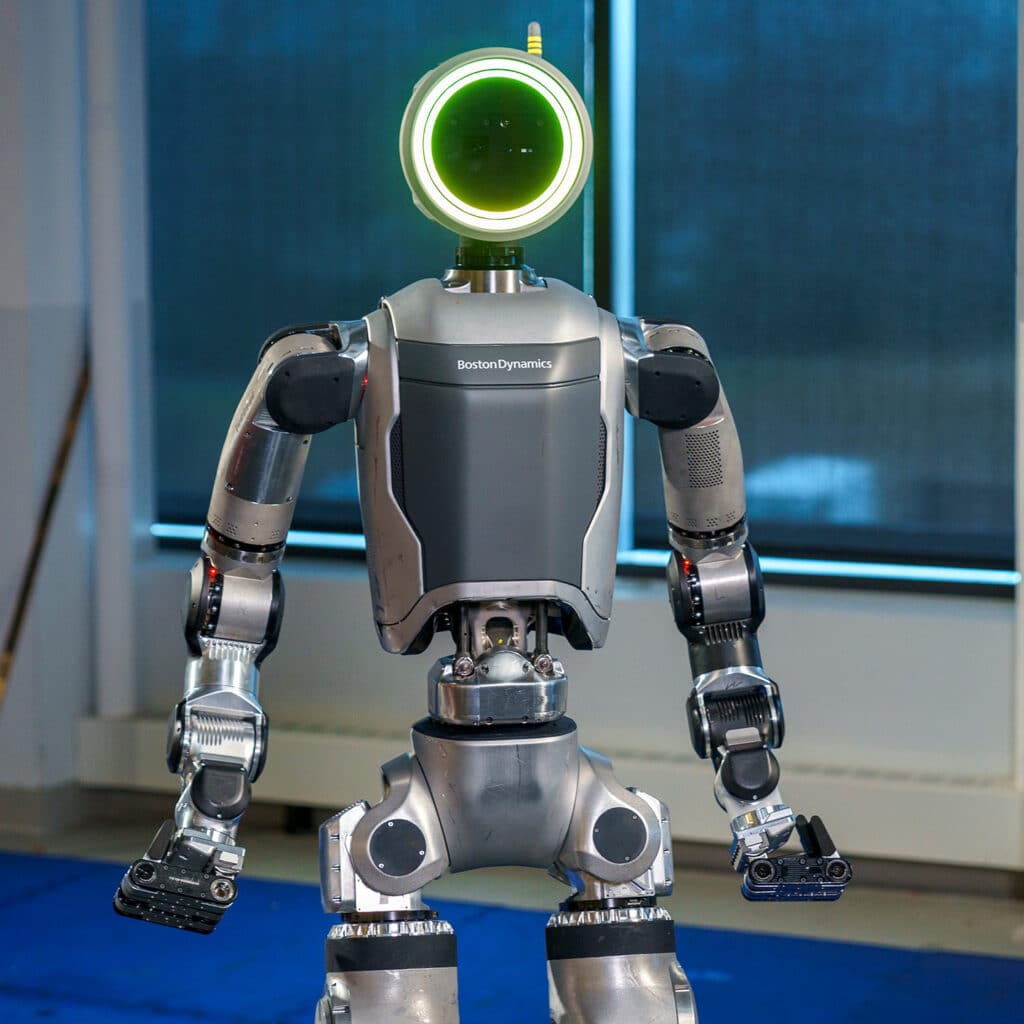
Bipedal Tectonics: Technical Differentiation, Partnerships and Competitive Positioning in the 2025–26 Humanoid Market As the humanoid robot market moves from lab demos to commercial pilots, vendor competitive positions are being defined less by single breakthroughs and more by technical stack choices, partnership ecosystems, and business model design. This analysis synthesizes public company disclosures, investor reporting and industry interviews through mid‑2024 and projects how those forces shape vendor differentiation in 2025–26. Key technical vectors that determine vendor specialization Five technical axes explain why vendors are diverging into distinct market plays: actuation & hand dexterity; mobility & dynamic stability; payload & endurance; perception & autonomy (on‑board vs cloud orchestration); and developer toolchains / software ecosystems. The table below summarizes how leading suppliers prioritize these vectors. Company Actuation / Hands Mobility / Stability Payload / Endurance Perception & Autonomy Developer Toolchain Boston Dynamics Advanced manipulation (research) / rugged grippers State‑of‑the‑art dynamics (Atlas research, Stretch warehouse) Task‑oriented (Stretch optimized for boxes) On‑board autonomy + edge orchestration Proprietary SDKs + integrator partnerships Figure High‑precision hands & whole‑body manipulation focus Dynamic balance for complex tasks Prototype‑to‑production scaling in focus Integrated on‑board autonomy, focus on AI stack In‑house stack oriented for general‑purpose tasks Tesla Simplified, production‑cost hands favored Robust locomotion via in‑house actuators Cost‑optimized unit economics is priority Heavy emphasis on integrated autonomy (vision + compute) Closed vertical stack leveraging fleet data Agility Robotics Task‑centric end‑effectors for logistics Repeatable, rugged balance (Digit) Optimized for cycles & throughput Edge autonomy with warehouse system integration Partnered SDKs for material handling SIs 1X Rugged simple hands for fast pick/place Industrialized stability for logistics floors Focus on operational uptime WMS integration first, research autonomy second System integrator‑friendly APIs Apptronik Compliant actuators, human‑safe manipulators Stable bipedal movement tuned for safety Designed for repetitive assisted care tasks On‑board autonomy with safety certifications focus Open‑friendly SDKs for healthcare integrators Sanctuary Compliant, biomimetic actuation for human interaction Human‑like stability with compliant control Task‑specific endurance (healthcare/service) Emphasis on safe on‑board autonomy Clinical workflows and compliance integrations Unitree Cost‑effective hands; pragmatic dexterity Stable for consumer/SMB environments Lower cost, moderate endurance Cloud‑assisted autonomy; OTA updates Rapid iteration, developer community focus Xiaomi / UBTECH / Others Consumer‑oriented manipulators Safe, stable designs for mass markets Affordability prioritized Cloud features + companion app ecosystems SDKs for consumer app developers Industry use cases and vendor positioning Logistics & Warehousing — Vendors such as Agility Robotics, 1X and Boston Dynamics (via Stretch) target box throughput and repetitive pick/place. Their messaging centers on cycle time, integration with WMS, and uptime. Customers in distribution centers prioritize reliability and predictable TCO over generality. Advanced manipulation / skilled labor replacement — Figure and Boston Dynamics emphasize manipulation for tasks that require dexterous handling (complex assembly, field service). These firms position robots as higher‑value automation for skilled shortages in manufacturing and utilities. Healthcare & Assisted Living — Apptronik and Sanctuary market compliance, human‑safe actuators and certification pathways. Their go‑to‑market is hospital pilots, rehabilitation centers and regulated product roadmaps rather than commodity deployment. Consumer / SMB — Unitree, Xiaomi and UBTECH pursue low‑cost platforms and rapid product cycles targeting retail, hospitality demos, and small business automation. Partnership ecosystems: who accelerates adoption Adoption in 2025–26 will be driven by layered partnerships rather than single vendors: System Integrators (SIs) — Warehouse and manufacturing SIs (both global and regional) are the primary channel for deployments. Vendors that provide SI‑friendly APIs and certified integration kits accelerate enterprise uptake. Software platforms — WMS vendors, ROS integrators, simulation & digital twin partners reduce integration risk. Logistics customers place a premium on WMS‑certified robots. Healthcare providers & regulators — Clinical trials, CE/FDA pathways and hospital procurement pilots determine which compliant platforms are acceptable. Apptronik and Sanctuary are building these alliances deliberately. OEM & white‑label partnerships — Low‑cost vendors (Unitree, Xiaomi) and some industrial players rely on white‑labeling or joint ventures to enter retail and B2B channels quickly. "The vendor that wins enterprise scale in logistics will be the one that proves predictable integration cost, uptime guarantees and a clear upgrade path for autonomy." — industry systems integrator (anonymized) M&A, funding flows and white‑label dynamics Capital and consolidation activity is shaping moats: M&A and corporate backing — Strategic corporate investors (OEMs, auto groups) provide manufacturing scale and distribution channels. These relationships accelerate hardware cost reductions and open white‑labeling opportunities. VC and growth capital — High‑end manipulation firms require deep pockets to transition from prototypes to production—investor willingness to fund multi‑year roadmaps determines who reaches market at scale. White‑label & licensing — Cost‑focused vendors expand reach via OEM partners; this increases unit adoption but dilutes brand control. Conversely, vertically integrated suppliers (Tesla style) retain software/data moats but bear production risk. Competitive timing windows: who scales vs. who specializes Two timing windows are critical: Near‑term (2024–2026) enterprise scale — Players with task‑specific robots (logistics boxes, assisted handling) plus SI partnerships are best positioned to scale commercially. Expect Agility, Boston Dynamics (Stretch), and cost leaders with strong channel strategies to be early enterprise winners. Mid‑term (2026+) general‑purpose substitution — Vendors pursuing high dexterity, whole‑body manipulation and fleet learning (Figure, Tesla ambitions) aim for higher lifetime value per unit but face longer productization curves and higher capital intensity. Price, business models and deployment evidence Concrete pricing remains fluid. Commercialized, single‑task platforms are priced to compete with specialist automation (tens of thousands to low hundreds of thousands per unit, with service contracts). Research prototypes and high‑precision humanoids are orders of magnitude more expensive until volume production matures. Common enterprise models include capital purchase + maintenance SLA, robotics‑as‑a‑service (RaaS) monthly fees tied to throughput, and outcome/throughput‑based contracts with revenue sharing. Public deployments to date (pilots, field trials and announced integrations through 2024) demonstrate that customers value predictable throughput, integration cost and regulatory clarity more than headline dexterity. Vendors are careful in marketing: Boston Dynamics sells reliability and dynamics engineering; Figure and Tesla emphasize AI-driven autonomy and future scale; Apptronik and Sanctuary emphasize safety and clinical rigor; Unitree/Xiaomi highlight cost and mass accessibility. Procurement decision framework for 2025–26 Procurement teams should evaluate vendors across four dimensions to match vendor capability to task risk and ROI: Task fit — Does the robot’s technical emphasis (dexterity vs throughput vs safety) map to the business problem? Favor task-specific, certified platforms for regulated or high‑throughput environments. Total cost of ownership (TCO) — Compare acquisition, integration, downtime, maintenance, and upgrade costs. RaaS models can reduce capex but increase lifetime payments. Upgradeability & roadmap alignment — Can the vendor deliver incremental software and hardware upgrades without forklift replacements? Check modularity of hands, compute and perception stacks. Ecosystem & regulatory risk — Evaluate SI relationships, WMS and cloud partners, and the vendor’s active engagement with regulators and standards bodies. A vendor with certified integrations and established SIs reduces deployment risk. Bottom line Humanoid robotics in 2025–26 is not a single‑axis race; it is an ecosystem competition. Firms that combine a clear technical focus (e.g., robust dynamics for logistics, compliant actuation for healthcare, low‑cost scale for SMBs), tightly coupled partnerships with SIs and software platforms, and sustainable funding or corporate backing will create durable enterprise moats. Procurement teams that prioritize task fit, realistic TCO modeling, upgrade pathways and ecosystem resilience will avoid the common pitfall of buying a general‑purpose “future” robot when a task‑specialized automation would deliver predictable ROI today.