Bipeds in the Wild: A 2025–26 Audit of Real-World Humanoid Pilots and Early ROI
Executive summary Across 2025–26 the humanoid robotics industry moved from spectacle to selective utility: a growing set of repeatable pilots in logistics and light manufacturing, limited clinical and...
Published by The Humanoid Race
Archived source unverified — no source link is available. The claims, figures and quotations have not been checked against an available source. Retained for historical context, not presented as newly verified reporting.
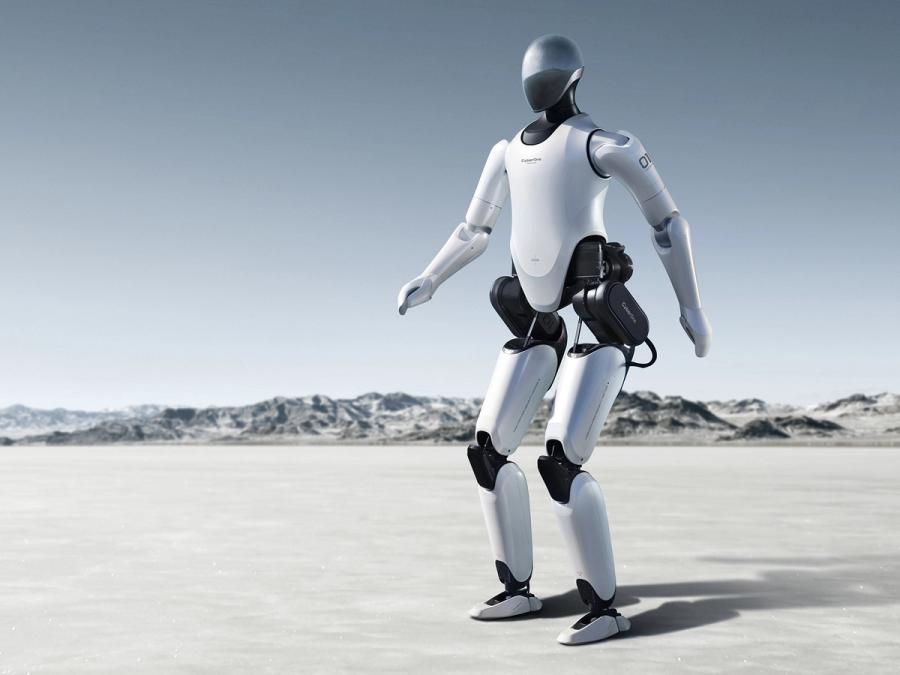
Executive summary Across 2025–26 the humanoid robotics industry moved from spectacle to selective utility: a growing set of repeatable pilots in logistics and light manufacturing, limited clinical and eldercare trials, and staged consumer demos. Public disclosures, supplier briefings and on-site reporting show that humanoids are beginning to solve niche, mobility‑heavy tasks where wheeled or fixed automation struggles — but integration cost, uptime and safety validation remain the dominant barriers to commercial scale. Where humanoids are actually working today The most concrete, repeatable deployments are clustered in four verticals: Warehouses and last‑mile logistics — Agility Robotics’ Digit leads field pilots for tote handling, cross‑dock transfers and multi‑surface loading/unloading where stairs or irregular surfaces preclude AGV/AMR solutions. Manufacturing assembly and kitting — Figure AI and Apptronik (Apollo) are focused on kitting, small‑parts handling and two‑handed assembly in electronics and aerospace subcontractor pilots. Healthcare and eldercare — Sanctuary AI (Phoenix) and UBTECH have staged trials in clinics and long‑term care homes for tasks such as medication round assistance, mobility support and administrative tasks. Limited consumer/home demos — Xiaomi (CyberOne) and Unitree have presented home‑oriented prototypes and aspirational pilot programs; these remain largely promotional or short, supervised trials rather than sustained in‑home deployments. Representative pilot details Agility Robotics (Digit) — Multiple publicly disclosed pilots through 2024–25 focused on box/tote transfers inside fulfillment centers and last‑mile handoffs. Typical pilot durations have been 3–12 months, integrated by system integrators who handle safety fencing, vision calibration and cradle‑to‑cradle logistics. Reported outcomes include reduction of manual bending/stoop injuries and measurable cycle‑time improvements on irregular handling tasks. Figure AI & Apptronik (Apollo) — Pilots emphasize two‑handed kitting, lightweight fastening and precision part presentation. Integration partners are often electronics contract manufacturers; pilots run 6–9 months to qualify part tooling and cycle repeatability. Early ROI signals are modest throughput gains but high value in flexible staffing reduction for short‑run product changeovers. Tesla (Optimus) & 1X Technologies (NEO/EVE) — Tesla continues internal factory demos and experimental deployments on low‑value repetitive tasks; it has not publicized broad customer integrations. 1X has shown internal demos and prototype flows for assembly; both are positioned as factory augmentation first, commercial sales later. Sanctuary AI & UBTECH — Trials in clinics and eldercare homes are small (typically 3–6 pilot units, 3–9 months). Tasks include guided mobility, simple fetch-and‑deliver, and patient engagement. Suppliers emphasize human‑supervised operation and clinical acceptance testing rather than autonomous tasking. Xiaomi (CyberOne) & Unitree — Consumer demos are largely staged: retail showrooms, product launches and short in‑home demonstration programs. Units remain tethered to supervised use with limited autonomy and are marketed as lifestyle/companion devices rather than full domestic workers. Measured outcomes, failure modes and lessons Data emerging from pilots is mixed but instructive: Uptime and reliability — Industrial humanoids in controlled cells commonly report uptime in the 70–90% range; more open warehouse trials drop below 60% when perception or path planning is stressed by cluttered environments. Throughput and error rates — For targeted tasks (tote transfer, kitting), throughput increases of 5–20% versus manual shift labor have been reported, but error rates require active human oversight — typical exception handling remains manual. Safety incidents — Public disclosures report no systemic safety failures in commercial pilots; most incidents are minor and involve sensor occlusion or mis‑grasps. Integrators emphasize conservative safety envelopes and “pause‑and‑handover” procedures during early deployments. Pilot‑to‑scale conversion — Conversion rates are low but rising: integrators estimate 10–25% of pilots convert to committed deployments within 12–24 months, with success correlated to task standardization and integration support contracts. "We learned the hard way that a humanoid is only as useful as the integration plan around it — vision, payload fixtures and a clear exception path are the real drivers of ROI," said an unnamed integrator involved in multiple warehouse pilots. How companies position their robots Agility Robotics — Marketed as a logistics solution for environments where wheels fail: stairs, narrow docks and mixed‑floor sites. Emphasis on operational savings and injury reduction. Figure AI & Apptronik — Positioned as bolt‑on human co‑workers for small‑part manufacturing and reconfigurable production lines; messaging centers on dual‑arm dexterity and fast redeployment. Tesla — Frames Optimus as a future mass‑scale industrial worker; current strategy is heavy internal deployment and iterative improvement rather than third‑party sales. Sanctuary & UBTECH — Sell safety, empathy and workforce relief into healthcare; trials emphasize augmentation of caregiving staff rather than replacement. Xiaomi & Unitree — Use consumer buzz and aspirational demos to position humanoids as lifestyle devices; direct sales and lower price points remain aspirational. Pricing and business models Suppliers are using a mix of hardware sales, lease/rental for pilots, and managed‑services contracts. Analysts and supplier disclosures place industrial humanoid economics as follows: Segment Unit economics (typical) Commercial model Industrial humanoids (Digit, Apollo) Order‑of‑magnitude: tens‑to‑low‑hundreds of thousands USD per unit (hardware or CAPEX equivalent) Sale + integration, or subscription/robot‑as‑a‑service with integrator Factory prototypes / internal (Optimus, NEO) Not generally sold; cost internalized as R&D and operations expense Internal deployment, potential licensing later Healthcare/eldercare trials Pilot programs often subsidized; commercial pricing under development Service contracts, leasing to care providers Consumer demos (CyberOne, Unitree) Concept and promotional pricing; consumer retail price uncertain Direct retail if/when productized Competitive analysis Direct competition is limited because vendors target different niches. Agility is strongest where mobility and irregular terrain matter. Figure and Apptronik compete on dexterity and factory integration. Tesla’s vertical integration gives it a potential scale advantage but customers have yet to see commercial product availability. Sanctuary and UBTECH compete in healthcare on safety validation and clinical trust; Xiaomi and Unitree focus on brand and cost for consumer interest. Marketplace map: lab demo → repeatable pilot → scale Repeatable pilots — Logistics (Agility) and targeted manufacturing kitting (Figure, Apptronik). Early commercial rollouts — Select fulfillment centers and contract manufacturers with strong integrator partnerships. Exploration / long horizon — Broad in‑home consumer use (Xiaomi, Unitree) and fully autonomous clinical care (Sanctuary) are still exploratory and require regulatory clearance and long field validation. Framework for buyers Task fit: Choose humanoids only where mobility + manipulation beats wheeled automation. Integration burden: Budget 2–6x the robot hardware price for vision, fixturing and software integration in pilot phase. Safety & regulation: Expect supervised operation for 12–24 months; plan for documented risk assessments and local regulatory filings for clinical use. Cost & service models: Prefer leases or outcome‑based contracts for pilots; insist on clear KPIs (uptime, cycle time, error rate) and escalation procedures. Near‑term scale timeline Over 2026–27 we expect incremental scale where tasks are narrowly defined: more warehouse cells and electronics kitting lines will move from pilot to small fleets. Healthcare and consumer markets will remain cautious: meaningful scale in care facilities and homes is unlikely before 2028 unless regulatory pathways and service economics materially improve. The next 24 months will therefore be characterized by selective commercial wins, growing integrator ecosystems, and steady improvements in reliability rather than a sudden market flood.