Boots on the Warehouse Floor: A 2025–26 Inventory of Humanoid Logistics Pilots and Live Deployments
Executive summary Humanoid robots are no longer just lab curiosities. Between 2023 and 2025 a wave of pilots, public demonstrations and limited commercial deployments has shifted the conversation from...
Published by The Humanoid Race
Archived source unverified — no source link is available. The claims, figures and quotations have not been checked against an available source. Retained for historical context, not presented as newly verified reporting.
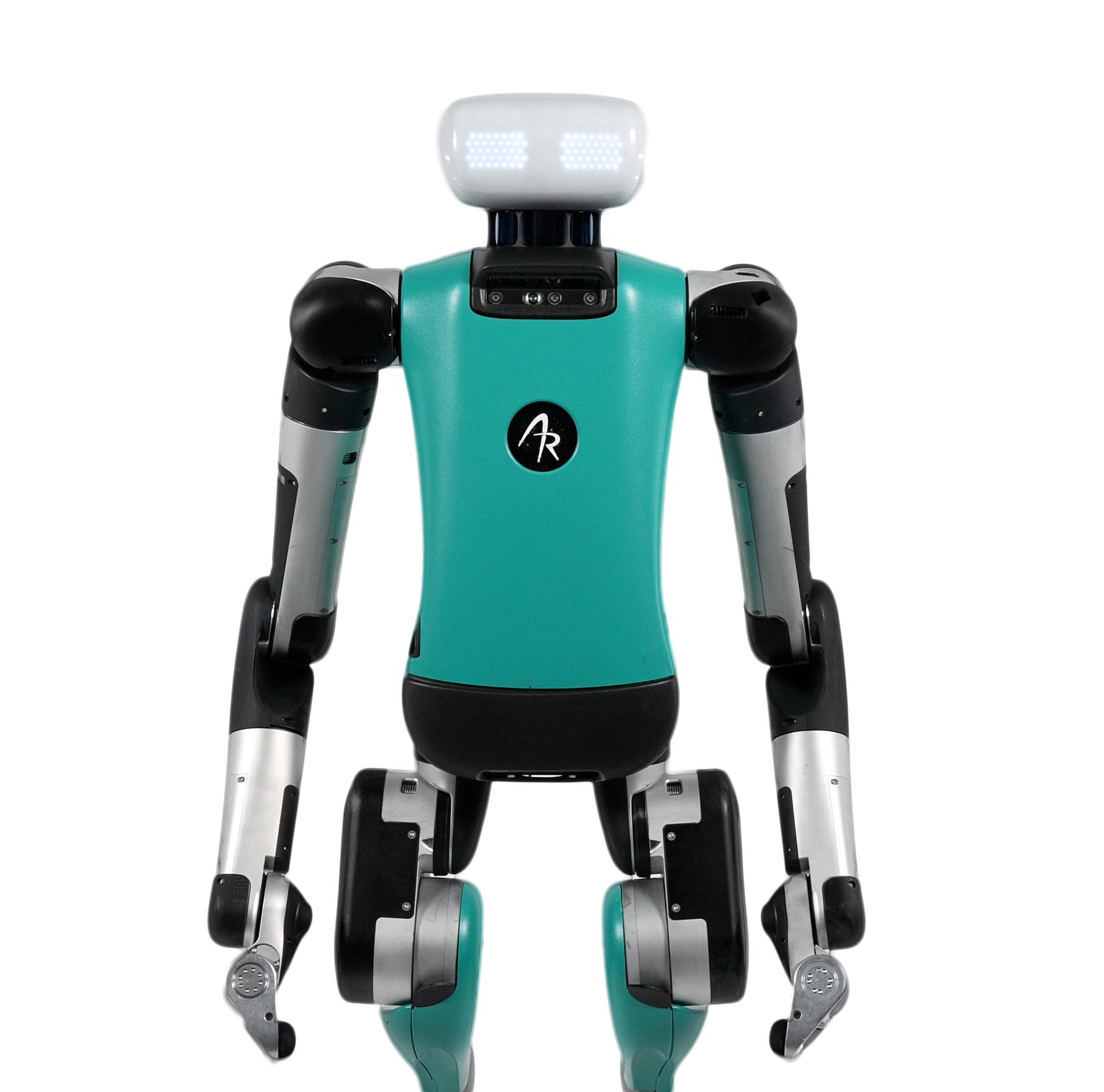
Executive summary Humanoid robots are no longer just lab curiosities. Between 2023 and 2025 a wave of pilots, public demonstrations and limited commercial deployments has shifted the conversation from feasibility to where and how humanoids can be productive on the warehouse and factory floor. That said, live deployments remain small and highly specific: most humanoids today are being trialed in discrete tasks that leverage bipedal form factors or human‑grade manipulators — not yet as general replacements for pick‑to‑light pickers or large AMR fleets. Where humanoids are working — a ground‑level inventory Agility Robotics — Digit (logistics integration experiments) Use cases: case handling, mid‑aisle tote transport, short‑run putaway and light pallet break‑down. Deployment profile: Agility’s Digit has been the most visible humanoid in logistics pilots. Agility announced a multi‑year research collaboration with Ford to trial Digit in parts movement and station replenishment; other pilots have paired Digit with human pickers for asymmetric tasks (lifting heavy cartons, crossing stairs) where wheeled AMRs hit limits. Public demos show Digit moving single‑to‑double‑handed cartons and transferring between conveyors and pallets. Operational data (public/industry reports): pilot operators report conservative pick rates (10–30 assisted transfers per hour depending on pick complexity), uptime in the 70–90% window during trials, and integration timelines of several weeks to months to interface with WMS and cell safety fencing. 1X Technologies — NEO / EVE (warehouse trials) Use cases: assisted picking, sorting, shelf restocking. Deployment profile: 1X Technologies has focused marketing on “human‑like reach and sight” for narrow‑aisle shelved goods. The company’s early trials have been with regional e‑commerce warehouses and third‑party logistics (3PL) providers; most customers remain unnamed in public disclosures. The company positions NEO/EVE as a complementary option to human pickers for mixed‑SKU, small‑parcel environments where flexible grasping beats fixed tooling. Figure AI — early beta logistics tests Use cases: batch picking trials, conveyor transfers, cross‑docking assistance. Deployment profile: Figure has run a limited beta program in North America and Europe with undisclosed logistics customers. Public material highlights the platform’s rapid task reconfiguration and cloud update model; beta notes emphasize a secondary role supporting human teams in high‑SKU e‑commerce operations. Tesla — Optimus (reported factory/fulfillment floor trials) Use cases: simple material handling, parts shuttling, repetitive “boring” tasks. Deployment profile: Tesla CEO statements and media reporting indicate early, in‑house testing of Optimus prototypes at Tesla manufacturing sites for repetitive intra‑line tasks. These are experimental, proprietary trials focused on demonstrating robustness in a single OEM environment rather than customer‑facing pilots. Apptronik — Apollo (manufacturing and material‑handling demos) Use cases: kitting, small‑parts assembly support, light palletizing demos. Deployment profile: Apptronik has shown Apollo in manufacturing scenarios at trade shows and in targeted OEM proofs‑of‑concept. The company positions Apollo squarely as an industrial collaborator — a humanoid designed to integrate into existing assembly lines and work alongside human operators. Unitree — legged platforms adapted for material transport Use cases: inspection with payloads, light material shuttle in constrained environments. Deployment profile: Unitree’s quadrupeds have been adapted to carry payload modules for site inspection and light transport. Unitree markets such deployments to contractors and industrial maintenance teams where access and mobility matter more than dexterous manipulation. Boston Dynamics — lessons from Handle and Atlas Use cases: palletizing, box handling, research prototypes informing product design. Boston Dynamics’ Handle (a purpose‑built mobile manipulator) and research on Atlas provide the most movement and manipulation references for logistics: their 2017–2020 Handle demos (case picking, palletizing) still serve as design templates for combining dynamic locomotion with box handling. Boston’s commercial activity (Spot, Stretch) has focused on niche inspection and case picking respectively, and Stretch’s palletizing work reframes how a humanoid might approach the same tasks. How companies are marketing and positioning humanoids Assistance, not replacement: Most vendors emphasize humanoids as augmentation for human teams — handling repetitive, ergonomically risky tasks (lifting, stairwork, reach tasks). Flexibility premium: Firms sell humanoids on the value of human‑like versatility — fewer fixtures and less conveyor engineering than fixed automation when SKU mixes change. Integration platforms: Startups tie robot hardware to cloud orchestration and WMS connectors; integrators (Dematic, Honeywell Intelligrated, Manhattan Associates, Blue Yonder) remain the gatekeepers to scaled warehouse adoption. Pilot results, KPIs and real metrics to gather Public pilots remain thin on standardized KPIs. Logistics executives and pilots should demand consistent metrics: Pick rate (assisted picks/hour and end‑to‑end task time) Uptime and mean time between failures (MTBF) in hours Integration time with WMS/ERPs and coexistence with AMR fleets (days/weeks) Safety incidents (recorded near misses, contact events, and any downtime for investigations) Staffing impacts (FTEs reallocated, net headcount change, productivity deltas) On the floor the consistent story is: humanoids cut task variance and ergonomic risk, but do not yet match speed or cost per pick of specialized AMRs and hands‑on automation. Technology gaps observed on the floor Perception: robust, high‑speed bin and cluttered shelf perception remains brittle compared with fixed camera/fixture systems. Gripper reliability: general‑purpose end‑effectors still struggle with soft, deformed or overlapping items — a common cause of aborts. Task switching: reconfiguration between distinct workflows (picking vs palletizing vs conveyor transfer) can require human intervention and software tuning. Pricing, business models and competitive positioning Vendors generally sell a combination of hardware, software subscriptions and integration services. Public price lists are rare; industry benchmarks gathered from integrators suggest: Early‑stage pilot hardware is typically a capital line item in the high five to low six‑figure band per unit, while enterprise deployments add integration, safety engineering and WMS connectors costing equal or higher sums in year one. Subscription or robot‑as‑a‑service models are gaining traction to lower upfront costs; integrators often package robots with SLA guarantees on uptime and support. Decision framework for logistics executives We recommend a three‑step practical framework: Identify “humanoid‑friendly” tasks: cross‑level transfers, stair/step movements, ergonomic lifts, and ad hoc sorting where human reach makes sense. Pilot with clear KPIs: measure pick rate, MTBF, integration time, and staffing impact over a 90–180 day window. Compare total cost of ownership and throughput vs AMRs and fixed automation — include retrofitting and changeover costs when SKU mix shifts. Near‑term realistic deployment scenarios by industry Industry Near‑term scenarios (2025–26) E‑commerce Assisted case/tote transfers in micro‑fulfillment centers; order consolidation where variable SKU mixes reduce ROI of fixed automation. Cold storage Stair and ramp transfers where wheeled robots struggle; human‑like grips for packaged frozen goods with minimal retooling. Automotive parts / OEM Line feeding, kitting, and repetitive in‑plant shuttles in mixed‑model assembly lines (not heavy stamping or welding). Operational constraints shaping adoption Regulatory and safety: ISO safety standards for collaborative robots exist, but humanoids’ bipedal dynamics create new risk cases for regulators and insurers; expect site‑specific risk assessments and longer sign‑off times. Certification: CE/UL pathways require additional mechanical and software safety evidence for mobile humanoids operating near humans. Labor relations: Unions and HR teams focus on worker displacement and reclassification; successful pilots emphasize redeployment and ergonomics-driven productivity gains. Final assessment Humanoids are crossing from R&D into purposeful, small‑scale operations. They offer unique advantages where human form factors solve access, reach or ergonomic problems. But for high‑throughput, low‑variance tasks, specialized AMRs, articulated pickers and fixed automation still deliver lower cost‑per‑pick and faster ROI. The smart play for 2025–26 logistics leaders is disciplined, KPI‑driven pilots targeted at tasks where humanoids’ morphology is a clear advantage — and to partner tightly with integrators who can manage safety, WMS integration and total cost modeling.