Boston Dynamics details 13‑DOF Atlas hand built for sim-to-real dexterity (2026)
AI-assisted source briefing. Boston Dynamics published a technical blog in 2026 describing a new four‑finger, 13‑degree‑of‑freedom hand for its next‑generation Atlas, designed for high‑fidelity simulation, reinforcement‑learning training, and rugged tool use in real work contexts.
Published by The Humanoid Race
Source link: bostondynamics.com
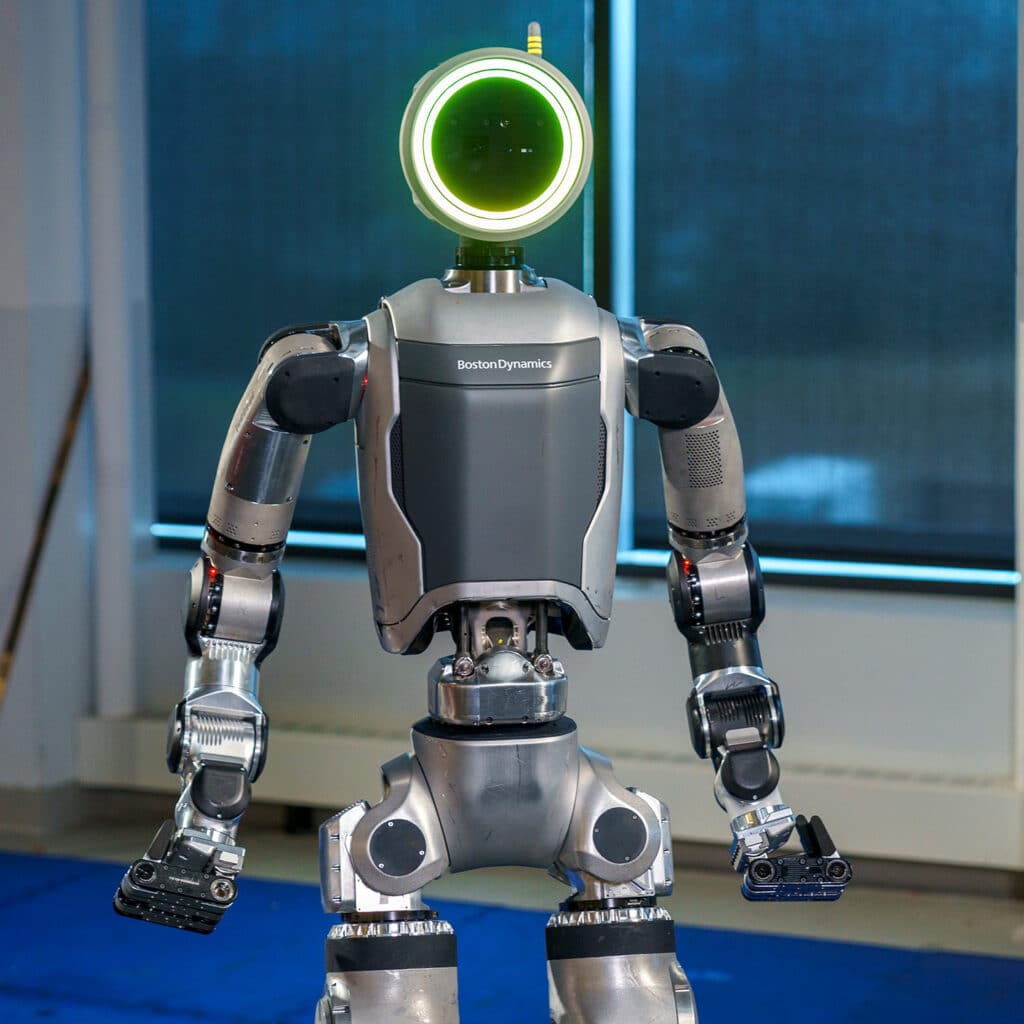
AI-assisted source briefing. Automatically written and checked against the cited source, without human editorial review. These are automated checks, not independent verification. Evidence date: 2026-10-01. Classification: reported actual. Source: Boston Dynamics blog (2026). The company posted a product‑news blog describing a new generation of robot hands intended for its Atlas humanoid platform and for use with modern AI training workflows. The post frames the hands as part of Atlas’ trajectory toward mass manufacturability and field work rather than a purely laboratory demonstrator (blog post published on Boston Dynamics’ site, product‑news entry). Mechanical design and specs: Boston Dynamics says the new hand uses four fingers—including an opposable, more anthropomorphic thumb—and totals 13 degrees of freedom (up from 7 DOF in the prior GR2 hand). The hand retains direct‑drive, highly transparent actuation across joints, uses a single actuator type, encloses actuators with no fragile cross‑joint cabling, and is sized slightly larger than an average human hand to reach human‑sized spaces and tools (company description of kinematics, actuators, and packaging). Strength, sensing and control: The company reports the hand maintains strength comparable to the prior design (capable of carrying a 100+ lb loaded minifridge in the Atlas context), and pairs backdrivable actuators with dense pressure tactile sensors across fingertips and palm to enable contact‑sensitive behaviors and proprioceptive feedback for closed‑loop control (statements on load capability, backdrivability, and tactile sensing). Built for simulation and RL: Boston Dynamics frames the hand’s architecture around sim‑to‑real reinforcement learning workflows—highlighting rigid‑drive, backdrivable transmission and control techniques that reduce friction and cogging so the hand can be simulated with high dynamic fidelity. The company says policies are trained in simulation with domain randomization and that they have initial results showing promising sim2real transfer for dynamic tasks, with rollouts on hardware relying on high‑rate actuator proprioception (description of simulation fidelity, RL training approach, and initial sim2real results). Design tradeoffs and manufacturability: The blog emphasizes tradeoffs that drove design choices: the team rejected a fifth (pinky) finger after experiments and cost/complexity analysis, arguing four fingers and 13 DOF already enable in‑hand reorientation, slip recovery, and tool grasps while simplifying size, power, and reliability for scale manufacturing. Boston Dynamics positions the hand as a long‑term bet toward reliable, low‑cost production rather than an over‑specialized research prototype (discussion of the pinky decision, tradeoffs, and manufacturability goals). Original source: Robot Hands for Modern AI and Real Work | Boston Dynamics