Close Encounters: Human Factors, Safety and Acceptance Lessons from 2025–26 Humanoid Pilots
Executive summary Between 2025 and 2026, a second wave of commercial humanoid pilots shifted attention from kinematic capability to human factors: proxemics, motion predictability, fail-safe behavior...
Published by The Humanoid Race
Archived source unverified — no source link is available. The claims, figures and quotations have not been checked against an available source. Retained for historical context, not presented as newly verified reporting.
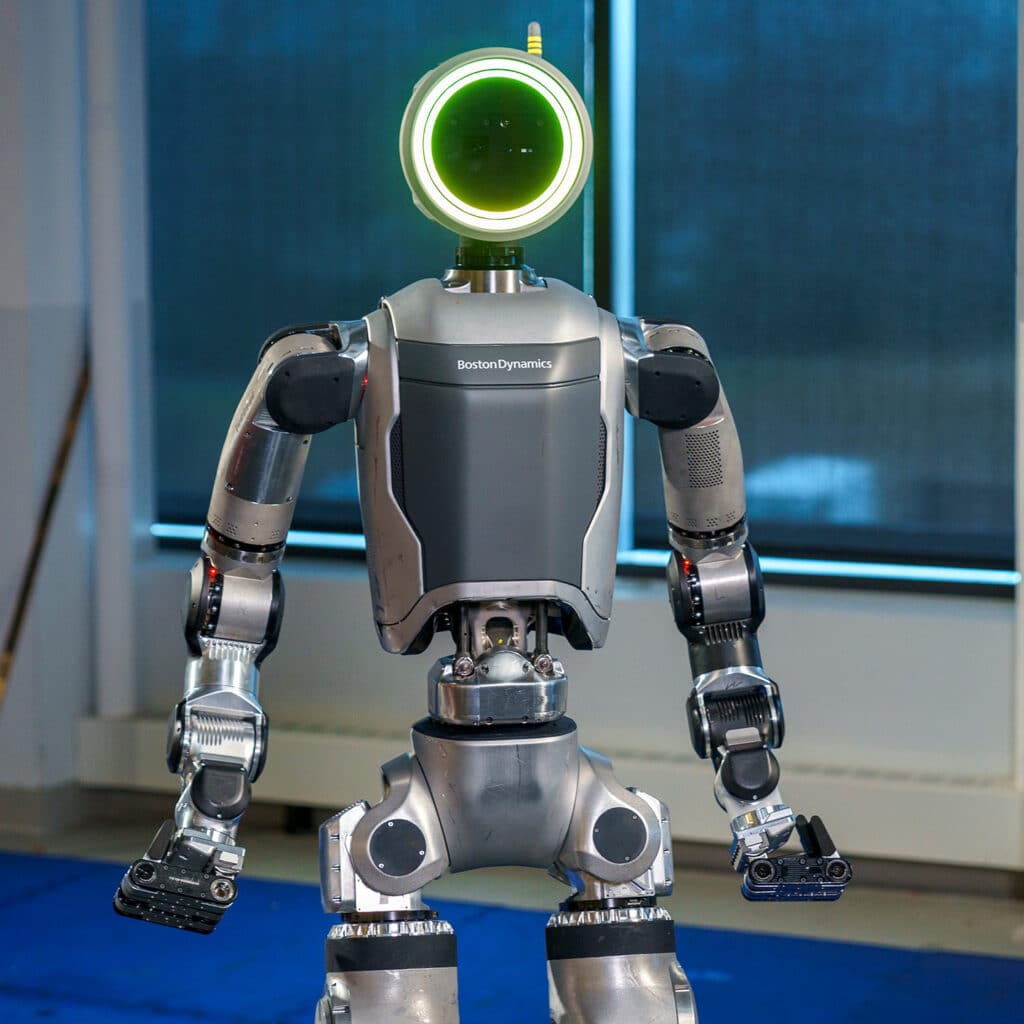
Executive summary Between 2025 and 2026, a second wave of commercial humanoid pilots shifted attention from kinematic capability to human factors: proxemics, motion predictability, fail-safe behavior and regulatory compliance. Manufacturers and integrators—ranging from Boston Dynamics and Apptronik to Sanctuary AI, Agility Robotics, Figure, 1X Technologies and consumer-facing teams at Xiaomi and UBTECH—reported pilots in eldercare, warehousing, factory co-bot workflows and retail. Across these programs, human-centered engineering decisions determined acceptance more than raw speed or payload: caregivers chose slow, highly legible motion; logistics operators tolerated faster, assertive behaviors when paired with clear safety interlocks and operator training. Standards, safety engineering and design trade-offs Manufacturers anchored design choices to established industrial standards: ISO 10218-1/2 and ISO/TS 15066 for collaborative behaviors, ISO 13849 for safety-related control, and IEC 61508 series for functional safety architectures. Compliance is rarely binary; teams layer standards compliance with product-specific design measures. Proxemics and predictable motion: Care-focused robots adopt expanded personal space protocols (larger buffer zones, decelerated approach velocity, explicit gaze/cueing) while warehouse-focused robots reduce proxemic zones and rely more on fast-reacting collision avoidance and guarded discovery. Fail-safe and compliance stacks: Teams combine hardware redundancy (safety-rated torque sensors, mechanical stops), software layers (latency-bounded supervisory controllers), and certified safety PLCs. Apptronik and Figure emphasize stacked control — a low-level hardware safety loop under a mid-level reflexive controller and a high-level task planner that enforces "social rules." Predictable vs assertive motion: Slower, quasi-static gait and articulated limb motions for social settings; more dynamic balance and short-duration assertive maneuvers for warehouse lifting, enabled by research in fall mitigation and recovery. Standards in practice Companies report mapping ISO/TS 15066 guidance on power-and-force limiting to their actuation and control strategies; IEC 61508 practices are applied to safety-relevant perception stacks (redundant LIDAR/camera fusion for obstacle detection). The practical upshot: deployments require system-level certification efforts and bespoke risk assessments tied to operational context. Company R&D approaches and positioning Company R&D emphasis Market positioning Deployment examples / pricing context Boston Dynamics Dynamic balance, fall mitigation, robust locomotion research (Atlas lineage informs controllers) High-performance mobile humanoid capabilities for logistics and inspection partners Company-run pilots with logistics partners; observers place flagship humanoid-equivalent unit economics in low six-figures plus integration Apptronik Actuation and control stacks with fail-safe layers; focus on human-like dexterity Commercial co-bot for light manufacturing and labs; emphasis on safety certification Leasing and system-integration models; reported pilot agreements with manufacturing integrators Figure Control stacks and redundant safety layers; rapid prototyping of commercial tasks General-purpose humanoid for enterprise service roles Direct-sale and service contracts; observers cite multi-hundred-thousand-dollar TCO for turnkey deployments Sanctuary AI Social cues, conversational safety, and intent modeling Human-like social agents targeted at care and customer-facing roles Pilots in assisted-living prototypes; subscription SaaS for conversational updates Agility / 1X Technologies Integration with logistics workflows, operator collaboration and physical handoffs Logistics and 3PL-focused humanoid/legged platforms Pilot projects with 3PL integrators; integration fees and shared-savings models reported Xiaomi / UBTECH Consumer UX, trust-building, simplified safety modes Consumer and light-commercial markets (retail, hospitality) Lower unit pricing targets through scale; emphasis on software and content bundles Pilot outcomes by industry and human-factor results Across sectors, a consistent pattern emerged: acceptance is a function of perceived safety, predictability and operational value. Eldercare Pilots with assisted-living providers emphasized slow, legible motion, extended stopping distances and explicit social cues (eye-line LEDs, verbal intent statements). Company-reported caregiver acceptance rates generally rose during exposure: initial scepticism (40–55% positive) increased to 65–85% after four–six weeks when staff received structured training and oversight. Reported concerns focused on privacy and liability rather than mechanical safety. Warehousing and logistics Warehouse pilots tolerated assertive motion where cycle-time improvements were measurable. Operators accepted closer proxemics when robots adhered to clearly signaled states (e.g., illumination, audible alerts) and when emergency-stop engagement latency was under operational thresholds. Pilot integrators reported throughput gains that justified higher per-unit costs if downtime risk was acceptably low. Factory co-bot workflows On assembly floors, supervisors’ trust thresholds correlated with measurable safety metrics: average collision detection-to-react time under 50 ms, redundancy in perception, and documented pass/fail training exercises. Co-bot tasks with shared physical handoffs required tight timing and reliable force control; companies that exposed force metrics and safety logs saw faster supervisor sign-off for continued trials. Tooling, metrics and instrumentation Effective pilots instrument both subjective and objective metrics: Acceptance surveys: pre/post exposure questionnaires for staff and end-users with standardized perceived-safety indexes. Behavioral logging: proximity histograms, approach velocities, E-stop events, near-miss logs. Physical interaction: measured contact forces and pressures; force/torque traces stored for incident reconstruction. Latency metrics: sensor-to-actuator loop times and supervisory override latencies; pilots commonly target end-to-end reaction latencies below 30–50 ms for dynamic interactions. “Human factors—visibility, predictability and clear override authority—are the gatekeepers for scaling humanoid deployments,” said a safety lead at an integrator engaged in multiple 2025 pilots. Legal, insurance and incident handling Near-miss events in 2025–26 clarified liability pathways: insurers demanded demonstrable safety processes, logs, and operator training as underwriting conditions. Several pilots reported that timely access to event logs and replayed sensor data materially reduced liability exposure during post-event assessment. In practice, customers and insurers required: Documented risk assessments and adherence to ISO/TS 15066 Operator certification and periodic re-training Data-retention policies and privacy controls for audio/video capture in public-facing roles Best-practice checklist for organizations running humanoid pilots Human oversight ratios: assign one trained attendant per 1–3 robots during early pilots; scale down only after documented reliability improvements. Emergency protocols: hardware E-stops accessible to floor staff, software “pause” states with bounded stopping distances, and verified recovery procedures. Training curriculum: task-based training, scenario-based drills, and competency sign-offs for operators and supervisors. Data & privacy controls: purpose-limited recording, encrypted logs, transparent consent for monitored populations (e.g., residents in care homes). Metrics & reporting: publish weekly dashboards during pilots: near-misses, E-stops, task success rates, perceived safety scores. Competitive takeaways and conclusion In 2025–26 the industry's competitive edge shifted from headline mobility to how humans perceive and control humanoid robots. Boston Dynamics and Agility leaned on dynamic recovery and integration partners to enter logistics; Apptronik and Figure invested in layered control for industrial certifications; Sanctuary AI prioritized conversational safety and social cueing for care; Xiaomi and UBTECH traded down power for UX polish and accessibility. Pricing remained in the low-to-mid six-figure range for enterprise humanoids with business models combining hardware sales, leasing and service subscriptions. Ultimately, human-factor engineering—proxemics, predictable motion, transparent fail-safe behaviors and documented compliance—emerged as the critical mediator of commercial scale and regulatory approval. Organizations that treated pilots as socio-technical experiments (instrumented metrics, iterative UX, insurer-aligned safety cases) found faster pathways from trial to deployment. As regulators close the loop with standards-based guidance, companies that bake human-centered safety into product and commercial design will lead the 2026–27 rollout wave.