Competitive Playbooks 2025–26: Technical and Commercial Differentiators in the Humanoid Market
Executive summary As of mid‑2024 the humanoid robotics field is bifurcating into (a) research flagship platforms that demonstrate capability (Boston Dynamics' Atlas lineage, Xiaomi CyberOne demos), (b...
Published by The Humanoid Race
Archived source unverified — no source link is available. The claims, figures and quotations have not been checked against an available source. Retained for historical context, not presented as newly verified reporting.
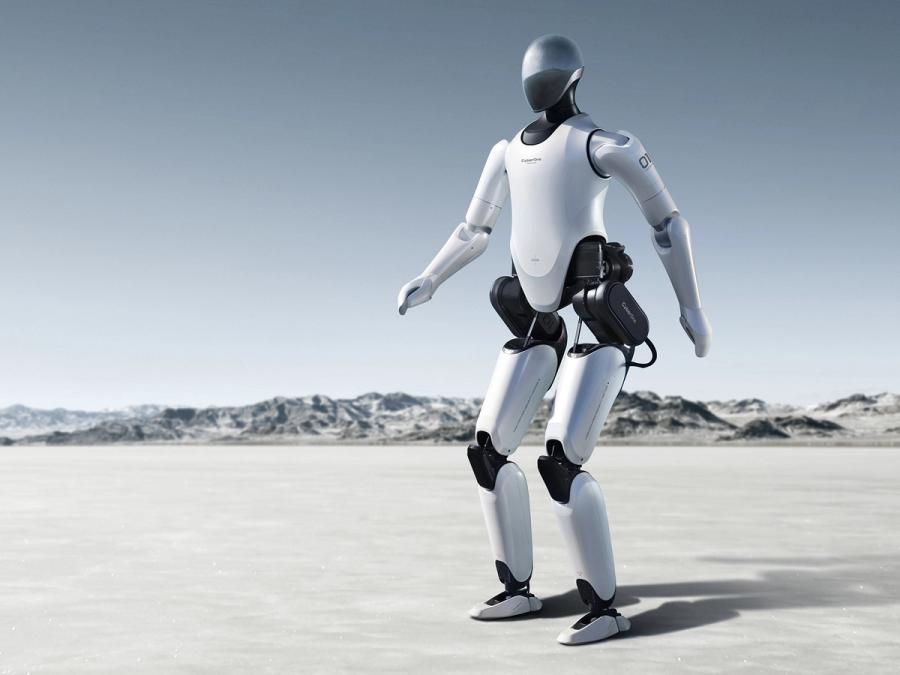
Executive summary As of mid‑2024 the humanoid robotics field is bifurcating into (a) research flagship platforms that demonstrate capability (Boston Dynamics' Atlas lineage, Xiaomi CyberOne demos), (b) vertically‑oriented commercial players focused on discrete enterprise workflows (Agility Robotics, Figure, Apptronik), and (c) more consumer/education‑oriented firms or concept builders (UBTECH, Unitree, Xiaomi). Tesla’s Optimus remains the most hyped near‑consumer/scale play. Public technical data is uneven — many companies publish design goals rather than sustained field metrics — so this analysis pairs verified specs and demos with company claims and market signals to map technical tradeoffs to market fit, pricing cues and go‑to‑market strategy. Technical benchmark (summary) Company / Robot Payload Typical speed Reach / size Battery life (public/est.) Actuator architecture Perception / autonomy Integration APIs / ecosystem Tesla — Optimus (company targets) Company‑stated target ~20 kg (goal) Company demos walking; roadmaps claim human‑like speed (goal) Human scale (prototype ~170–180 cm) Company goals; prototype run times published only in demos Electric actuators, highly integrated with Tesla motor/drive expertise (company claim) Vision first (camera + Dojo training ambition), aim for high autonomy via fleet learning Tightly integrated with Tesla stack; expected developer APIs but company control likely Boston Dynamics — Atlas (research lineage) Low payload vs industrial arms; research platform High dynamic agility (demonstrated gymnastic/parkour motions) Human scale, highly articulated Short; research demo durations High‑performance hydraulics / electric actuation in some iterations Advanced state estimation, vision + force control; non‑commercial autonomy Research platform — not a commercial API play; tech demonstration to influence adjacent products Figure AI (humanoid programs) Company targets mid‑tens of kg payload (public claims) Designed for continuous industrial pace; company demos focus on repeatability Human scale; factory ergonomics in mind Designed for shift‑length operations (company/est.) Custom electric actuation with focus on efficiency and durability Perception stacks geared to structured environments; task autonomy with teach/playback Positioned as an integrated turnkey hardware+software supplier Agility Robotics — Digit ~18 kg (company spec) Walking up to ~1–1.5 m/s (practical deployment speeds lower) Compact human scale, modular payload interface Field deployments 1–4 hours depending on duty cycle (operator reports) Electric joint motors, series compliance focused on durability Perception includes stereo/vision + lidar for navigation; human‑in‑loop teleop common APIs for integrators; explicit partnerships with logistics integrators Apptronik — Apollo Designed for human‑scale tasks; payloads in the mid‑tens kg (company materials) Designed for industrial tempos Human scale with modular end‑effectors Engineered for multi‑hour operation; hot‑swapable power suggested Compliant, torque‑controlled electric actuators; emphasis on safety and force control Autonomy layer for routine tasks + easy integration for higher‑level orchestration Marketed as a developer‑friendly stack with robotics SDKs for partners Sanctuary AI — Phoenix Company designs for general‑purpose tasks; public numbers limited Emphasizes safe, deliberate motion rather than speed Human scale; ergonomic workspace reach Company claims multi‑hour; few public duration tests Custom actuators with compliance for human interaction Perception + cognition ambitions (general intelligence rhetoric); staged autonomy Positioned as a full‑stack solution provider to enterprise customers 1X Technologies — NEO/EVE (emerging) Limited public specification; early prototype phase Prototype mobility emphasized Human scale prototypes Not publicly validated at scale Proprietary electromechanical designs (company claims) Perception stacks typical of emerging players (vision, IMU) Strategy unclear; early‑stage developer outreach reported Xiaomi — CyberOne (demo) Concept demo; not commercial Demonstrated walking and limited motion sequences Human scale (177 cm public demo) Demo durations only Electric actuators; consumer electronics integration focus Multimodal sensors including lidar/cameras; heavy reliance on cloud compute Primarily branding and technology showcase; ecosystem unclear UBTECH Smaller payloads for service/education robots Moderate; designed for indoor service tasks Smaller form factors for home/retail Designed for hours of operation; consumer grade Lightweight electric actuators focused on cost Standard vision stacks and cloud services for voice/interaction Commercial SDKs and developer community; productized offerings Unitree Primarily quadruped portfolio; humanoid efforts nascent Not a primary humanoid competitor in commercial deployments NA for production humanoids NA Electric motors; cost‑optimized Perception stacks focused on mobility Open developer community for their robot platforms Notes on data Many publicly shared numbers are goals, not sustained production metrics. Where possible the table labels company‑declared figures or widely reported estimates; readers should treat raw numeric comparisons as directional. Mapping technical profiles to market fit Design tradeoffs drive where each robot can commercially land in 2025–26: Warehousing & e‑commerce: Favours speed, endurance and robustness. Agility Robotics’ Digit (endurance and box handling), Figure’s industrial focus, and Apptronik’s modular systems are best suited to SKU movement, packing and last‑mile staging. Companies offering explicit fleet APIs and integrations with AMRs/warehouse management systems will win pilots. Manufacturing & light‑assembly: Requires precision, repeatability and safety. Apptronik and Figure (torque control, compliant actuation) target this space; Boston Dynamics’ research on dynamic manipulation informs techniques but Atlas itself is not a commercial candidate. Healthcare & assisted living: Demands compliance, soft interaction and regulatory attention. Sanctuary’s philosophy on safe human‑interaction and Apptronik’s compliance focus map better to cognitive care and patient handling pilots. UBTECH’s smaller indoor platforms can serve therapy/engagement roles. Home & consumer: Needs low cost, small size, unsurprising behavior. Xiaomi’s CyberOne is a branding/technology statement; true home adoption hinges on price points UBTECH‑class suppliers are closer to achieving. Commercial approaches: funding, partnerships and pricing cues Three broad commercial plays have emerged: Platform scale plays: Tesla has publicly signaled ambitions to mass‑manufacture Optimus, leveraging Tesla’s production expertise and Dojo training ambitions to drive cost per unit down (Elon Musk has repeatedly described low long‑term price targets). This is a classic scale‑platform thesis: high up‑front R&D, then downward price pressure as volume rises. Vertical integrators / turnkey sellers: Figure, Apptronik and Sanctuary pitch full‑stack hardware+software tailored to verticals (factories, warehouses, care). Their pricing will be enterprise OEM/robot‑as‑a‑service (RaaS) models with multi‑year contracts rather than one‑time consumer sales. Productized OEMs and education/retail: UBTECH, Unitree and Xiaomi’s consumer demos chase narrower markets where lower unit cost, reliability and developer ecosystems matter more than generality. Partnerships visible to date include platform suppliers teaming with logistics integrators and pilot partners (warehouse operators, OEM factories). Funding levels remain concentrated: well‑capitalized players (Tesla, Boston Dynamics’ owners, large venture rounds for Figure/Apptronik/Sanctuary) can sustain long development cycles; smaller firms must niche or pursue aggressive partnerships to survive. Strategic positioning and competitive dynamics to watch Platform vs. Vertical integration: Tesla is the clearest platform aspirant — mass production + large data scale. Apptronik and Figure are more vertical, selling end‑to‑end solutions to specific workflows. Agility sits between — hardware product with an ecosystem play through integrator partnerships. Open APIs vs. closed stacks: UBTECH and Unitree have historically embraced developer communities; Apptronik and Agility publish integrator SDKs; Tesla’s stack will likely be more controlled, even if APIs are exposed to select partners. M&A and IP moats: Expect consolidation in 2025–26: perceptual IP (vision stacks, grasping datasets), actuator designs (high power‑density, compliant torque control) and trained task policies (fleet‑learned behaviors) will be primary targets for acquisition. Well‑funded incumbents with production supply chains hold advantage. Scenario forecasts (through 2026) These short‑horizon scenarios are directional; they assume no breakthrough general intelligence or dramatic macro shocks. Conservative: By end‑2026, commercial humanoid deployments remain niche: ~1,000–3,000 units in enterprises (warehouses, factories, labs). Price per advanced humanoid stays high ($150k–$500k for enterprise‑grade units), limited RaaS rollouts. Base case: 3,000–10,000 enterprise units deployed. Cost compression for commodity subsystems (sensors, compute) drives average price down 20–40% from 2024 levels for mid‑tier units; Tesla’s implied volume goals remain aspirational but exert downward pricing pressure on competitors. Aggressive: If Tesla or a deep‑pocketed OEM reaches modest production volumes by 2026, the market sees tens of thousands of units across consumer and enterprise lines with price points for basic humanoids falling toward the $20k–$50k band for simplified task‑specific variants; however complex, full‑capability humanoids remain expensive. Bottom line The 2025–26 humanoid market will be defined less by a single winner and more by differentiated plays: industrial integrators winning vertical workflows through safety, repeatability and tight WMS/PLM/ERP integration; platform players chasing volume and cross‑industry use; and consumer/education firms optimizing cost and interaction. Technical differentiators — actuator compliance, energy efficiency, perception robustness and fleet learning — will determine which verticals move first. Expect targeted pilots to scale, selective acquisitions to lock in IP, and gradual price erosion driven by component commoditization and manufacturing scale rather than a single dramatic technology leap. “Humanoids will enter markets where existing automation leaves a capability gap — handling unstructured, human‑oriented tasks — and the winners will be those who align technical tradeoffs to the economics of those workflows.” — Industry synthesis, The Humanoid Race