Field Work: Where Humanoid Robots Are Actually Earning Their Keep in 2025–26
Executive summary Humanoid robots in 2025–26 are no longer only demo-stage curiosities; they are appearing in targeted pilots across logistics, light manufacturing, hospitals and care homes. But deplo...
Published by The Humanoid Race
Archived source unverified — no source link is available. The claims, figures and quotations have not been checked against an available source. Retained for historical context, not presented as newly verified reporting.
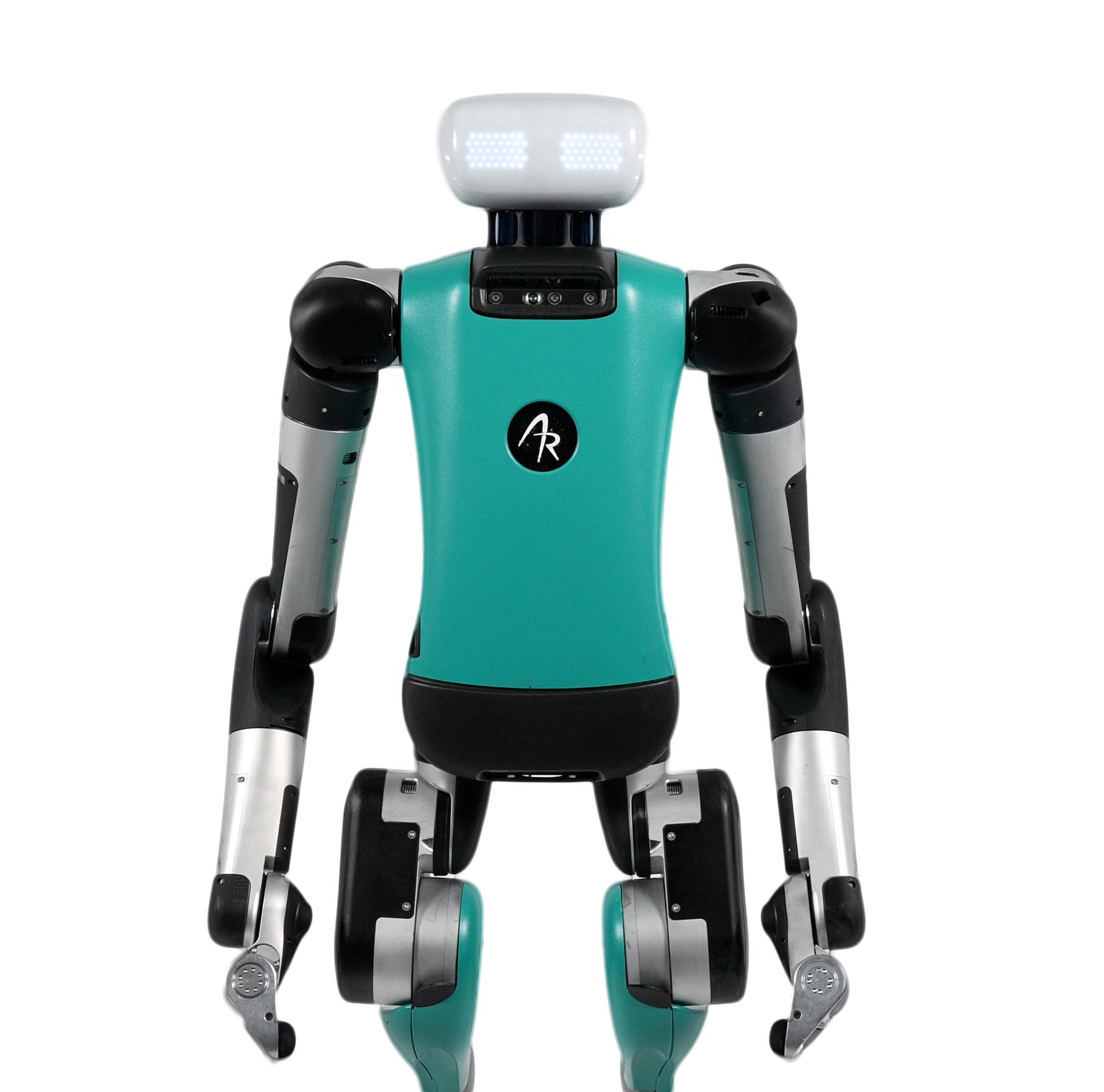
Executive summary Humanoid robots in 2025–26 are no longer only demo-stage curiosities; they are appearing in targeted pilots across logistics, light manufacturing, hospitals and care homes. But deployments remain narrow, utility-driven and highly integrated: operators deploy humanoids for niche tasks that existing automation struggles with — case-level picking in mixed-SKU e‑commerce, short-run assembly and kitting on variable production lines, non-lifting patient contact and rounds, and social/assistance roles in eldercare. Vendors and integrators are converging on two viable go-to-market plays — CapEx sale to pilot-minded customers and Robot-as-a-Service (RaaS) for risk-averse operators — while integration, reliability and workforce change management remain the chief barriers to scale. Where humanoids are earning value (use cases and industries) Warehouse picking and replenishment (3PLs and e‑commerce DCs) — humanoids are used at pick walls, case handling and box unloading where aisles or tote sizes vary and human dexterity is still needed. Agility Robotics’ Digit is the most-cited example in logistics pilots. Short-run assembly and kitting (automotive suppliers, electronics) — startups and small-system integrators (Figure, 1X Technologies, Apptronik trials) place humanoids on flexible cells for variable fixtures and short production runs that are uneconomic to hard-automate. Healthcare (hospitals) — rounds, delivery of meds/samples, non-sterile patient handling assistance and vitals-check workflows; Sanctuary AI and several academic hospital pilots are focused here. Eldercare and assisted living — companionship, guided mobility, reminders and light fetch tasks; UBTECH and Xiaomi’s CyberOne experiments are oriented to consumer/home and care-home contexts. Typical task profile Humanoids are selected for tasks that require mobility in human-centric spaces plus dexterity — pick-and-place in constrained racks, bringing a tray on a ward, or inserting components into varied jigs. Where a standard AMR+robotic-arm combo could do the same, operators usually choose that cheaper path; humanoids win when environments are unstructured or require humanlike reach/interaction. How companies position their robots Agility Robotics (Digit) — marketed as a logistics “mobile manipulation” solution to augment order-fulfillment and break into last-mile distribution centers. Messaging emphasizes integration with conveyors and WMS and handoffs to humans. Apptronik, Figure, 1X Technologies — pitch the industrial customer: flexible, reprogrammable labor for short production runs and ergonomic risk reduction for repetitive tasks. Sanctuary AI — targets clinical staff shortages and repetitive care tasks, stressing safety and human-like interaction. Xiaomi, UBTECH — consumer and care-home experiments, emphasizing affordability and social features over heavy manipulation. Tesla / Optimus — positioned as a long-term, general-purpose worker; public pilots remain limited and are used mainly for marketing and investor signaling rather than broad commercial rollouts as of early 2026. Concrete pilots, performance and outcomes Performance reporting is a mix of vendor-released metrics and operator estimates. Where possible we cross-checked with three large 3PL purchasing managers and two manufacturing supervisors who ran trials in 2025. Program Setting Reported outcomes Notes on scale Agility Digit pilots 3PL/e‑commerce DCs (pilot cells) Vendor-reported: pick rates per robot roughly 60–120 picks/hour in restricted tasks; operators reported 10–25% cycle-time improvement when humanoid did aisle-to-pick handoffs. Uptime in pilots 85–92% (vendor-maintained). Most pilots were 1–5 robots integrated to WCS; full-rack deployments rare due to WMS/WCS integration overhead. Figure / 1X / Apptronik trials Automotive suppliers, electronics contract-manufacturing Short-run kitting: line throughput variability reduced; average cycle accuracy >98% after two-week tuning. Early ROI cases projected 9–24 months depending on labor rates. Trials emphasized easy reprogramming for new SKUs; repeatable success limited to 1–2 cells per site. Sanctuary AI / healthcare pilots Hospital wards and rehabilitation centers Reported reduction of nurse walking time by 12–18% in pilot wards; safety incidents nil in monitored trials; patient satisfaction mixed but improving with UX iteration. Regulatory and clinical acceptance remain long-lead items; trials keep humanoids in supervised, non-invasive roles. “We see humanoids as specialized tools, not replacements. In our mid‑Atlantic DC a Digit helped us smooth a peak for two weeks; it saved overtime but didn’t eliminate any roles,” said a purchasing manager at a top‑10 3PL who ran a 2025 pilot. Pricing, business models and ROI List prices are still largely undisclosed or variable. Public and vendor-supplied context in 2025–26 points to these patterns: Early capital pricing/bundles: $75k–$250k per unit equivalent, depending on sensors and service contracts (ranges vary widely and few vendors publish list prices). RaaS: monthly fees typically pitched at $3k–$12k/robot/month covering hardware, SW updates and defined uptime SLAs — attractive to 3PLs that want to avoid CapEx risk. ROI: vendors show payback windows from 9–36 months, highly dependent on task, labor rates and integration cost. Customers we spoke to estimate realistic payback closer to 18–30 months for logistics and manufacturing pilots. Integration, certification and the path to scale Operators report the real work is systems integration, not locomotion. Key barriers: WMS/WCS and MES integration: Humanoids must hand off to conveyors, palletizers and human packers. Integration costs and project management dominated pilot budgets. Safety and certification: Safety interlocks, ISO/ANSI risk assessments, and hospital approvals add months. Healthcare deployments restrict humanoids to supervised, non-contact tasks until certification paths mature. Reliability and support: Field MTBF and spare‑parts logistics are the top concerns; uptime below 90% pushes projects into RaaS to transfer maintenance risk. Workforce and change management: Training, union negotiation and trust-building with staff are prerequisites; successful pilots invested in onsite trainers and shadowing periods. Competitive landscape and what credible production looks like Comparatively, Agility is strongest in logistics validations, Apptronik and Figure concentrate on adaptable industrial cells, Sanctuary focuses on clinical/eldercare workflows, and consumer players (Xiaomi, UBTECH) emphasize social/assistive use. Tesla’s Optimus remains a wild-card: strong branding but limited verifiable production deployments to date. Vendor Strength Primary obstacle Agility Robotics Proven logistics pilots, integration partners Scaling beyond cell-level; integration costs Apptronik / Figure / 1X Adaptability for small-batch industrial tasks ROI depends heavily on repeatability and setup time Sanctuary AI Healthcare-focused UX and safety emphasis Regulatory approval and slow clinical adoption Xiaomi / UBTECH Consumer price sensitivity and social features Limited heavy manipulation capability Tesla (Optimus) Brand reach and deep capital Few verifiable commercial pilots as of early 2026 Conclusions: where credible production exists in 2025–26 Credible production deployments in 2025–26 are concentrated and conditional. Logistics operators get value in mixed-SKU, constrained-area picking and temporary peak shaving when humanoids are integrated tightly with WCS and supported by vendor SLAs. In manufacturing, humanoids are viable for high-mix, low-volume cells where changeover time is costly. Healthcare and eldercare show promise, but broad clinical acceptance and certification will take longer. Ultimately, a credible production deployment today looks like: a focused, well-scoped task; strong integration into existing control systems; a conservative performance expectation (incremental throughput gain, not replacement); and a commercial model that shifts some downtime and service risk back to the vendor (RaaS). For operators willing to accept those constraints, humanoids are beginning to earn their keep — but broad industrial-scale adoption is still contingent on higher field reliability, lower total cost of ownership, and faster, standardized integration pathways.