Fielded and Tested: 2025–26 Case Studies of Humanoids Doing Real Work in Warehouses, Clinics and Factories
Executive summary Humanoid robots crossed from lab demonstrations to structured pilots across logistics, manufacturing, healthcare and limited consumer settings between 2022–2024. Operations teams ent...
Published by The Humanoid Race
Archived source unverified — no source link is available. The claims, figures and quotations have not been checked against an available source. Retained for historical context, not presented as newly verified reporting.
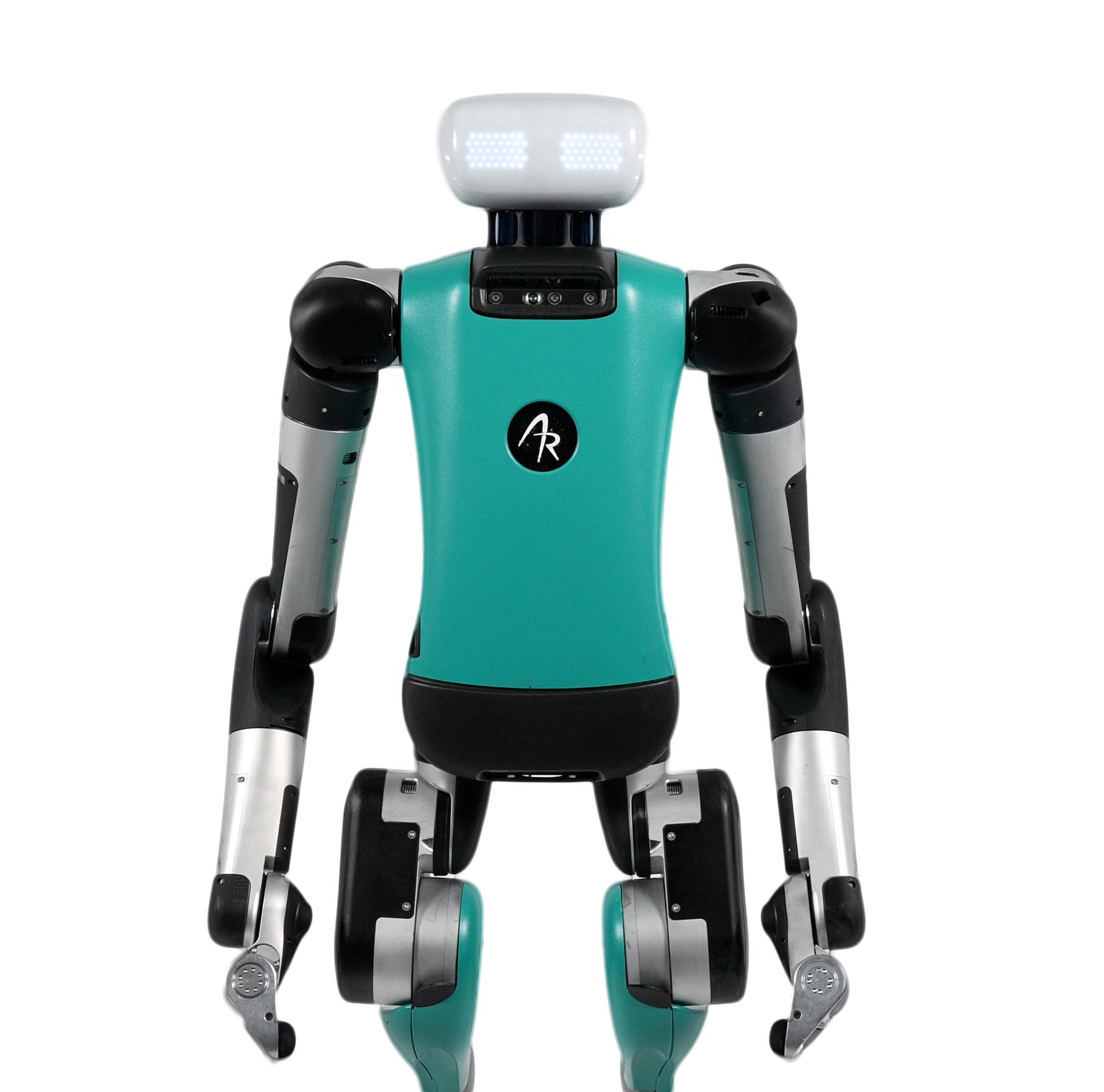
Executive summary Humanoid robots crossed from lab demonstrations to structured pilots across logistics, manufacturing, healthcare and limited consumer settings between 2022–2024. Operations teams entering 2025–26 face a patchwork of narrow, task-focused deployments rather than plug‑and‑play generalists. This survey synthesizes public company releases, reporting from The Robot Report and TechCrunch, IEEE Spectrum technical analyses and vendor materials to profile concrete pilots — how they were measured, integrated and where they failed — and to offer a short operational playbook for evaluating pilots. Logistics: order picking and aisle replenishment Leading vendors: Agility Robotics (Digit) , 1X Technologies (NEO/EVE) . Use cases Case: order picking in e-commerce forward pick zones; aisle replenishment for grocery and convenience retail. Scope: multi-week to multi-month pilots in real warehouses, with robots operating sharable aisles and working next to human pickers. KPI, integration and outcomes KPI tracked: picks-per-hour and pick-cycle time, uptime (target 85–95% in pilots), mispick/error rate, safety incidents (near-misses logged). Integration: most pilots ran as semi-standalone agents. Vendors integrated with WMS via middleware or human-in-loop tablet interfaces rather than deep PLC/WMS rewrites. Digit and early 1X pilots routed tasks through a task server and human operators approved edge cases. Staffing impact / training: staff reallocated from low-value picking to exception handling; training typically 1–3 days for floor operators and 1–2 weeks for maintenance staff. ROI / cost-per-task: vendors and trade reporting place breakeven for high-throughput sites; operations modeling in field pieces showed cost-per-pick reductions only when uptime exceeded ~80% and error rates were comparable to humans. Published pilots reported incremental throughput gains (single‑digit to low‑double-digit %) rather than wholesale labor replacement. Failure modes: perception failures in cluttered aisles, grasping failures on non‑standard packaging, navigation stalls around dense human traffic, battery/resupply scheduling issues. Many pilots used human workers as fallback to maintain SLA. Manufacturing: repetitive material handling and kitting Leading vendors: Apptronik (Apollo) , research efforts by Boston Dynamics and integrators partnering for factory trials. Use cases Case: repetitive kitting and part presentation on assembly lines, light material handling and supply-to-line. Scope: shift-length trials in controlled cells with safety fences or collaborative spaces. KPI, integration and outcomes KPI tracked: cycle compliance, takt-time adherence, downtime due to robot intervention, line yield (defects introduced/avoided), and safety events. Integration: deeper PLC-level integration needed where robots hand parts to tooling or trigger conveyors. Apptronik positioned Apollo as a workcell robot that can be integrated into MES/PLC stacks alongside traditional cobots. Staffing / training: upskilling of line technicians; most manufacturers retained humans for JIT quality checks and changeovers. ROI: vendors showed favorable economics when robots handled repetitive tasks that required human ergonomics relief; cost models emphasized reduced injury-related costs and improved OEE rather than pure labor substitution. Failure modes: grip-and-fixturing mismatch for non-standard parts, synchronization errors with conveyor timing, and intermittent sensor occlusion in high-EMI or reflective environments. Healthcare and eldercare: patient assistance and mobility support Leading vendors and partners: Sanctuary AI (Phoenix) , Fourier Intelligence (rehab clinics), pilot concepts from UBTECH and Xiaomi in eldercare. Use cases Case: clinical gait and upper-limb therapy assistance in rehabilitation clinics; mobility support in long‑term care facilities; observational assistance (rounding) and non‑clinical companion functions. Scope: tightly controlled trials, often under institutional review and clinical oversight; many pilots limited to supervised demonstration modes. KPI, integration and outcomes KPI tracked: therapy session throughput, patient adherence, clinician time saved, adverse events and safety incident logs, patient-reported outcomes. Integration: robots were integrated with EMR systems only in a handful of trials; most clinics used manual logging or vendor dashboards. Regulatory protocols required local ethics review, infection control procedures and clinician oversight. Staffing / training: clinicians presided over sessions; staff time for setup and supervision often offset time savings in therapy delivery. Training burdens and institutional credentialing were cited as major friction points in public reporting. ROI: economic case is long horizon and tied to capacity expansion (allowing more therapy sessions) and decreased rehospitalization; vendors emphasized clinical outcomes more than short-term labor savings. Failure modes: patient unpredictable motion, perception difficulties with occlusions and medical equipment, and stringent safety needs that limited robots to low-force, supervised behaviors. Consumer / home trials Leading entrants: Xiaomi (CyberOne) demos, early UBTECH activities in China. Scope: staged home demonstrations and showrooms rather than open consumer trials. Xiaomi’s CyberOne and UBTECH demonstrated potential companion and assistance behaviors in controlled environments. KPI and outcomes: vendors focused on user experience metrics — natural language interaction success rates, battery life for household routines — but no large-scale ROI metrics exist publicly. Failure modes: reliability, cost, and unclear value proposition versus smartphones/voice assistants. How companies are de‑risking commercialization: public demos vs closed pilots Public demos (Tesla, Figure, some Unitree activities): used to signal capability and attract capital; useful for investor narratives but poor predictors of production readiness due to sanitized environments. Closed pilots (most logistics/manufacturing/clinical trials): favored by vendors looking to validate integrations, safety regimes and economic models. Reporting shows closed pilots produce richer operational learnings — uptime, edge‑case failures and maintenance cadence — that inform incremental product releases. Role of systems integrators (SIs): SIs are essential for PLC/WMS/EMR integration, safety fencing/standards implementation and on‑site commissioning. Many vendors rely on SI partners to translate a robot’s capability into a repeatable deployment package. Competitive comparison Robot / Vendor Primary target Deployment model Public pilot maturity Agility Robotics (Digit) Logistics picking, last‑mile pilots with site integration, middleware to WMS multiple field pilots, incremental site deployments 1X Technologies (NEO / EVE) Aisle replenishment, store services standalone & human‑in‑loop; store pilots early pilots / demos in retail settings Apptronik (Apollo) Factory kitting, material handling workcell integration with PLC/MES cell‑level trials with manufacturing partners Sanctuary AI (Phoenix), Fourier Clinical assistance, rehab supervised clinical pilots, vendor dashboards clinic and lab trials under ethics oversight Xiaomi / UBTECH Consumer / eldercare concepts showroom demos, selective pilots demo‑heavy, few public pilots Tesla / Figure / Unitree Ranged: generalist humanoid / mobility platforms mix of large public demos and selective closed tests public demos + early closed engagements Common lessons and a short playbook for 2025–26 operational pilots Start with constrained tasks: choose predictable, local tasks (single SKU families, fixed kitting positions, supervised therapy exercises). Define KPIs upfront: picks/hour, mean time between failures (MTBF) target, error rate tolerance and safety incident thresholds. Plan integration scope: expect middleware and SI work; avoid assuming full WMS/PLC rewrite. Budget for 10–20% of project cost for integration and validation. Staffing and training: plan for operators as exception handlers for 12–36 months; invest in maintenance training and spare parts inventory. Measure the whole-system ROI: include injury reduction, capacity uptime, and quality improvements; short-term labor substitution alone will rarely justify cost. Run closed pilots to expose edge cases: public demos hide environmental complexity; insist on multi-week continuous runs under real shift patterns. Humanoids in 2025–26 are best viewed as specialized tools — expensive, promising tools — that require careful scope, robust integration and honest KPIs to prove value. The field evidence favors incremental deployments, SI partnerships and clinically conservative approaches in healthcare. Sources: synthesis of public vendor materials and press releases, field reporting in The Robot Report and TechCrunch, IEEE Spectrum analyses and vendor demo materials through mid‑2024. Operations leaders should treat vendor performance claims as directional and insist on contractually specified KPIs and acceptance tests in any pilot.