Form Follows Function: How Design Choices, Autonomy Stacks and Service Models Carve the Humanoid Landscape in 2025–26
Form Follows Function: How Design Choices, Autonomy Stacks and Service Models Carve the Humanoid Landscape in 2025–26 Engineering choices — from actuator topology and sensor suites to cloud vs. onboa...
Published by The Humanoid Race
Archived source unverified — no source link is available. The claims, figures and quotations have not been checked against an available source. Retained for historical context, not presented as newly verified reporting.
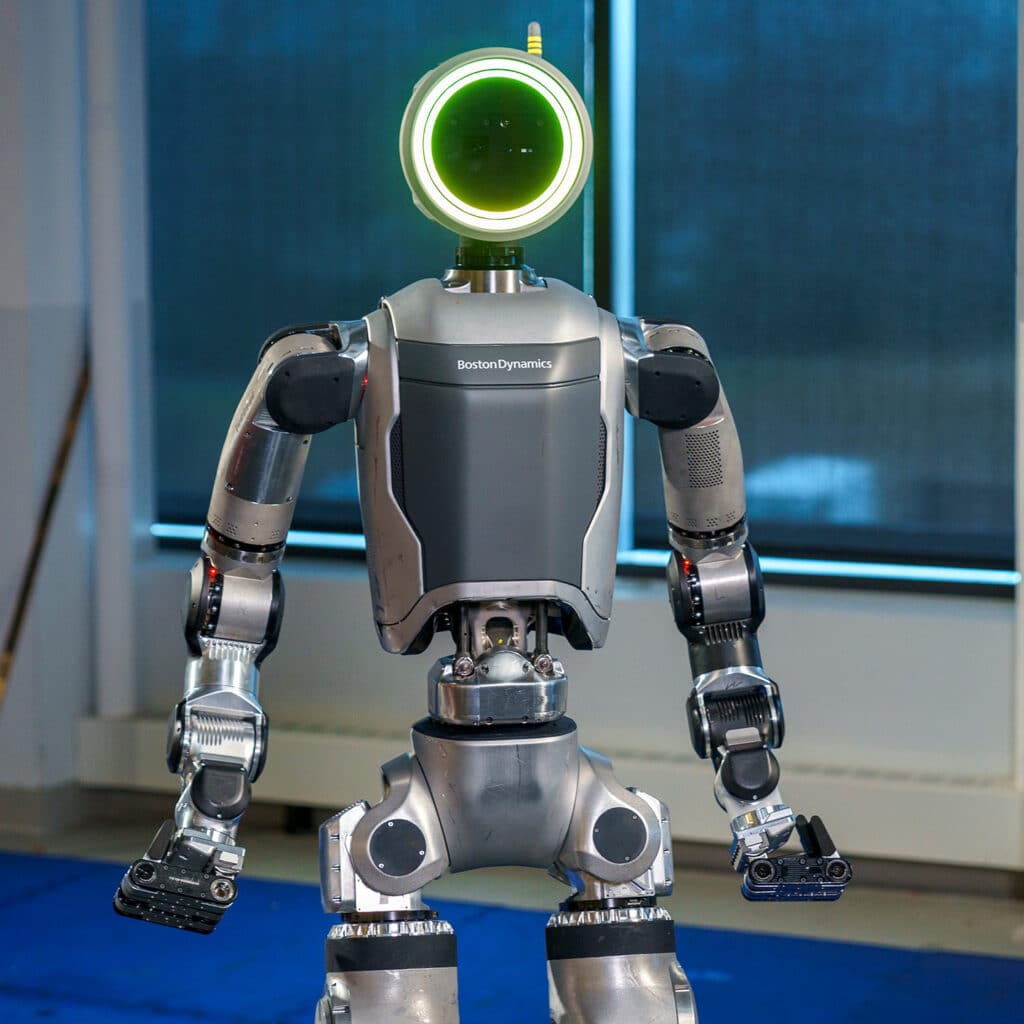
Form Follows Function: How Design Choices, Autonomy Stacks and Service Models Carve the Humanoid Landscape in 2025–26 Engineering choices — from actuator topology and sensor suites to cloud vs. onboard autonomy — are not abstract R&D debates. They determine which industries a humanoid can address, how easy it is for integrators to deploy the robot, and ultimately whether a vendor competes on price or on reliability. Below I map concrete hardware and software trade-offs to real commercial outcomes, compare representative platforms, and offer an enterprise decision framework for 2026. Hardware trade-offs and commercial consequences The basic engineering vectors drive product-market fit: Actuator type — hydraulic/series-hybrid systems (Boston Dynamics Atlas research lineage) deliver high power-to-weight and dynamic maneuvers but require heavy power systems and maintenance, limiting industrial uptime and raising TCO. Electric gear/series-elastic actuators (Agility, Apptronik, many consumer designs) trade peak force for simpler maintenance and longer duty cycles, enabling repeated manipulation tasks in warehouses and factories. Sensor suites — full 360° LiDAR + multimodal vision enables autonomous inspection and rugged navigation (construction, energy). Lower-cost camera-centric arrays are sufficient for constrained structured environments (manufacturing lines, retail stores) and lower hardware costs. Payload, reach, modular end-effectors — purpose-built manipulators (Digit’s integrated arms, Apptronik/1X emphasis on industrial-grade arms) target picking and package handling. Modular end-effectors and quick-change tooling shift a humanoid from a research demonstrator to a production utility, lowering integration complexity for conveyors, grippers, or medical lifting slings. Battery life — trade-off between continuous autonomous operation and weight/size. Spot-class quadrupeds and many humanoids operate in the tens of minutes to a few hours range; vendors targeting industrial shifts invest in battery-swapping or docked charging ecosystems to meet uptime guarantees. Software architecture and deployment economics Where computation lives and how autonomy is trained determine integration complexity and scalability: Onboard vs. cloud — edge-first autonomy decreases latency, supports privacy-sensitive environments (healthcare wards, industrial sites with regulatory constraints) and reduces dependence on connectivity. Cloud-centric stacks simplify model updates and fleet orchestration but impose bandwidth costs and complicate regulatory compliance. Learning approaches — imitation learning and large visual-language models accelerate task generalization for unstructured human environments (customer assistance, elder care), but they require large labeled datasets and rigorous safety testing. Classical planning and model-based control remain the backbone for high-reliability logistics and inspection workflows where determinism and explainability are prioritized. Teleoperation tooling — mature teleop and shared-control stacks reduce first-mile deployment friction in inspection and hazardous environments; vendors that bundle intuitive teleoperation dashboards and low-latency links (Boston Dynamics’ enterprise tools, vendor SDKs) shorten the path from purchase to production use. Platform comparisons: who is betting on what Company / Platform Engineering focus Target markets Positioning & pricing context Boston Dynamics (Atlas lineage / Spot heritage) High-dynamic actuators, advanced mobility, mature inspection SDKs Inspection, construction, research Research-grade Atlas demos; Spot commercialized (~$70–80k list historically) with enterprise service contracts. Competes on reliability and proven field trials (energy, construction). Tesla Optimus Vertical integration, high-density electric actuators, Tesla compute stack Long-term consumer and light industrial ambitions Public price targets in the tens of thousands (company guidance), prototype-stage economics still far higher; Tesla’s bet is scale + OTA software to drive down unit cost. Agility Robotics (Digit) Purpose-built manipulation, electrical actuators, warehouse ergonomics Logistics, last-mile handling Positioned as a practical warehouse manipulator; pilots emphasize cycle-time gains and ergonomics. Pricing for pilots and early deployments sits above commodity automation but below bespoke industrial robots. Apptronik / 1X Robust industrial arms, safety-first control, ISO-compliant systems Manufacturing, industrial integration Targets integrators who need safety-certifiable robots; business model includes integration partnerships and service contracts. Figure Manufacturability, cost optimization, mass-production focus Volume markets, future consumer/enterprise Public roadmap emphasizes scalable manufacturing to lower price-per-unit; business model aims for higher volume and lower margins per unit. Xiaomi / UBTECH Consumer-oriented form factors, lower-cost sensors Home assistance, consumer robotics Positioned on affordability and consumer features (voice, simple manipulation). Pricing targets are consumer-market competitive tiers rather than industrial TCO. Fourier Intelligence / Sanctuary AI Healthcare/adaptive interfaces, exoskeleton expertise (Fourier) & caregiving AI (Sanctuary) Hospitals, rehabilitation, care facilities Packaged as clinical solutions with extended support and compliance; service-heavy business models that bundle training and onsite support. Developer ecosystems, SDKs and third-party tooling ROS, vendor SDKs (Spot SDK, custom Agility/ Apptronik APIs), and an emerging set of vision + LLM toolchains are decisive enablers. Platforms that provide stable SDKs, simulation assets (Gazebo/Isaac), and pre-built perception stacks shorten integration time by months. Vendors leaning on open ecosystems attract integrators; those with closed stacks rely on higher-margin professional services. Platforms with mature SDKs see deployments accelerate because integrators can re-use perception models, simulate workflows and iterate in parallel with safety certification. Service and support: the hidden determinant of adoption Robots are hardware plus the back-end that keeps them useful: Onsite technicians and rapid-spare programs favor vendors selling to energy, healthcare, and manufacturing customers that cannot tolerate extended downtime. Remote monitoring & predictive maintenance reduce mean-time-to-repair and are essential for fleet economics in logistics and retail. Training-as-a-service and certified integrator networks make a robot usable in regulated environments (hospitals, aviation). Vendors who bake these services into subscription models (hardware-as-a-service, software subscriptions, uptime SLAs) compete on reliability; lower-cost vendors compete on lower upfront price but rely on third-party integrators for field support. Matching robot technical profiles to operational needs (practical framework) Enterprises should map four axes: environment (structured vs. unstructured), task (manipulation vs. mobility), uptime requirements, and regulatory constraints. Picking (warehouses) — choose electric-actuator humanoids with modular end-effectors, mid-range batteries, onboard planning and robust SDKs (Agility-style). Prioritize vendors that offer integration kits for conveyors and vision pipelines. Inspection & remote operations (energy, construction) — favor mobility-focussed platforms with LiDAR, long-range sensors, and onboard autonomy plus remote teleop support (Spot/Boston Dynamics lineage). Patient handling & rehabilitation (healthcare) — require safety-rated control, compliant actuators, and extensive training/service bundles (Fourier, Sanctuary-style collaborations). Personal assistance (consumer) — lower-cost form factors, cloud-assisted perception, and OTA updates (Xiaomi/UBTECH/Tesla longer-term play). Competitive map and 2026 outlook Through 2026 the field will bifurcate into archetypes: High-reliability integrators (Boston Dynamics, Apptronik): win energy, construction, and regulated industrial verticals where service and uptime trump unit price. Purpose-built manipulators (Agility): capture logistics and last-mile niches by optimizing form-factor and SDKs for pick/place workflows. Scale-first entrants (Tesla, Figure): if they achieve manufacturing targets and competitive pricing, they could disrupt lower-margin volume markets (consumer and light-industrial) — but their 2024–25 prototypes must prove uptime and safety to realize that potential. Consumer & care specialists (Xiaomi, UBTECH, Fourier/Sanctuary): win end-user and medical niches through lower price points, regulatory focus, and service-heavy bundles. Engineering choices map directly to commercial outcomes: high-power, research-grade designs sell to R&D and inspection; modular, industrial arms sell into warehouses; mass-manufacturing bets target broad volume markets but hinge on scale and software maturity. For enterprises, the right decision is a match of task requirements to a robot’s actuator, sensor, autonomy and service profile — the old industrial axiom holds: form follows function, and function decides the winner.