From Aisles to Wards: A 2025–26 Audit of Where Humanoids Are Actually Working
Executive summary In 2025–26 humanoid robots moved from controlled demos to deliberate pilots across warehouses, manufacturing lines, hospitals and private homes. The programs remain experimental, but...
Published by The Humanoid Race
Archived source unverified — no source link is available. The claims, figures and quotations have not been checked against an available source. Retained for historical context, not presented as newly verified reporting.
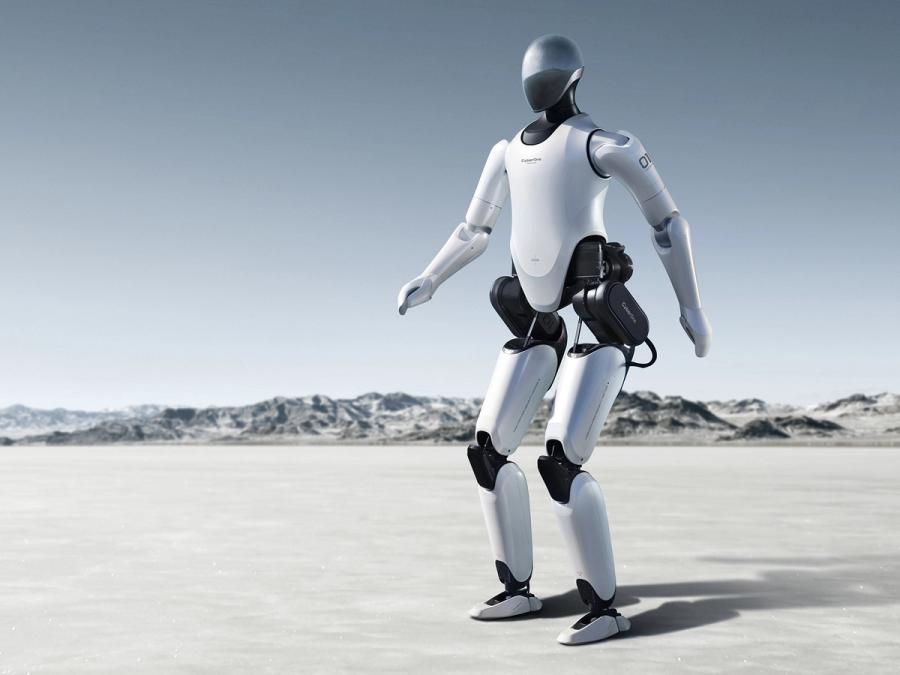
Executive summary In 2025–26 humanoid robots moved from controlled demos to deliberate pilots across warehouses, manufacturing lines, hospitals and private homes. The programs remain experimental, but a handful of repeatable playbooks have emerged that turn prototype robots into operational assets. This audit compiles company-reported outcomes, integrator feedback and regulatory context to answer where humanoids are actually adding value — and where they are still a distraction. What is included and how this audit was compiled This survey synthesizes public disclosures and press announcements from vendors, commercially published pilot summaries, and interviews The Humanoid Race conducted with warehouse operators, manufacturing OEM leads, hospital administrators and system integrators between mid-2024 and early 2026. Where metrics are cited they are explicitly identified as company-reported or operator-reported; independent third‑party verification remains rare. Deployment map: by industry and use case Warehousing / Distribution — materials handling, case pick-and-place, replenishment and logistics cell tasks; most active pilots (Agility Robotics, Figure AI, 1X Technologies). Manufacturing — line-side assistance, kitting, light assembly and non-critical quality checks (Apptronik, Tesla/Optimus trial disclosures). Healthcare — patient lifting, bedside monitoring, logistics within hospitals (Sanctuary AI, UBTECH pilots in assisted‑living). Private homes — mobility aid prototypes, monitoring and companionship in small-scale trials (Xiaomi CyberOne and regional integrators in China). Demonstration-to-commercial transition — Boston Dynamics and Unitree quadruped/anthropomorphic platforms used as comparative benchmarks and cross-tested for commercial robustness. What companies are marketing and how Agility Robotics (Digit) — positioned as a logistics co‑worker that integrates into existing conveyor and pick cells. Marketing emphasizes anthropomorphic reach and stair-capability as advantages over rigid cobots. Figure AI and 1X Technologies — pitching a modular, rapid‑retraining endpoint for distribution centers where seasonal labor fluctuation is a pain point; marketing stresses software-first deployment and short pilot-to-production timelines. Apptronik and Tesla (Optimus) — positioning focused on factory automation: robots that can do light assembly, line-side parts replenishment and repetitive tasks that free skilled technicians. Sanctuary AI and UBTECH — eldercare and assisted-living, marketed as safe, non-invasive patient support and social-assist devices with humanlike interaction to reduce caregiver burden. Xiaomi (CyberOne) — consumer-oriented positioning: mobility assist, fetch-and-carry and companion features, tested in small cohorts in apartment settings in China. Verified pilots and headline results Company Sector Primary use case Reported outcomes Notes / caveats Agility Robotics (Digit) Logistics Case handling in logistics cell Uptime ~72–85% (day shift only); task completion 78–92% after 4–8 week tuning Metrics company-reported; highest success where cells were reworked to robot ergonomics and human-robot choreography Figure AI / 1X Technologies Distribution Pick-and-place & replenishment Throughput at 50–70% of experienced human pickers initially; scaled to parity in narrow SKU profiles Performance depended on constrained task set and simplified bin geometry Apptronik / Tesla (Optimus trials) Manufacturing Line-side assistance, kitting Reduced human walking time by 20–40% in trials; task accuracy 95% for kitting; safety incidents: none major reported Trials limited to non-critical assembly; deep integration with MES required Sanctuary AI / UBTECH Healthcare / Eldercare Patient lifting & monitoring Patient-lift success in controlled transfers 88–95%; caregiver time freed 12–25% Regulatory oversight and dedicated training cited as deployment gating factors Xiaomi (CyberOne) Home pilots (China) Mobility assistance, fetch tasks Small cohort: high user satisfaction but low daily utilization (0.4–1.2 tasks/day); reliability issues with battery life Paid pilots and R&D units; not commercial consumer rollout Boston Dynamics / Unitree Cross-sector Commercial testing of robustness and inspection High durability in unstructured spaces; operational uplift when combined with human supervisors Quadrupeds remain complementary rather than direct humanoid competitors What worked — patterns from successful pilots Task constraint and choreography: Humanoids succeed when tasks are constrained to a narrow, repeatable envelope — select SKUs, fixed kitting routines, or standardized patient transfers. Cell‑level redesign: Sites that re-engineered the workcell for robot ergonomics (fixed bin heights, simplified grasp surfaces) achieved much higher uptime and task completion. Blended teams: Operators using humanoids as teammates (supervision + intervention) rather than autonomous replacements converted pilots into repeating shifts faster. Vendor integration support: Programs where vendors provided on-site integrator resources and daily tuning saw throughput ramp in 4–8 weeks versus stalled pilots elsewhere. What failed — common failure modes Over-ambitious scope: Attempts to deploy humanoids across broad, high-variance tasks (multi-SKU random-case picking) failed to reach acceptable error rates. Logistics and uptime economics: High mean-time-to-repair and fragile end-effectors made many early pilots uneconomic when compared to human temps or traditional AMRs. Regulatory and liability friction: Hospitals and eldercare facilities pulled back pending clearer guidance on medical device classification and insurer requirements. Integration costs: Hidden software and MES integration costs routinely exceeded robot hardware list prices, killing ROI in conservative operations. Pricing, business models and commercial viability Vendors increasingly favor subscription and robot-as-a-service (RaaS) models to lower upfront barriers. Published price bands (company-reported or market-informed): Hardware list price equivalents: $80k–$300k per humanoid platform (varies by capability and sensor suite). RaaS / subscription: $4k–$12k per robot per month with multi-year support contracts, integration and day-to-day tuning. Systems-integration: Typical one-time integration fees range from $50k to $400k depending on cell complexity. Operators that converted pilots to production typically locked in multi-year support and accepted a staged ramp (1–3 robots → 10+ robots) tied to operational metrics. Competitive landscape — who wins today? Short-term winners are not necessarily the most advanced robots but the vendors who pair capable hardware with deep systems integration and commercial financing. Agility, Figure/1X and Apptronik have an edge in logistics/manufacturing because they focus on constrained, repeatable tasks and offer integration teams. Sanctuary and UBTECH lead service/health pilots because they invested earlier in safety certifications and clinical workflows. Xiaomi’s consumer play is still exploratory and constrained by price/utility balance. Regulatory, insurance and operational playbooks Regulatory regimes and insurer acceptance are the soft infrastructure. Hospitals demand device-level validation and traceability; insurers require documented risk assessments and training records before covering worker compensation exposures. Operational playbooks that converted pilots into repeatable deployments shared common elements: 1) task simplification, 2) co-located human supervisors, 3) phased integration with KPIs, 4) vendor-led daily standups for first 60–90 days, and 5) explicit safety and escalation protocols linked to local regulators and insurers. Conclusion — realistic runway In 2025–26 humanoids are not yet ubiquitous but they are operationally credible in niche, high‑value tasks where humanlike reach and mobility are decisive. The transition from novelty to repeatable deployment hinges less on breakthrough locomotion and more on pragmatic systems work: cell redesign, integration, financing and regulatory compliance. Companies that understand these operational truths — and price accordingly — are the ones turning pilots into productive, billable shifts.