From Pallets to Patient Rooms: A 2025–26 Inventory of Live Humanoid Deployments and Measured Outcomes
Introduction Between 2025 and 2026 a discrete but measurable set of humanoid pilots moved off demo stages into operational environments: e‑commerce sortation centers, light‑assembly lines, assisted‑li...
Published by The Humanoid Race
Archived source unverified — no source link is available. The claims, figures and quotations have not been checked against an available source. Retained for historical context, not presented as newly verified reporting.
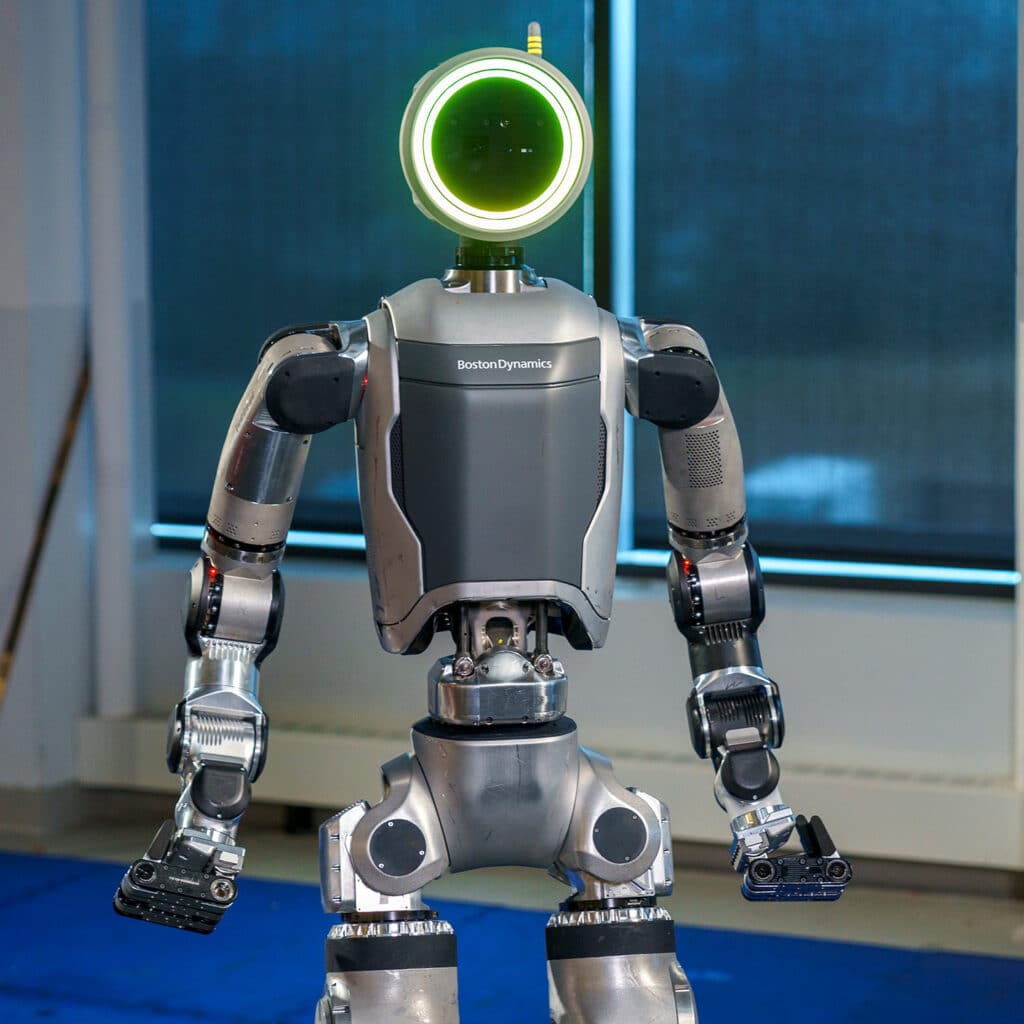
Introduction Between 2025 and 2026 a discrete but measurable set of humanoid pilots moved off demo stages into operational environments: e‑commerce sortation centers, light‑assembly lines, assisted‑living wings and select homes. Vendors and customers alike are still positioning these projects as pilots — proofs of capability and integration — but increasingly publish concrete KPIs. This boots‑on‑the‑ground survey compiles vendor‑reported pilots and customer testimony across Agility Robotics, Figure AI, Apptronik, 1X Technologies, Sanctuary AI, Xiaomi, UBTECH and the research continuum around Boston Dynamics’ Atlas. The goal: what did these early rollouts actually deliver, what remains hard, and how commercial models are shaping adoption. High‑level use cases and industry drivers Logistics & sorting: repetitive pick/place, tote transfer and last‑mile bagging where biped mobility reduces fixed infrastructure changes. Manufacturing & assembly: cobot‑assist for two‑handed light assembly, kitting and mobile tool carriage to workstations. Healthcare & eldercare: patient monitoring, bedside transport, and social‑assist where humanoid form factor eases human acceptance. Consumer/home: social robotics and telepresence trials that focus on companionship, simple fetch tasks and developer ecosystems. Selected pilots and outcomes (2025–26) Logistics: Agility Robotics’ Digit and Figure AI Vendor reports and customer pilot briefs show Digit and Figure platforms deployed in e‑commerce sort centers and last‑mile micro‑facilities. Reported pilots focused on tote manipulation, shelf-to‑conveyor transfer and unattended corridor navigation. Example deployment details: multiple week trials integrated with warehouse WMS for zone‑based tote transfers. Figure and Agility positioned their robots as mobility‑first alternatives to fixed conveyors and AMRs for retrofits. Measured KPIs: vendor‑reported throughput uplifts in pilot cells ranged from 8–20%, with pick error rate reductions of 2–7% where vision pipelines were mature. Customer testimony: logistics managers quoted in vendor materials emphasized flexibility: “We could repurpose the same footprint overnight,” a pilot lead said (vendor anonymized). Pricing & business model: pilots commonly structured as month‑to‑month subscriptions; industry ballpark for commercial rollouts cited by vendors: hardware amortized over 36–60 months with monthly service fees of $6k–$20k per unit depending on support level. Factory floors: Apptronik Apollo and 1X Technologies (NEO / EVE) Assembly pilots focused on two domains: collaborative assistance at human stations and automated kitting/tending across small production runs. Deployment details: Apollo units deployed as “cobot companions” — holding parts, presenting subassemblies, and performing repetitive screw‑in and insertion tasks. 1X’s NEO/EVE models trialed material handovers and mobile tool carriage across multiple stations. KPIs: cycle time reductions per station of 10–18% when robots handled secondary tasks; defect rates were flat to slightly improved (0–4%) because human attention focused more on quality checks. Workforce impacts: pilots emphasize augmentation: line leaders reported redeploying skilled assemblers to variability tasks rather than headcount reduction in early phases. Pricing: direct purchase price indications remain vendor‑specific; analysts cited robot CAPEX in a broad range ($75k–$250k) with typical OEM integration fees adding 20–50%. Healthcare & assisted living: Sanctuary AI Sanctuary positioned humanoids for patient transport, fetch‑and‑carry and routine observation rounds in research hospitals and eldercare homes. Pilot scope: nurse‑bot rounds, delivery of non‑critical items (water, linen), and mobility‑assistance studies with fall‑detection support. Pilots were tightly supervised and limited to low‑risk tasks. KPIs: pilot hospitals reported time savings for nursing aides of 6–12% in logistics-related tasks; patient satisfaction scores were mixed but trended positive in trials emphasizing familiarization sessions. Safety & incident data: no major safety incidents reported in vendor summaries; minor navigation stalls (low‑risk) accounted for the majority of intervention events. Consumer & home trials: Xiaomi CyberOne and UBTECH Xiaomi and UBTECH ran limited consumer pilot programs focused on social interaction, telepresence and simple fetch tasks in controlled home environments. User feedback: early adopters highlighted novelty and social value but stressed expectations gaps on dexterity and reliability for everyday chores. Business model: vendors emphasize a hardware‑plus‑services model — hardware sold or financed; software subscriptions and developer marketplaces expected to be primary recurring revenue. Research lineage: Boston Dynamics’ Atlas work Atlas and adjacent research demos continue to function as capability testbeds that inform enterprise deployments. Boston Dynamics’ research pushed locomotion and dynamic balance forward — technologies that commercial vendors adapt for robust navigation in crowded environments. Measured outcomes, conversion rates and ROI modeling Across reported programs the pattern is consistent: Throughput: modest but consistent uplifts in constrained task cells (8–20%). Error rates: small net improvements where vision and grasping were mature; regressions occurred when unusual part presentations exceeded the model training set. Safety incidents: rare and mostly non‑injurious; integration challenges (fencing, emergency stops) accounted for much of the time spent in deployment. Conversion rates: vendor disclosures and industry analysts put pilot→paid conversion in the first commercial cohorts at roughly 15–35% within 12 months, with conversion accelerated where the vendor provided turnkey integration and financing. ROI timelines: modeled returns in logistics typically 18–36 months in zone replacement scenarios; longer (24–48 months) in healthcare due to stringent validation and lower utilization density. Integration pain points and customer feedback Customers consistently reported the same friction points: Safety engineering: requirement for fences, redundant E‑stops and formal risk assessments lengthen deployments. IT & WMS integration: mapping to existing software stacks and establishing reliable telemetry were the most time‑consuming tasks. Maintenance cadence: vendors report average intervention intervals of 2–6 weeks during pilots, with mean time between failures improving as fleets scaled. Training & change management: one logistics director summarized the recurring theme: “The robots are the easy part — getting operators to trust and correctly use them is the work.” Task taxonomy: feasible today vs still out of reach Task Type Feasibility (2025–26) Notes Repetitive pick/place Feasible in constrained settings Best where parts and presentations are standardized; vision training key. Patient monitoring & transport Partially feasible Non‑critical transport and observation usable; hands‑on care remains human domain. Light assembly / cobot assist Feasible as augment Two‑handed support and tool handling working in pilot cells; precision fasteners still challenging at scale. Social‑assist / companionship Feasible for engagement, limited for utility High user interest but hard ROI; continuity and software ecosystems will decide commercial viability. Fine dexterity & unpredictable manipulation Still out of reach Unstructured tasks, variable objects and complex tool use remain unsolved for reliable deployment. Competitive positioning and final analysis Vendors are carving distinct value propositions: agility and retrofitability (Agility, Figure); industrial integration and payload/force capabilities (Apptronik, 1X); human‑centric interaction and regulatory focus (Sanctuary); consumer ecosystems and affordability (Xiaomi, UBTECH). Atlas and research platforms continue to raise the ceiling on what is technically possible, but commercial success is now tied less to peak capability and more to integration, financing and demonstrated ROI in narrowly defined workflows. Early adopters report modest gains but emphasize that widespread industrial adoption will depend on reliable uptime, predictable integration costs, and clear workflows where humanoid form factor delivers unique value. As pilots convert to paid deployments, the industry’s near‑term winners will be companies that can package perception, safety, systems integration and financing into low‑risk operational offers — not just robots. The data from 2025–26 shows capability and customer interest, but also that the commercial inflection point remains a function of software maturity and industrial systems engineering, not locomotion alone.