From Pilots to Productivity: 2025–26’s Humanoids Delivering Real ROI on the Warehouse Floor and Beyond
Executive summary By 2025–26 humanoid robots have moved from demos into limited commercial rollouts in logistics, discrete manufacturing, healthcare and hospitality. What distinguishes the most convin...
Published by The Humanoid Race
Archived source unverified — no source link is available. The claims, figures and quotations have not been checked against an available source. Retained for historical context, not presented as newly verified reporting.
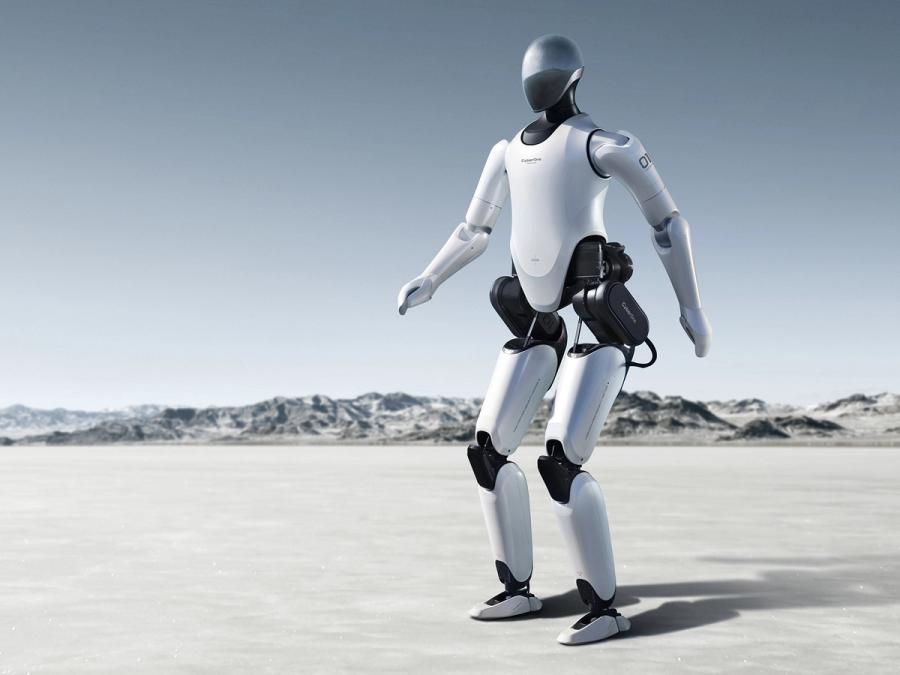
Executive summary By 2025–26 humanoid robots have moved from demos into limited commercial rollouts in logistics, discrete manufacturing, healthcare and hospitality. What distinguishes the most convincing deployments is not humanoid novelty but measurable operational impact: consistent task uptime in constrained environments, integration with warehouse execution/WMS systems, and business models that align vendor incentives with throughput gains. This feature catalogs the leading pilot programs and early commercial uses — how they were scoped, what KPIs vendors and operators reported, how the robots are sold/leased, and the practical barriers still limiting ROI. Where humanoids are producing measurable value Across industries four use cases dominate deployments: Warehousing & logistics: picking, putaway and trailer loading where human-level dexterity and gait unlock workflows not served by fixed automation. Discrete manufacturing: machine tending, high-frequency parts kitting, and line-side handoffs that require adaptable manipulation and mobility. Healthcare & eldercare: medication and linen delivery, room disinfection and assisted transfer aides in controlled pilot wards. Commercial & hospitality: front‑of‑house delivery and concierge demos in hotels and retail settings that prioritize customer interaction over raw throughput. How companies are positioning their humanoids Vendors adopt four positioning strategies: Logistics-first, automation ROI — Agility Robotics’ Digit is marketed as a "box-handling" node for mixed-SKU e-commerce flows, emphasizing reduced manual lifting and flexible trailer loading. Industrial strength, collaboration — Figure and Apptronik position humanoids as line assistants that augment headcount on repetitive pick-and-place and machine tending, focusing on reliability and safety certification for factory floors. Service and hospitality demonstrations — 1X Technologies (NEO/EVE) and UBTECH foreground customer experience and compact form factors for short, visible interactions in hotels and retail. Healthcare-safe aides — Sanctuary AI and Apptronik emphasize human-safe actuation and compliance for trials in patient transfer and medication logistics. Case studies: pilots and early rollouts Agility Robotics — logistics workflows Scope: multi-shift pilots with regional 3PLs and parcel sort centers focusing on tote/pallet pick-and-putaway and trailer loading. Pilot KPIs: vendor-reported improvements of 5–15% in average throughput for selected load/unload lanes; human-robot handoffs reduced ergonomic incidents (lowered reported manual lift events by pilot operators). Economics: pilots run as short-term RaaS or lease trials; vendors offer outcome-based pilots where fees scale with hours of operation. Integrator role: WMS and conveyor integrators handled order-slotting logic; safety officers designed exclusion zones and tested stop behaviors. Barriers: long-tail grip failures on soft or irregular parcels, and overhead cost of safety fencing vs. mobility gains. Figure & Apptronik — high-volume picking and line support Scope: factory kitting stations and small-parts totes in electronics and consumer goods lines. Pilot KPIs: vendors report reduced labor-hours for repetitive kitting by 20–40% where part geometry was standardized; pick accuracy in constrained workcells approached 98–99% after vision-model tuning. Economics: hybrid commercial offers — capital purchase for integrators, RaaS for operators, and co-funded pilot programs to validate cycle-time improvements. Barriers: high variance in part orientation, need for custom end-effectors, and cycle-time sensitivity during changeovers. 1X Technologies (NEO/EVE) & UBTECH — hospitality and retail trials Scope: concierge deliveries, lobby wayfinding and pop-up retail demos in boutique hotels and large-format stores. Pilot KPIs: measured in guest satisfaction and novelty-driven incremental revenue; hotels reported improved service consistency for simple delivery tasks, but not material labor replacement. Economics: trial economics are marketing-centric — low-cost demo leases, then short-term subscriptions tied to seasonal demand spikes. Barriers: social acceptance, speech/gesture reliability in noisy environments, and human staff overlap that limits cost offsets. Sanctuary AI & Apptronik — healthcare pilots Scope: medication and supply delivery, room disinfection, and supervised patient transfer in controlled wards. Pilot KPIs: early programs emphasize safety and compliance; reported reductions in non‑clinical staff walking time (10–25%) and accelerated medication rounds during night shifts. Economics: pilots are typically grant-supported or hospital-funded proof-of-concept; full deployments require regulatory pathway and institutional endorsement. Barriers: patient consent, infection control protocols, and the complexity of unscripted human interactions. Xiaomi (CyberOne), Tesla Optimus, Boston Dynamics Atlas — consumer and research intersections Scope: Xiaomi's CyberOne and other consumer-focused humanoids are undergoing in-home and companion trials; Tesla and Boston Dynamics are reported to be exploring enterprise collaborations and research‑grade integrations. These platforms are primarily at the experimental edge: their enterprise value is being assessed through internal pilots and academic partnerships rather than wide commercial rollouts. Competitive comparison Company Primary use case Deployment model Strengths Limitations Agility Robotics Logistics (loading, putaway) RaaS / pilot leases Mobile box handling; integration-first Grippers for irregular parcels; safety zoning Figure High-volume picking, kitting Capital & RaaS hybrids Industrial compliance focus; reliability End-effector customization; changeover time Apptronik Manufacturing, healthcare pilots Pilots, partnerships Torque‑dense actuators; collaborative safety Software maturity in unstructured tasks 1X / UBTECH Hospitality / retail Short-term subscriptions Customer-facing UI; compact design Throughput and robustness in busy settings Most credible ROI comes where humanoids solve a constrained, repeatable gap no other automation can — e.g., flexible trailer loading, unattended night med rounds, or a kitting station with fixed part geometries. Pilot economics and pricing models Across deployments three commercial models dominate: RaaS (robot-as-a-service): monthly fees that include support and software updates; preferred for pilots to avoid capital risk. Lease-to-buy / subscription: longer term commitments with lower upfront cost and upgrade clauses. Outcome-based pilots: fees partially tied to achieved throughput or uptime; used by vendors to reduce buyer risk but requiring granular telemetry and dispute resolution clauses. Operational hurdles and user acceptance Common barriers reported across pilots: Edge-case handling — soft or deformable items, cluttered floors, and non-standard human behaviors still produce the majority of failures. Safety certification and audit trails — hospitals and regulated industries require documented risk assessments and maintenance protocols. Change management — workers accept humanoids when they augment tedious or dangerous tasks, not when they are perceived as blunt replacements. Guidance for operations leaders Measure what matters: cycle time per task, uptime percentage, mean time between failures, and ergonomics incidence for tasks replaced. Capture pre-pilot baselines. Expect timelines: plan 3–6 months for station-level productivity and 9–18 months for scalable ROI once integration and edge‑case handling are resolved. Pick the right pilot: select constrained workflows with high manual touch, repeatable geometry, and clear handoff points to existing systems. Vendor selection: prioritize companies offering robust integrator networks, open APIs for WMS/PLC, and commercial models that share performance risk. Humanoids are no longer science projects. In 2025–26 the most convincing programs are those that married pragmatic pilots to outcome-based commercial thinking and tight systems integration. The industry’s next step is scaling those narrow wins into resilient, maintainable fleets that justify enterprise budgets — a transition that will separate vendors promising generality from those delivering targeted, repeatable ROI.