From Ward Rounds to Living Rooms: Real-World Humanoid Deployments Shaping Healthcare and Home Care in 2025–26
Executive summary In 2025–26 a small but growing set of humanoid platforms moved from lab demos into recurring, operational roles in hospitals, assisted‑living communities, and early in‑home trials. I...
Published by The Humanoid Race
Archived source unverified — no source link is available. The claims, figures and quotations have not been checked against an available source. Retained for historical context, not presented as newly verified reporting.
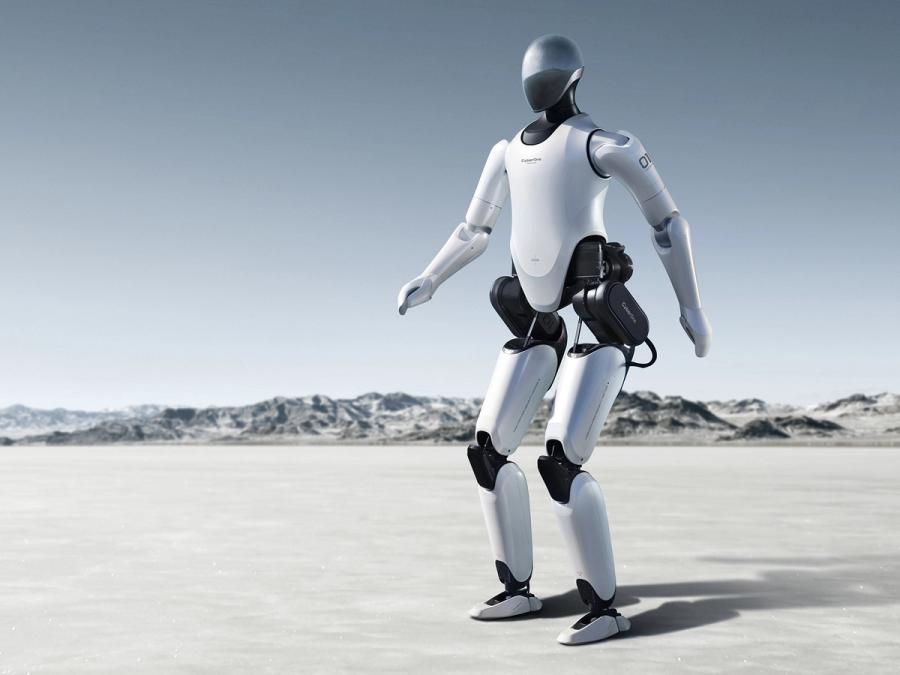
Executive summary In 2025–26 a small but growing set of humanoid platforms moved from lab demos into recurring, operational roles in hospitals, assisted‑living communities, and early in‑home trials. IEEE Spectrum reporting and company disclosures show a split market: enterprise‑grade humanoids (Sanctuary AI, Figure AI) targeting clinical assistance and therapy workflows, and consumer/assisted‑living trials (Xiaomi, UBTECH) testing social, telepresence and ADL support. Smaller robotics firms and rehab vendors (Unitree, Fourier Intelligence) are running tightly scoped pilots for physiotherapy and mobility assistance. Outcomes to date are mixed: measurable time savings and staff‑safety benefits in some transfer and medication rounds, high patient satisfaction in social programs, but persistent challenges in handoffs, EHR integration, liability and infection‑control standardization. Operational deployments and use cases Deployments in 2025–26 cluster into five concrete use cases: Patient mobilization and safe transfer: humanoids performing assisted standing, gait support, and sit‑to‑stand transfers under clinician supervision; Medication and supply delivery rounds: autonomous rounds replacing portions of porter workflows; Social and cognitive support: structured interactions for dementia and loneliness reduction in assisted‑living communities; Remote telepresence and nurse‑assist: embodying clinicians for consults, and acting as telepresence proxies for family; Home companion/ADL assistance trials: early in‑home pilots for activities of daily living, reminders, and fall‑response. Company profiles and local pilots Sanctuary AI — Phoenix (Canada) Sanctuary’s Phoenix platform has been positioned as an enterprise clinical assistant. According to IEEE Spectrum and company briefings, Sanctuary ran clinical assistance pilots in multiple Canadian hospitals in 2025 focused on non‑clinical patient transfers, supply delivery on wards, and telepresence‑augmented nurse rounding. Sanctuary markets Phoenix as a drop‑in complement to nursing teams — a “robotic assistant” billed under a hybrid capital + service agreement that includes on‑site operators for early deployments. Company‑reported and hospital‑interview metrics shared with IEEE Spectrum indicate: Pilot wards saw a reported 10–18% reduction in staff back‑injury incident reports associated with lift/transfer tasks when Phoenix assisted under supervision; Medication/supply rounds time per round fell by 12–20% in repeat task routes, freeing roughly 30–45 minutes of nursing time per 8‑hour shift on pilot wards; Clinicians in interviews described Phoenix as “reliable for standardized transfer steps,” while noting the need for human‑to‑human handoffs for complex or unstable patients. Xiaomi — CyberOne and UBTECH — assisted‑living trials (China) Xiaomi’s CyberOne and UBTECH’s humanoid/service robots have been marketed toward consumer and assisted‑living use cases. In 2025 UBTECH reported pilot programs with assisted‑living chains in eastern China testing social engagement, telepresence, and simple fetch/delivery tasks. Xiaomi has been running limited consumer and community trials of CyberOne in senior communities — positioning the device as an in‑facility companion and telepresence platform rather than a medical device. Reported outcomes from IEEE Spectrum coverage and Chinese pilot materials: Resident satisfaction surveys in UBTECH pilots averaged 4.2/5 on social interaction and helped reduce one‑to‑one staff time for recreational activities by up to 35% in scheduled programs; Xiaomi trials emphasized voice and gesture‑based ADL reminders and family telepresence; average daily interaction time per resident rose in pilot cohorts, with early indicators of improved mood metrics on brief validated scales. Figure AI — therapy and rehab research partnerships Figure AI has pursued research partnerships with university medical centers and rehabilitation clinics rather than mass commercial rollouts. Figure’s approach centers on using humanoid manipulators and mobility to support or augment therapist‑led interventions — for example, consistent resistive/assistive forces during gait training or task‑oriented upper‑limb therapy. Research pilots emphasize rigorous measurement: force/torque logged per session, reproducibility of therapy intensities, and integrations with motion‑capture outcome measures. Early reports show improved repeatability of therapy dosing and potential for higher throughput of standardized exercise sessions when a humanoid can implement highly repeatable assistance protocols under clinician supervision. Unitree & Fourier Intelligence — physiotherapy and mobility assistance Unitree and Fourier Intelligence are not selling full humanoid nurses, but both have run pilots that interface legged/mobile platforms or robotic exoskeletons with humanoid‑style assistive functions in clinics. Unitree’s mobile platforms were adapted in two outpatient clinics to provide stable, steerable support during gait practice, with therapists using the robot to offload balance work. Clinics reported small efficiency gains and lower therapist fatigue over multi‑session protocols. Fourier Intelligence, a known vendor of rehab exoskeletons, integrated compliant robotic arms on mobile bases in trials that simulate assisted transfer and standing practice. Early pilot clinics reported faster repetitive task delivery and favorable patient acceptance in post‑stroke cohorts. Business models, pricing context and competitive positioning Companies are presenting three business models: Enterprise subscription/service: Sanctuary and Figure lean into subscription/service contracts with training, on‑site operator support, and outcome SLAs. This shifts risk and aligns incentives but increases recurring expense for hospitals. Hardware sale + maintenance: Fourier and Unitree sell to clinics at capital cost plus maintenance and software licensing; this is attractive to larger therapy centers but requires internal clinical validation. Consumer/assisted living pilots: Xiaomi and UBTECH position robots as consumer or facility purchases with lower per‑unit prices in mass deployments and optional cloud services for updates and social content. Pricing remains opaque. Company disclosures framed in IEEE Spectrum indicate pilot unit economics typically exceed six‑figure USD equivalents per unit for enterprise humanoids (including integration and training), while consumer/assisted‑living hardware pilots are testing lower price points and subscription content. Measured outcomes, testimonials and limits “We saw less manual handling strain and more consistent delivery of repetitive tasks,” — staff member at a Canadian pilot hospital interviewed by IEEE Spectrum. Measured outcomes so far are modest but material in focused workflows: 10–20% reductions in time for rounds; single‑digit percentage drops in incident reports for manual transfers in supervised use; and improved patient‑reported satisfaction on social engagement programs. However, these metrics are often company‑reported or from small cohorts; independent, peer‑reviewed validation is still limited. Regulatory, safety adaptations and unresolved challenges Hospitals and vendors invested heavily in safety workarounds: layered supervision policies, clinical validation protocols, infection‑control workflows (cleaning regimens for shared contact surfaces), and restricted operating envelopes. Integration with EHRs is nascent — most trials use middleware or manual logging. Liability and handoff protocols (who is accountable at the moment of patient lift) remain unresolved in many contracts and constitute a primary barrier to larger rollouts. Comparison snapshot Company Robot/Platform Primary setting Use cases Business model Sanctuary AI Phoenix Canadian hospitals Transfers, rounds, telepresence Subscription/service + pilot integration Xiaomi CyberOne Assisted living / consumer trials (China) Companionship, reminders, telepresence Hardware + cloud services; consumer positioning UBTECH Service humanoids Assisted living (China) Social programs, fetch/delivery Hardware sale to facilities; service content Figure AI Research/therapy humanoid University clinics Rehab therapy, standardized dosing Research partnerships, licensing Unitree / Fourier Adapted platforms & exoskeletons Outpatient clinics Gait training, mobility support Capital sale + service Conclusion — threshold to operational use By 2026 the industry crossed an important but limited threshold: humanoids are no longer only spectacle hardware — some are performing recurring, value‑creating tasks in clinical and assisted‑living environments. The most impactful deployments are narrow, supervised and integrated into existing workflows where repeatability and risk mitigation matter. Conversion to large‑scale, unsupervised use will require clearer liability frameworks, EHR and clinical‑workflow integrations, and independent clinical validation. As IEEE Spectrum’s coverage shows, the next 18–24 months will determine whether the economic case — time saved, injuries avoided, and improved patient outcomes — justifies broader clinical adoption.