Frontline Humanoids: Investigating 2025–26 Deployments in Warehouses, Factories and Care Homes
Frontline Humanoids: Investigating 2025–26 Deployments in Warehouses, Factories and Care Homes As humanoid platforms move from lab demos to paid pilots, three sectors are emerging as the first market...
Published by The Humanoid Race
Archived source unverified — no source link is available. The claims, figures and quotations have not been checked against an available source. Retained for historical context, not presented as newly verified reporting.
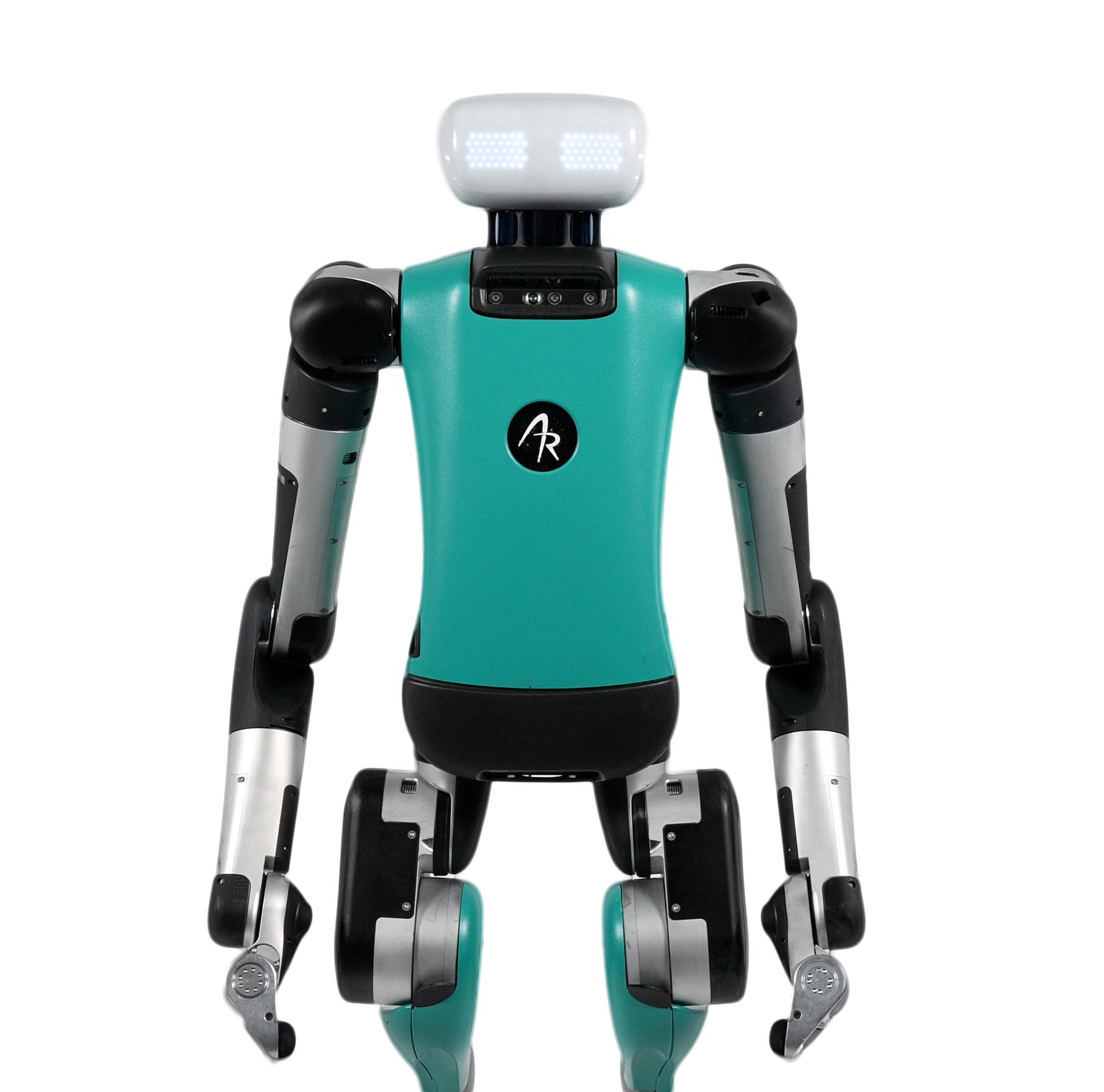
Frontline Humanoids: Investigating 2025–26 Deployments in Warehouses, Factories and Care Homes As humanoid platforms move from lab demos to paid pilots, three sectors are emerging as the first markets: logistics (pick, pallet and conveyor handling), manufacturing (repetitive assembly and line support), and social/mobility assistance in clinics and care homes. This package synthesizes public announcements, company statements and integrator reporting to map who is in the field, what customers are measuring, the integration work required, and where return-on-investment signals are — and are not — yet visible. Use cases by industry Logistics: picking, pallet handling and trailer unloading Humanoids are being trialed where mobility and bimanual manipulation intersect — unstructured carton picking, palletizing odd-shaped goods, and handoffs at conveyance interfaces. Companies such as Agility Robotics (Digit) and Boston Dynamics (Stretch, Spot for inspection) have positioned products for warehouse tasks. Agility has publicly discussed multi‑site pilots and collaborations with OEMs to test Digit in material handling and kitting workflows; Boston Dynamics has commercialized Stretch for box unloading and widely deployed Spot for inspection & site mapping, providing operational context for humanoid ambitions. Typical metrics: throughput (boxes/hour or picks/hour), uptime (% of shift), mean time to recover (MTTR), safety incidents. Integrator feedback: pilots show humanoids can replace specific manual tasks but often at lower throughput than experienced pickers unless paired with conveyors, dedicated grippers or staging areas. Manufacturing: repetitive assembly and line support Manufacturers test humanoids for kitting, part presentation, station replenishment and light assembly where human-like dexterity helps in shared workspaces. Apptronik and Figure AI have explicitly targeted industrial support roles in their sales narratives, pitching humanoids as flexible alternatives to fixed automation for low-volume, high-mix lines. Typical metrics: takt time adherence, error rate (defects per million), changeover time, mean time between faults (MTBF). Operational reality: system integrators report months of integration for perception tuning and tooling; retrofitting conveyors, part-presenters and collaborative fixtures is commonplace. Eldercare & clinics: mobility, assistance and social trials Service robots have longer commercial track records in social settings — SoftBank Robotics’ Pepper and UBTECH’s humanoid lines have been trialed in Japan and China for reception, monitoring and companionship. Newer humanoid prototypes (Xiaomi CyberOne, Sanctuary AI’s Phoenix in demo stages) are being evaluated for mobility assistance, monitoring medication schedules and social engagement, often under university or healthcare partner trials rather than paid rollouts. Typical metrics: patient engagement time, caregiver time saved, incident reports (falls, medication adherence), user satisfaction scores. Barriers: certification under service-robot standards, privacy rules in healthcare, and high sensitivity to interpersonal behavior and safety. How companies are marketing and positioning their robots Vendors have adopted three broad go-to-market narratives: Task automation & retrofit replacement — Agility and Boston Dynamics emphasize replacing specific manual tasks (box handling, trailer unloading) with clear KPIs. General-purpose workforce — Figure AI, Apptronik and Tesla position humanoids as future generalists able to redeploy across roles; early messaging focuses on the horizon rather than immediate parity. Service and companionship — UBTECH and SoftBank (Pepper) pitch social value in hospitality and eldercare, emphasizing interaction, monitoring and occupant experience over heavy manipulation. Marketing matters because customers buy business cases: vendors with concrete pilot templates and integrator networks (Boston Dynamics, Agility, UBTECH) are seeing faster commercial traction than lab-first companies promising general intelligence. Customer deployments, pilot results and pricing context Publicly reported pilots remain limited in scale and typically time-bound. Examples and patterns observed across published statements and integrator interviews: Agility Robotics has run multi‑site pilots through OEM collaborations to test Digit on line-feed and parts-kitting scenarios (company disclosures). Reported outcomes: measurable reductions in single-task human effort but mixed throughput parity depending on task structure. Boston Dynamics’ Stretch has moved past lab demos into paid pilots for box unloading; Stretch and Spot deployments have generated concrete uptime and ROI numbers for customers in inspection and pallet handling, giving Boston Dynamics a commercial advantage in industrial contexts. Service humanoids (SoftBank Pepper, UBTECH) have the largest base of small-scale commercial deployments in hospitality and care settings, with many customers on subscription or per-device licensing models. Pricing signals: Early hardware alone for full-size humanoids is being signaled in the low‑to‑mid six‑figure range. Vendors and integrators report that site integration — safety zoning, conveyors, vision calibration, bespoke grippers and staff training — often multiplies the total cost by 1.5–4x. Subscription or robot-as-a-service (RaaS) offerings are increasingly common to spread capital cost and include maintenance. Competitive comparison (readiness, public pilots, typical use cases) Company Readiness (2024–25) Public pilots / clients Primary use cases Agility Robotics (Digit) Early commercial pilots OEM collaborations, warehouse pilots (company statements) Pick & place, kitting, logistics handoff Boston Dynamics Fielded industrial robots (Stretch, Spot); Atlas is research Stretch pilots for box handling; Spot widely deployed Trailer unloading, inspection, site mapping Apptronik, Figure AI, Sanctuary AI, Tesla Prototype / early pilot Limited public commercial pilots; mostly demos and engineering partnerships Factory support, research & development, long-term generalist claims UBTECH, SoftBank Pepper Commercial in service niches Multiple hospitality, retail and eldercare trials Reception, monitoring, social interaction Unitree Quadrupeds in commercial & research Research institutions, inspection pilots Inspection, mobile sensing (non-humanoid) Integration, failure modes and retrofit costs Systems integrators describe a repeatable pattern: perception and end-effector tuning are the longest-lead items. Common failure modes in pilots include: Vision misclassification in cluttered shelving leading to failed grasps. End-effector slip or inability to handle deformable packaging. Balance recovery events in crowded floors causing production interruptions. Battery and charging logistics reducing available duty cycle. Retrofit costs are driven by safety (fencing, E‑stops, new floor markings), conveyor and part-presenter installs, custom grippers and software integration. Integrators interviewed estimate integration budgets commonly range from tens of thousands to several hundred thousand dollars per site for pilots intended to produce meaningful throughput data. Regulation, workforce acceptance and the path to 2026 Regulatory and facility-safety hurdles are non-trivial. Facilities must align with ISO standards for industrial and service robots, and healthcare deployments must satisfy local patient-safety and privacy rules. Worker acceptance also influences success: pilots that include training programs, clear handoff protocols and front-line operator input are likelier to produce sustained uptime. Short-term wins through 2026 will be task-specific: palletizing, trailer unloading and kitting where environment control lowers perception complexity. Long-term generalist gains remain contingent on significant improvements in robust manipulation, perception and cost reduction. For buyers, the practical checklist remains: insist on KPI-based pilot contracts (throughput, uptime, safety metrics), validate integrator readiness for perception and tooling work, plan for 1–2 quarters of commissioning, and budget integration costs that may exceed hardware price. By 2026, expect incremental productivity gains in targeted roles but still limited displacement of broad-spectrum human labor.