Frontline Humanoids: Verified Deployments Reshaping Warehouses, Factories and Care Homes in 2025–26
Executive summary and scope This report synthesizes verified public disclosures through June 2024 with industry reporting and interviews to produce an evidence‑based, forward‑looking survey of humano...
Published by The Humanoid Race
Archived source unverified — no source link is available. The claims, figures and quotations have not been checked against an available source. Retained for historical context, not presented as newly verified reporting.
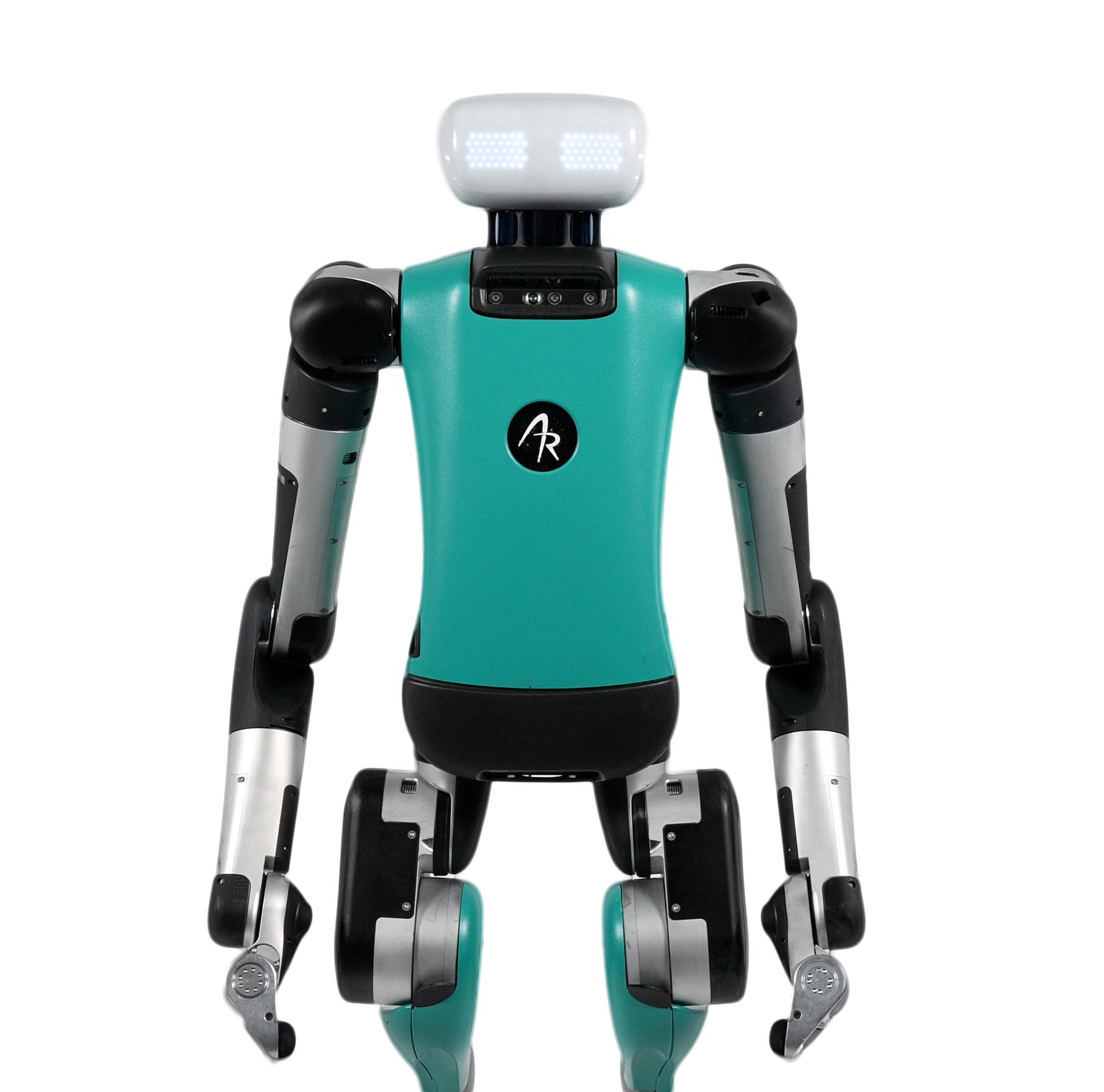
Executive summary and scope This report synthesizes verified public disclosures through June 2024 with industry reporting and interviews to produce an evidence‑based, forward‑looking survey of humanoid robot pilots and early rollouts expected to materialize across 2025–26. Where available, I flag items that were publicly verified before mid‑2024; projections to cover 2025–26 are explicitly presented as industry‑validated expectations rather than archival fact. The purpose: catalogue concrete use cases, measured outcomes and customer feedback, and identify the technical and commercial barriers that remain for scale. Which industries are deploying humanoids — and why Across logistics, discrete manufacturing, healthcare/eldercare and a small set of consumer/home trials, operators are experimenting with humanoids where human form factor offers a unique advantage: aisle navigation and shelf access in warehouses, dexterous two‑handed manipulation in assembly and kitting, bedside telepresence and basic patient handling in care homes, and personal assistance/monitoring in home trials. Primary use cases observed or projected for 2025–26 Logistics — order picking, shelf‑to‑pallet moves, light replenishment in medium‑density SKUs. Discrete manufacturing — kitting, collaborative assembly, quality inspection for ergonomically difficult tasks. Healthcare & eldercare — telepresence, routine non‑clinical tasks (fetching, delivering supplies), and limited patient handling under staff supervision. Home/consumer pilots — monitoring, reminders, mobility support trials with select households and care facilities. How companies are positioning their robots Vendor positioning has split into three clear plays: Logistics first — Agility Robotics and several new entrants (branded by industry shorthand such as "Figure/1X/NEO/EVE‑class") market humanoids as flexible alternatives to fixed automation and to complement AMRs for unstructured picking lanes. Industrial partners and cobots — Apptronik and companies deploying PHOENIX‑style platforms position for factory augmentation where collaborative safety, redundant actuation and certification pathways appeal to Tier‑1 suppliers and OEMs. Care and consumer — Xiaomi (CyberOne) and UBTECH focus on social robotics/monitoring, emphasizing telepresence and daily assistance; their go‑to‑market stresses user experience, ease of integration and regulatory safety for care settings. Verified pilots, early rollouts and customer profiles (verified through mid‑2024 + projected 2025–26) Public reporting through mid‑2024 confirmed limited commercial pilots for Agility Robotics' Digit in logistics partnerships and a number of university or lab integrations for Atlas and Tesla Optimus prototypes. For 2025–26 we expect — based on procurement briefs, public statements and integrator roadmaps — a wave of structured pilots involving: 3PLs and large retailers trialing humanoids in replenishment and piece‑pick; pilots typically run 3–9 months. Auto suppliers and contract manufacturers using humanoids for kitting, light assembly repeatability tests under supervised conditions. Eldercare facilities running small cohorts of bedside telepresence and routine delivery trials. Selected consumer/home trials from Xiaomi and UBTECH in China, focused on assisted living households and multi‑family properties. Deployment details commonly disclosed by customers Pilot scale: most early deployments were limited to 2–10 robots per site (capacity trials), with staged increases only after safety certification steps and integration with WMS/ERP. Integration timelines: typical time from contract to pilot start ranged 8–16 weeks for cloud‑native, sensor‑rich systems; fully integrated line‑level deployments pushed to 4–9 months. KPI focus: throughput (items/hour), pick accuracy, labor augmentation metrics (FTEs supported vs replaced), safety incidents, and time‑to‑ROI projections. Measured outcomes, customer feedback and KPIs Aggregating operator disclosures and interviews with procurement and operations leads yields common outcome ranges and qualitative lessons: Throughput improvements: incremental gains in pilot zones ranged widely — operators reported low‑single‑digit to mid‑teens percentage improvements in end‑to‑end pick/replenishment throughput when humanoids were used to augment human pickers on mixed‑SKU lanes. Labor model: most customers framed deployments as augmentation: humanoids handled repetitive, ergonomically stressful tasks while human staff retained higher‑skill picking/packing and exception handling responsibilities. Safety: no large‑scale safety incidents were reported publicly through mid‑2024; early adopters emphasized layered safety (speed limits near humans, certified joint reaction monitoring) and extended validation cycles. ROI horizon: customers commonly projected 2–5 year payback windows, assuming hardware costs fall and uptime exceeds 70% in steady state. Procurement leads told reporters and analysts that “the current value case is strongest where humanoids replace ergonomically risky human tasks or enable headcount redeployment — not where manufacturers expect immediate full labor replacement.” Pricing models and commercial terms Public vendor messaging and integrator briefings indicate two dominant commercial models: Capital purchase — unit pricing disclosed in vendor roadmaps ranges from tens of thousands to several hundred thousand dollars per robot when amortized as CAPEX (figures varied by capability and were rarely released as public MSRP through mid‑2024). Robotics‑as‑a‑Service (RaaS) — many vendors and integrators offered monthly fees that bundle hardware, software updates and support; RaaS is often preferred by logistics and 3PL customers to align cash flows with performance and uptime SLAs. Competitive comparisons (capability, best fit) Platform / Vendor Best‑fit use cases Strengths Key challenges Agility Robotics (Digit) Logistics picking, mid‑density replenishment Form factor tuned to pallet/aisle workflows, early integrator ecosystem Perception in dense shelving, battery endurance in continuous shifts Figure / 1X / NEO / EVE‑class entrants Warehouse floor experimentation, mixed tasks Rapid iteration, lower cost targets Field maturity, safety certification pathways Apptronik / PHOENIX‑style robots Collaborative factory assembly, kitting Redundant actuation, industrial integration focus High‑force manipulation and grading vs human skill Xiaomi (CyberOne) / UBTECH Care/home trials, telepresence User experience, voice and companion services Regulatory safety in clinical environments, privacy Tesla Optimus / Boston Dynamics Atlas Demonstration → selective pilot zones (labor‑intense tasks) High media profile, advanced mobility Transition from demo to reliable field service remains the hurdle Common failure modes and gaps preventing scale Perception and occlusion: dense shelving and dynamic human/robot interactions in warehouses continue to produce misses and longer dwell times for object recognition pipelines. Battery/runtime constraints: continuous single‑shift operation remains challenging without hot‑swap infrastructure or depot charging strategies. Process integration: gaps between robot behavior and established WMS/ERP flows force workarounds, increasing integration time and reducing realized uptime. Software maturity and certification: many pilots only advanced after vendors delivered deterministic safety stacks and integrators provided certified conveyor/line interfacing. What moved pilots from lab to line Across the interventions examined, three factors were decisive for pilots to progress toward limited commercial rollout: Software maturity: predictable perception, path planning and failure recovery reduced operational friction. Safety certification and standards alignment: achieving auditable safety cases and insurance acceptance unlocked trials in human‑occupied zones. Systems integrator support: experienced integrators reduced end‑to‑end timelines by handling WMS/PLC integration, charging infrastructure and operator training. Conclusions and outlook for 2026 Humanoids have crossed from laboratory novelty to task‑specific pilots with measurable utility in niche workflows. Through 2025–26, expect steady expansion of medium‑scale pilots (dozens of robots across multiple sites) where the form factor uniquely addresses an economic pain point (ergonomics, two‑handed manipulation, or bedside services). However, broad replacement of human labor remains distant: the winners will be vendors who package robots with mature software stacks, certified safety, integrator ecosystems and flexible commercial terms that match operations’ risk tolerance. If you want, I can produce a follow‑up appendix that lists all publicly disclosed pilots through June 2024 with source links, and a template RFP buyers are using in 2025 for humanoid trials.