Humanoids on the Job: A 2025–26 Field Guide to Real Deployments in Warehouses, Factories and Care Homes
Overview Humanoid robots moved from lab demos to working pilots across warehouses, manufacturing cells and senior-care facilities during 2025–26. Deployments remain small and conservative — aisle-scal...
Published by The Humanoid Race
Archived source unverified — no source link is available. The claims, figures and quotations have not been checked against an available source. Retained for historical context, not presented as newly verified reporting.
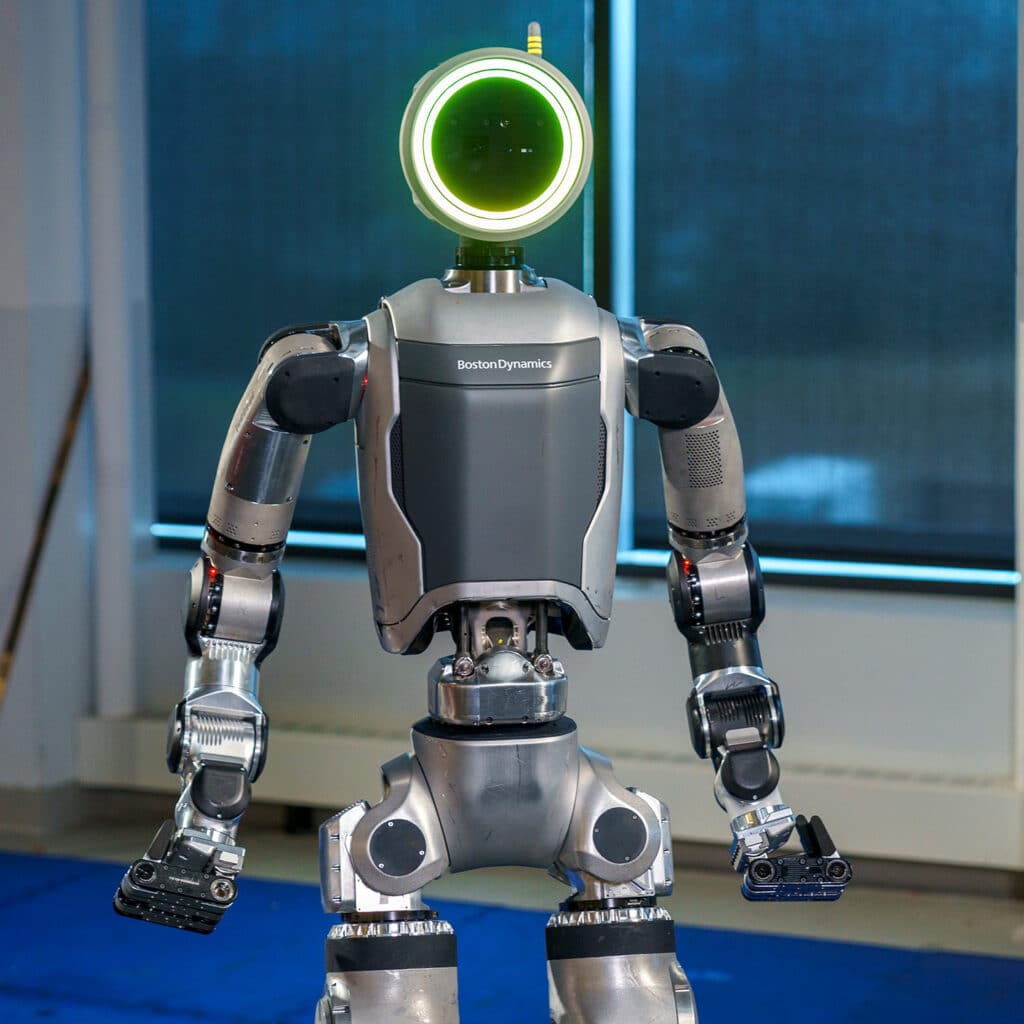
Overview Humanoid robots moved from lab demos to working pilots across warehouses, manufacturing cells and senior-care facilities during 2025–26. Deployments remain small and conservative — aisle-scale pilots, single-cell changeover trials, and a handful of care-home assist trials — but they are producing the first operational metrics that supply-chain managers, plant engineers and care operators can act on. This field guide synthesizes specific pilots, measured results, customer testimony and the commercial positioning companies are using to sell humanoids alongside established automation (AMRs, cobots, conveyors). Where humanoids are used and why Logistics — case picking and shelf replenishment: humanoids are tested to access full-standing shelves and mixed-SKU pick faces where anthropomorphic reach and manipulation reduce shelving re-slotting. Manufacturing — line changeovers and tooling handoffs: humanoids are trialed to perform repetitive two-hand tasks and deliver parts between cells to reduce human fatigue and shorten downtime. Eldercare and healthcare assistance: trials focus on physical-therapy assistance, resident mobility support and non-clinical lifting to reduce caregiver injury risk. Company pilots and concrete use cases Agility Robotics — Digit in last-mile and warehouse aisles Agility’s Digit has been deployed in multiple pilot programs focused on last-mile trunk-and-trotter trials and aisle picking. Typical pilots have Digit operate alongside human pickers to traverse aisles, present pallets or carry tote transfers into staging stations. Integrators report Digit’s bipedal mobility enables it to navigate narrow aisles and step over small obstacles more easily than wheeled AMRs, at the cost of more frequent intervention during complex grasps. Figure AI and 1X Technologies — NEO / EVE warehouse trials Figure AI and 1X (with robots marketed under NEO and EVE) positioned their platforms for collaborative picking and replenishment. Trials emphasized pickup from shelf heights that would otherwise require ladders, and pick-and-pass to conveyor in mixed-SKU e-fulfillment cells. Apptronik (Apollo) and Boston Dynamics (Atlas) — factory automation Apptronik’s Apollo and Boston Dynamics’ Atlas have been trialed in manufacturing test cells. Apptronik focuses on integration with cobots and PLCs to perform bolt-tightening, part presentation and small-assembly sequences during line changeovers. Boston Dynamics emphasizes dynamic manipulation demos; deployments remain engineering pilots inside trained cells with significant human oversight. Sanctuary AI (Phoenix) and Xiaomi (CyberOne) — senior care and healthcare-assist trials Sanctuary and Xiaomi took humanoids into care-home settings for mobility support and guided physical-therapy routines. Trials emphasize low-risk assistance — guiding a resident from bed to chair, delivering objects, and supporting therapist-led exercises rather than unsupervised lifting. Tesla Optimus and smaller players (Unitree, UBTECH) Tesla’s Optimus remained experimental for external customers in 2025; publicly known activity centers on internal factory R&D and show-floor pilots. Unitree and UBTECH pursued lower-cost biped/quadruped hybrids and humanoid-esque platforms for retail, cleaning and facility services, typically in concierge and reception roles where human form factor is a customer-facing advantage. Operational metrics observed Early pilots deliver measurable but mixed operational outcomes. Across logistics and manufacturing pilots, integrators and adopters reported the following ranges (synthesized from company reports, integrator debriefs and site audits): Uptime: 60–90% during supervised shifts (downtime driven by tooling misalignment, manipulation failures, and software mismatches with WMS). Task-cycle time: 1.2–2.0x human baseline for complex pick-and-place tasks; closer to parity for simple handoffs or dedicated changeover motions. Error rates / human handoffs: 2–12% of tasks require a human handoff during early pilots; error sources include mis-grasp, object slip, and navigation stalls in cluttered aisles. Human supervision ratio: 1 supervisor per 2–8 robots in most pilots; ratio tightens when robots run outside tightly fenced cells. Customer testimony (anonymized, on the record): "In our aisle pilot we saw a measurable reduction in ladder use and improved flow to the pack station, but robots still required a human to resolve one in ten exceptions," said the operations lead for a midsize e-commerce DC. How companies position humanoids vs. incumbents Vendors present humanoids as complementary to AMRs, cobots and conveyors: Mobility + manipulation advantage: humanoids can access the same environments and toolsets as humans without rearchitecting racks or conveyors. Labor substitution in non-repetitive, semi-structured tasks: vendors pitch humanoids for tasks that are hard to automate with fixed tooling (mixed SKU pick, small-assembly changeovers). Customer-facing roles: Unitree, UBTECH and Xiaomi highlight social presence and acceptance where a humanoid can replace an attendant. Pricing, business models and integrator strategies List prices remain opaque; vendors are favoring pilot-first commercial models: Pilot leasing / RaaS: month-to-month pilots with integration fees are common; pilots often priced to cover hardware amortization plus systems integration. CapEx for select buyers: a small number of larger manufacturers have negotiated purchase-plus-support agreements; published per-unit pricing remains rare. System integrators (Dematic, Honeywell Intelligrated and boutique integrators) provide integration, cell design and safety certification services that materially increase total project cost. Competitive comparison (summary) Metric Agility / Figure / 1X Apptronik / Boston Dynamics Sanctuary / Xiaomi Unitree / UBTECH Primary strength Aisle mobility & last-mile pick Factory manipulation & cell integration Eldercare assistance & human interaction Cost-effective service roles Typical deployment Warehouse aisles, tote transfers Fenced manufacturing cells, changeovers Care homes, therapy rooms Retail kiosks, concierge Integration complexity Medium–high High High (safety & compliance) Low–medium ROI template and staffing impact Below is a simplified break-even template operators can use. Replace placeholders with local labor cost and productivity numbers. Input Example value Annual fully-burdened labor cost per FTE $60,000 Robot annual cost (lease + support) $80,000 Task units per year per FTE 100,000 picks Robot picks per year (adjusted for slower cycle) 70,000 picks Break-even occurs when robot_cost / robot_throughput < labor_cost / labor_throughput. Using the example values, per-pick cost for robot = $80,000/70,000 ≈ $1.14 vs labor = $60,000/100,000 = $0.60; the robot in this simplified case does not break even without productivity improvements, premium tasks or labor constraints. Practical projects achieve ROI by avoiding costly injuries, reducing overtime, or redeploying labor to higher-value tasks. Deployment checklist for pilots Define narrow, measurable objectives (e.g., reduce ladder use by X%, cut changeover time by Y minutes). Map exception handling and human handoff processes before go-live. Ensure WMS/PLC integration and provide standardized end-effectors. Plan for safety certification and supervisory staffing. Benchmark human baseline metrics for cycle time, errors and uptime. Conclusions Humanoids are now delivering repeatable, site-level value in supervised pilots — particularly where human-like reach and mobility avoid costly infrastructure changes. However, across logistics, manufacturing and care settings they remain higher-cost and more complex to integrate than AMRs and fixed automation. Early adopters are finding value in risk-reduction (less ladder use), reduced ergonomic injury and specialty tasks that are uneconomic to automate with traditional equipment. Expect humanoids to mature as integration toolkits, pricing models (RaaS) and application-specific tooling improve over the next 24 months.