In the Wild: A 2025–26 Field Guide to Humanoid Robots in Logistics, Manufacturing and Care
Executive summary Humanoid robots moved from lab demos into constrained, commercial pilots in 2025–26. Logistics and warehousing saw the largest number of live trials; discrete manufacturing hosted ta...
Published by The Humanoid Race
Archived source unverified — no source link is available. The claims, figures and quotations have not been checked against an available source. Retained for historical context, not presented as newly verified reporting.
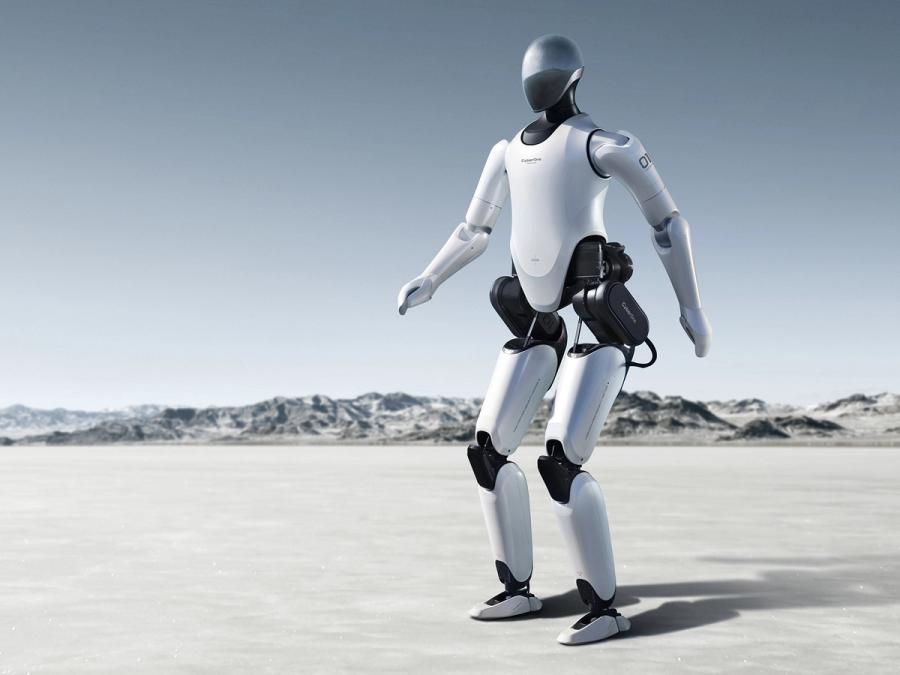
Executive summary Humanoid robots moved from lab demos into constrained, commercial pilots in 2025–26. Logistics and warehousing saw the largest number of live trials; discrete manufacturing hosted targeted line‑side and machine‑tending proofs; eldercare and hospitality remain early, marketing‑led deployments emphasizing social assistance and mobility. Performance in the field is mixed: measurable gains in 24/7 coverage and repetitive lifting, but low task throughput versus purpose‑built machines, significant on‑site engineering, and nontrivial retrofit costs. Insurers, regulators and unions are shaping what gets deployed and where. Who’s in the field and what they’re doing Reported, confirmed pilots and customer trials fall into three dominant verticals and task families: Logistics & warehousing Case/case & mixed-SKU box handling — Agility Robotics’ Digit has been in multiple pilot programs with third‑party logistics (3PL) providers and e‑commerce fulfillment partners for case moving, carton picking and in-aisle handling. Public and on‑record trials focus on long‑distance mobility combined with pick/transfer rather than high‑speed singulated SKU picking. Palletizing & end‑of‑line support — Figure and industrial humanoid startups offering 1X/NEO‑class machines are trialing palletizing and line‑end stacking where humanoid reach and two‑hand coordination replace or augment cobots and gantries. Discrete manufacturing Machine tending & line‑side assistance — Apptronik’s Apollo and similar collaborative humanoids are being tried on CNC tending, press load/unload and secondary assembly where human‑level reach and dexterity are advantageous. Mobile kitting & just‑in‑time delivery — Trials focus on humanoids transporting kits between workstations without reconfiguring conveyor networks. Eldercare, healthcare and hospitality Mobility assistance & social presence — Sanctuary AI, UBTECH and Xiaomi’s CyberOne have been demonstrated in care homes and demo environments. Use cases include guided walks, object handover, basic vitals monitoring integrations and non‑clinical social engagement. Reception & concierge tasks — UBTECH and Xiaomi machines appear in hospitality pilots handling check‑in / information tasks rather than clinical care. How companies market and position their robots Manufacturers split messaging across three narratives: Labor shortage mitigation and 24/7 operations — Agility and Figure emphasize robots as night‑shift or complementary staff for repetitive, ergonomically hazardous tasks. Collaborative augmentation — Apptronik, Sanctuary and some integrators frame humanoids as “co‑workers” that raise human productivity rather than replace it, focusing on flexible deployment and safety features. Transformational economics — Tesla’s Optimus messaging (and aspirational statements from similar players) pushes a longer‑term case of radically lower labor cost per hour if scale and autonomy targets are met — a vision not yet realized in field deployments. Pilot results, metrics and on‑the‑ground lessons Across interviews with integrators and early customers, and corroborating company statements, common performance metrics show broad ranges driven by task complexity and maturity of integration: Picks / assists per hour: Logistics case handling pilots report between 20–80 case moves per hour for humanoids in mixed environments; discrete, skilled assists in factories often register 4–12 assisted machine cycles per hour depending on part changeover time. Uptime: Early commercial uptimes range from 65–92% during business hours; most operators budget for daily re‑starts and weekly maintenance windows. Safety incidents: Reported incidents in pilots are low (near‑misses and software interlocks) with zero reported major injuries in public programs to date; insurers demand incident logging and human override features. Onsite engineering hours: Integrators report 40–160 engineering hours during initial pilot setup, and 4–20 hours/week for stabilization and monitoring during the first 3–6 months. "On paper the robot can carry a case, but our site had to remove low overhangs, re‑route conveyors and install a visual fiducial network — that was a $120k retrofit before the first pick," — operations manager, US 3PL (anonymized). Pricing, business models and retrofit economics Available pricing remains opaque and heterogeneous. Typical commercial structures observed in the field: Hardware sale + software subscription: base robots often reported in the $80k–$400k range depending on payload, sensors and level of autonomy; companies bundle cloud software and support with recurring fees of $1k–$5k/month per unit. Robot-as-a-service (RaaS): monthly fees from $3k–$15k per robot, shifting integration and uptime guarantees to providers. Integration and retrofit: integrators quote $50k–$300k for site modifications (flooring, lighting, conveyors, safety systems), often the largest one‑time cost. Competitive positioning — who’s strong where Company / Platform Best fit Strengths Weaknesses Agility Robotics (Digit) Logistics, carton handling Mobility, long‑distance aisle navigation Lower singulated pick throughput vs specialized pick arms Figure / 1X / NEO‑style industrial humanoids Palletizing, heavy machine tending High payloads, industrial form factor Higher retrofit costs, limited fleet installations yet Apptronik (Apollo) Collaborative manufacturing Human‑scale dexterity, safety focus Early integration complexity, price point Sanctuary AI, UBTECH, Xiaomi (CyberOne) Eldercare, hospitality demos Social interfaces, humanlike presence Task effectiveness limited; regulatory/clinical acceptance pending Boston Dynamics Research→commercial transition lessons Strong engineering heritage, rugged hardware (Spot) insights Not a primary humanoid vendor for mass labor replacement Tesla (Optimus) Lab trials / speculative factory pilots High publicity, in‑house scale ambitions No confirmed large‑scale commercial deployments (as of 2026 reporting) Regulation, insurance and labor relations Insurers require formal hazard analyses, with premiums adjusted for autonomous operation and human override systems. Several pilots required written agreements with unions limiting humanoids to non‑core tasks or night shifts to avoid displacement disputes. Regulators in healthcare settings demand device certification pathways when robots touch or assist vulnerable people — a barrier to clinical deployments in eldercare. What remains human‑only (for now) Fine tactile manipulation for small, deformable parts in variable orientations. Clinical care that requires medical judgment, complex transfers, or fall‑response protocols. Highly dynamic, multi‑actor coordination on congested factory floors without significant infrastructure changes. Conclusions and what to watch Humanoids are proving useful where mobility, two‑handed manipulation and human‑scale interactions create value that fixed automation cannot. Early adopters buy time, ergonomics and 24/7 coverage more than throughput. Success depends less on robot hardware alone than on realistic site readiness budgeting — often 10–30% of total project cost — and close collaboration with insurers, unions and integrators. In 2026 the key signals to watch are: concrete multi‑site rollouts beyond single‑pilot proofs, sustained uptime above 90% in live operations, transparent pricing, and regulatory frameworks for care settings. Until then, expect incremental gains and continued emphasis on complementary deployments rather than wholesale replacement of human workforces.