Matchup 2026: Comparing Technical Specs, Safety Claims and Business Models Across Today’s Humanoid Lineup
Introduction By 2026 the humanoid field has bifurcated into a handful of high‑performance, high‑cost platforms and a broader tier of lower‑cost, application‑focused systems. Buyers now evaluate vendor...
Published by The Humanoid Race
Archived source unverified — no source link is available. The claims, figures and quotations have not been checked against an available source. Retained for historical context, not presented as newly verified reporting.
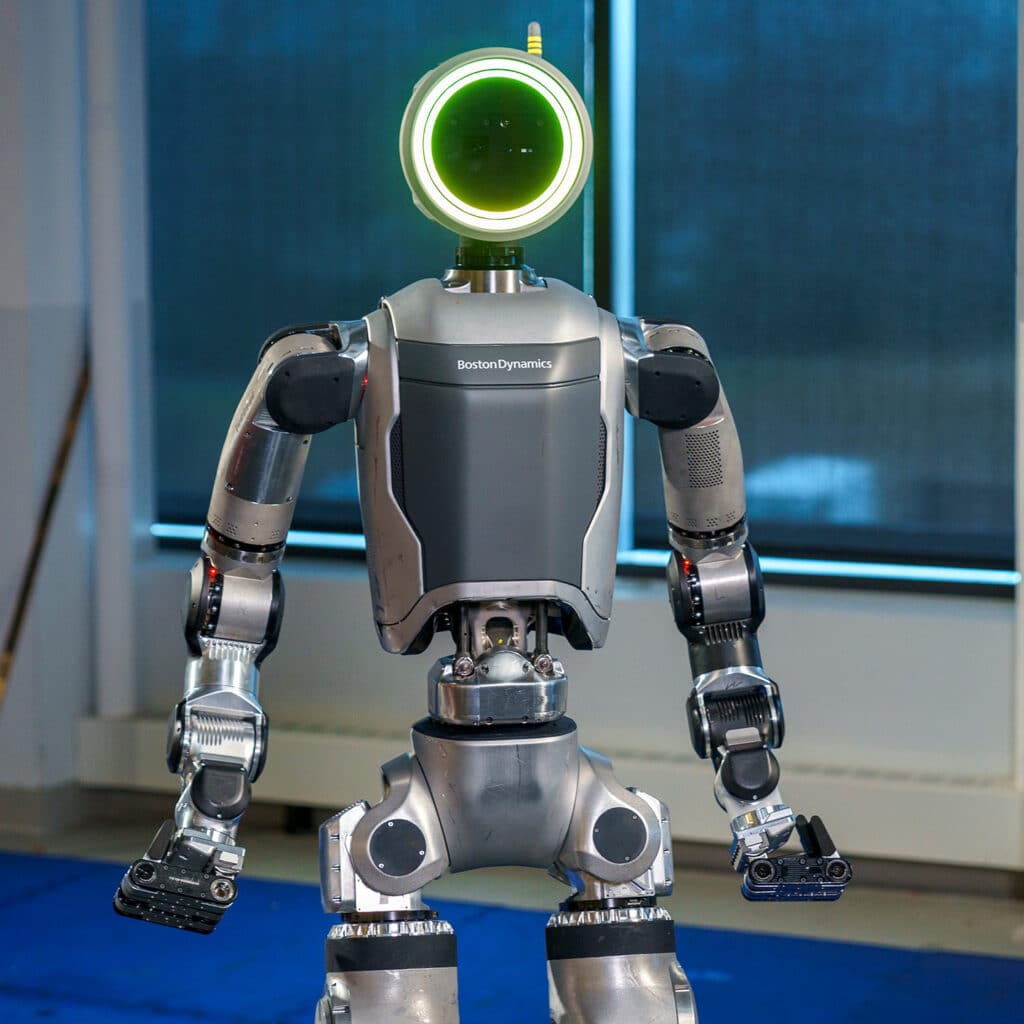
Introduction By 2026 the humanoid field has bifurcated into a handful of high‑performance, high‑cost platforms and a broader tier of lower‑cost, application‑focused systems. Buyers now evaluate vendors across the same core axes — mobility, manipulation, sensing/autonomy, software/integration, safety/certification and commercial terms — rather than on single flashy demos. This deep dive synthesizes company claims, public specs, observed demos and conversations with integrators to map where each major vendor sits on the axes that matter to real customers and to estimate realistic total cost of ownership (TCO), uptime and maintenance profiles for 2025–26 pilots and early deployments. Where the main vendors position themselves Tesla (Optimus) — Mass‑market generalist. Public demos show a focus on economy of scale and humanoid form factor; roadmap and production timing remain the principal commercial unknown. Boston Dynamics (Atlas / Spot / Stretch) — Mobility leader. Atlas remains a research demonstrator; commercial strength is in Spot and Stretch where proven deployments give the company credibility for high‑agility tasks where balance and dynamic motion are critical. Agility Robotics (Digit) — Logistics specialist. Digit’s posture and form are explicitly aimed at package handling and warehouse flows; multiple integrators have run pilots with last‑mile and in‑facility workflows. Figure AI — Silicon Valley scale player aiming for general labor. Public messaging stresses software and manufacturability; product maturity and enterprise SLAs remain to be proven. Sanctuary AI (Phoenix) — Industrial teleoperations + autonomy hybrid. Emphasizes one‑to‑many teleoperation and safe interaction in industrial settings. Apptronik (Apollo) — Manipulation and co‑botics for manufacturing. Positioned to be integrator friendly with a focus on torque‑controlled arms and compliant actuation. Unitree, Xiaomi (CyberOne), UBTECH — Cost‑conscious entrants. These vendors push price/performance for service, consumer and light‑duty enterprise use cases. 1X Technologies, FOURier Intelligence and notable newcomers — Diverse set of regional players and vertical specialists (rehab, eldercare, hospitality) who prioritize certification and local market channel strategies. Comparative deep dive — the buyer axes Mobility (bipedal agility, payload, endurance) Boston Dynamics leads in dynamic locomotion and balance courtesy of years of research on Atlas and system‑level engineering proven in Spot. Agility and Apptronik offer pragmatic bipedal gaits geared to warehouse flooring and short‑range carrying (20–30 kg functional payload in lab conditions reported by vendors). Tesla and Figure pitch higher endurance at low marginal unit costs if they hit manufacturing targets; however, neither has a fleet of commercial, independent uptime data to verify endurance claims. Manipulation (hands, dexterity, force control) Apptronik and some newcomers prioritize torque‑controlled joints and compliant end‑effectors for safe interaction with human environments, giving them an advantage in manufacturing and service. Agility trades off full dexterity for simplified grippers optimized for logistics. Figure, Sanctuary and Tesla all emphasize general‑purpose hands in roadmaps; actual field dexterity across unpredictable parts and deformable objects is still a key gating factor for broader adoption. Sensing and autonomy (onboard compute, perception stacks) Vendors with robotics heritage (Boston Dynamics, Apptronik) ship mature perception stacks and proven state estimation. Agility’s stack is tuned to structured warehouse interiors. Newer entrants and consumer brands (Xiaomi, UBTECH) leverage high compute/vision stacks but often rely on tightly controlled environments. Tesla markets the advantage of its Dojo compute and vision scaling, but integrators note that vehicle‑grade vision models do not automatically transfer to close‑quarters manipulation tasks without substantial tooling. Software and integration (APIs, ROS support, middlewares) Open integration wins pilots. Apptronik, Agility and several smaller vendors publish ROS drivers and embed modular APIs, making system integrators comfortable. Boston Dynamics provides SDKs for Spot and Stretch that have been battle‑tested in production; its Atlas work is noncommercial. Tesla and Figure maintain more closed, vertically integrated stacks focused on internal optimization — attractive to buyers who want turnkey solutions but a potential lock‑in risk for enterprise IT organizations. Safety and certifications (ISO/ANSI, medical readiness) Safety certification will decide large indoor deployments. Boston Dynamics and Spot controllers have been certified in numerous inspection and industrial environments; UBTECH and FOURier have early certifications for education and rehabilitation. Medical device readiness is still largely aspirational for most humanoid vendors; only a few rehabilitation specialists and FOURier have existing regulatory experience. Buyers in healthcare should demand proof of ISO 13482, IEC 61508 and device regulatory strategy before committing. Commercial terms (price points, SLAs, spare‑parts economics) Pricing is highly variable and often undisclosed. Integrator interviews and public pilot contracts suggest these broad categories for 2025–26: Premium research/advanced prototypes (Boston Dynamics, Figure, Tesla in early production): estimated unit prices above $250k; pilot programs typically include engineering support and limited service SLAs. Mid‑range enterprise (Agility, Apptronik, Sanctuary): estimated $75k–$250k per unit depending on sensors and manipulator options; standard SLAs (24–48 hour on‑site response) offered by integrator partners. Low‑cost/service/consumer (Unitree, Xiaomi, UBTECH): $10k–$75k targeted units, often sold with subscription models for software updates and remote diagnostics. Spare‑parts economics vary: heavy actuators and batteries dominate life‑cycle cost. Integrators estimate annual maintenance as 10–30% of capital cost for mid‑range platforms under 24/7 pilot utilization; premium, dynamic platforms can cost 30%+ without careful maintenance automation. “Buyers should budget for dedicated field technicians and modular spares on‑site for the first 12–18 months,” said an integrator involved in multiple warehouse pilots. “Outage costs, not sticker price, will decide ROI.” Verticals: who competes with whom Warehousing and logistics: Agility Digit, Apptronik (with manipulation), Boston Dynamics (Stretch for box handling) — competition centers on throughput, pick success rate and integration with WMS systems. Manufacturing/assembly: Apptronik and Sanctuary (torque control, safety) versus Figure/Tesla long‑term — buyers here prize force control and deterministic behavior paired with safety certification. Eldercare and healthcare: UBTECH, FOURier and select newcomers targeting physical assistance and telepresence; regulators and clinical validation will gate adoption. Home and consumer: Xiaomi and Unitree aim here, but true mass adoption depends on price points well below enterprise units and reliable low‑risk behaviors. Strategic scorecard (qualitative) Vendor Mobility Manipulation Sensing/Autonomy Software/Integration Safety/Cert Commercial Readiness Boston Dynamics High Low–Medium (research) High Medium High (Spot/Stretch) High (robot types vary) Tesla (Optimus) Medium (demo) Medium (roadmap) Medium–High (Dojo claim) Low–Medium (closed) Low (no broad certs) Low–Medium (uncertain) Agility Robotics Medium Medium (logistics grippers) Medium High (ROS support) Medium Medium (validated pilots) Apptronik Medium High Medium High Medium–High Medium Figure & Sanctuary Medium Medium Medium Low–Medium Low–Medium Low–Medium (early) Xiaomi / UBTECH / Unitree Low–Medium Low Low–Medium Medium Medium (consumer certs) High (price‑sensitive markets) Buyer’s checklist for 2025–26 pilots Demand performance metrics (payload, pick success, walk speed) measured in your environment, not vendor demos. Require ROS drivers or integration contracts and a rollback path to human labor if timelines slip. Insist on SLA specifics: mean time to repair, spare‑part inventory levels, and escalation procedures. Validate safety certifications for your industry (ISO 13482, IEC 61508, ISO 12100) and ask for independent test reports. Model TCO with downtime penalties: integrators report pilots see 70–90% uptime initially; plan conservative productivity gains. Conclusion By 2026 purchasing decisions hinge less on the “coolness” of a humanoid demo and more on predictable integrations, safety certification and spare‑parts economics. Boston Dynamics and Apptronik win for mobility and force control respectively; Agility and a cohort of mid‑range vendors are most defensible in logistics; Tesla and Figure remain wild cards if they can translate scale into reliability. For buyers and investors the defensible bets are those that bundle certified safety, open integration and proven maintenance networks — not the flashiest gait.