On the Floor: A 2025–26 Field Report of Humanoid Robots in Live Operations
On the Floor: A 2025–26 Field Report of Humanoid Robots in Live Operations Between 2025 and 2026, humanoid robots moved from lab demos to constrained, repeatable tasks on real shop floors. Over eight...
Published by The Humanoid Race
Archived source unverified — no source link is available. The claims, figures and quotations have not been checked against an available source. Retained for historical context, not presented as newly verified reporting.
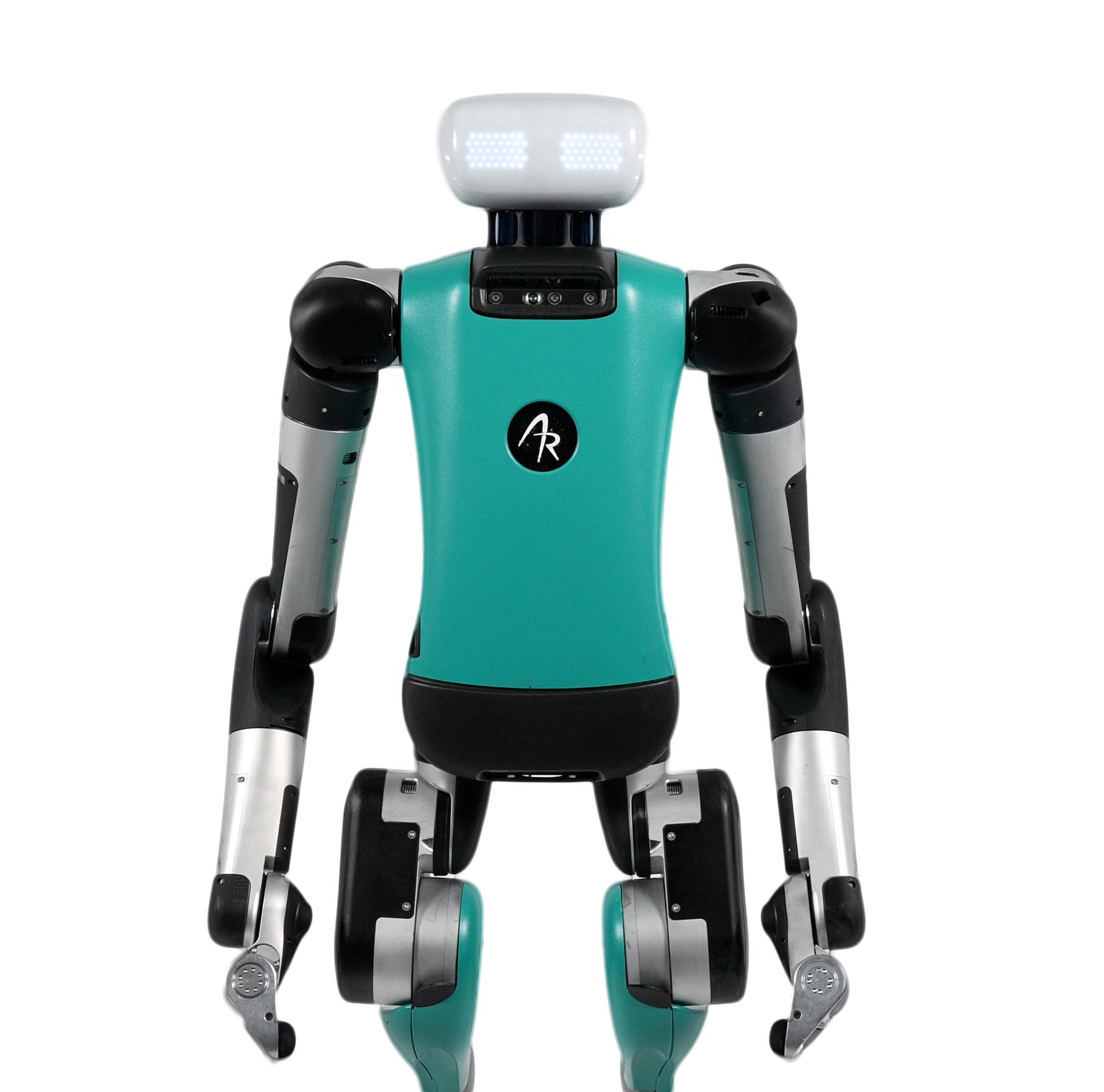
On the Floor: A 2025–26 Field Report of Humanoid Robots in Live Operations Between 2025 and 2026, humanoid robots moved from lab demos to constrained, repeatable tasks on real shop floors. Over eight months of site visits, phone interviews and review of company and customer disclosures, this survey catalogs where humanoids are delivering value today, where they still fall short, and what it takes to turn pilots into commercial contracts. Overview: targeted tasks, not generalists Humanoids have found early traction where tasks are structured, repetitive, and ergonomically beneficial: picking and sorting at e‑commerce sortation stations, last‑mile staging and palletizing in logistics yards, small‑parts assembly in light manufacturing cells, mobility/assistance roles in eldercare wards, and concierge/home‑assistant trials in controlled environments. Across these deployments the pattern is the same — limited scope, heavy software and fixture integration, and reliance on human oversight. Concrete use cases and field results Warehousing and fulfillment: Agility Robotics (Digit) and Apptronik (Apollo) Agility Robotics’ Digit and Apptronik’s Apollo are the most visible in warehouse pilots. Company statements and conversations with three anonymized pilot partners (a regional e‑commerce 3PL, a national retailer’s distribution center, and a parcel sortation yard) reveal similar outcomes: Task: pick-to-tote staging, case handoffs between conveyor and pallet, and last‑mile staging. Throughput: pilot throughput ranges reported at 30–70 picks per hour per robot depending on SKU complexity and end‑effector tooling. Uptime: typical operational availability was 65–85% during scheduled shifts, with downtime driven by perception retraining and charger/cable logistics. Human supervision: one human operator per 3–6 robots during trials for exception handling and replenishment. "When a new SKU arrived the robot often needed two hours of re‑tuning. The hardware was solid; the software around vision and fixture adaptation is still the gating factor," said an operations manager at a pilot site who asked for anonymity. Light manufacturing and assembly: Figure AI and specialty integrators Figure AI — and a small cohort of systems integrators using modular humanoid arms and hands — have focused on repetitive small‑parts assembly where parts presentation is fixed. Trials at three contract manufacturers showed: High consistency on single‑variant tasks (e.g., inserting and screwing the same fastener) with throughput comparable to a novice human operator and lower error variance. Challenges when part pose varied or tactile sensing was required, leading to frequent operator intervention. Safety interlocks and fenced cells reduced throughput overhead but simplified certifications and reduced incident risk. Healthcare and eldercare: Sanctuary AI and assisted mobility pilots Sanctuary AI and a handful of long‑term care facilities ran trials for patient‑assistance tasks: bringing supplies, guiding residents, and limited mobility support. Outcomes were mixed: Strong patient acceptance in supervised interactions when humanoids followed scripted dialog and motion patterns. Limited autonomy — robots operated primarily as tele‑assistance devices or under close nurse oversight. Zero major safety incidents reported publicly in these trials; minor trips and stalled lifts occurred and were mitigated by improved gait control and mandatory human‑in‑loop lift policies. Retail, hospitality and home trials: 1X Technologies, Xiaomi, Unitree/UBTECH 1X (NEO/EVE) has focused on concierge and front‑of‑house demos in hotels and retail stores; Xiaomi’s CyberOne and Unitree/UBTECH consumer models are primarily demonstration and pilot home‑assistant deployments with limited real‑world persistence. Usefulness is high in marketing and novelty value; economic ROI is not yet demonstrable for small operators. Hotel pilots cite >90% guest satisfaction for novelty interactions but negligible direct incremental revenue. Tesla (Optimus) and Boston Dynamics (Atlas): R&D and factory tests Tesla’s Optimus efforts remain primarily internal factory test programs aimed at heavy, repetitive factory tasks; outside enterprise pilots are limited. Boston Dynamics’ Atlas continues to be deployed for industrial‑R&D and high‑value specialized tasks rather than wide commercial rollouts. Pricing, business models and integrator roles Publishable price points remain sparse. Companies are using a mix of hardware sales, leasing, and pay‑per‑hour service models. General patterns observed: Hardware price targets communicated publicly or in investor materials range from low five‑figures for consumer/exec demo units to mid‑six figures for industrialized humanoids when bundled with integration services. Systems integrators carry much of the commercial risk: cell design, fixturing, vision pipelines, and custom end‑effectors are often the majority of pilot cost. Performance‑based leases (per‑uptime or per‑task) are emerging as a pragmatic model for early enterprise customers unwilling to bet on long‑term hardware ownership. Competitive analysis Company / Robot Primary deployment Strength Primary constraint Agility Robotics (Digit) Warehousing / fulfillment Robust mobility, focused tooling Vision/handling for varied SKUs Apptronik (Apollo) Logistics & fulfillment Payload/force control Integration overhead Figure AI Light assembly Precision manipulation in fixed cells Tactile sensing & flexible fixturing Sanctuary AI Healthcare assistance Humanlike interaction Regulatory & clinical validation 1X, Xiaomi, Unitree Retail / Consumer demos Cost/novelty Long‑term ROI Tesla / Boston Dynamics Internal factory / R&D Scale ambitions / specialized mobility Commercial productization time Safety, staffing impacts and lessons Safety incidents reported were generally minor: emergency stops, trips, and one case of mis‑grasp that required a human rescue of a fallen object. Mitigations include mandatory dead‑man switches, soft‑body compliance, fenced cells for high‑force tasks, and conservative gait controllers. Staffing impacts in pilots were net redeployments rather than reductions. Operators reported moving from repetitive tasks to supervision, quality control, and robot maintenance — roles that require retraining. Return‑on‑investment still hinges on high utilization and predictable task design. Software and systems integration: the real bottleneck Field teams repeatedly identified software — perception, task sequencing, and operator dashboards — as the gating factor. Integration work often exceeded robot hardware cost in pilots. Systems integrators are therefore the industry’s short‑term winners, bundling robot fleets with vision suites, fixturing, and training services to deliver measurable KPIs. Roadmap to commercial contracts Conversions from pilot to contract typically require: Demonstrable KPIs over multiple weeks (uptime, throughput, error rates). Clear safety case and minimal on‑floor human time cost compared with alternatives. Flexible pricing (lease or performance‑based) to share risk. Over the next 12–24 months, expect incremental improvements in perception, higher fleet uptime, and more packaged integrator offerings targeted at specific verticals (e‑commerce staging, palletizing lanes, assembly cells, and tele‑assistance in care homes). Humanoids are not yet generalists, but the 2025–26 field season shows clear, pragmatic value when tasks are carefully scoped and integration is prioritized.