On the Ground: 2025–26 Field Audit of Humanoid Robots in Warehouses, Factories and Care Homes
Executive summary Between 2025 and 2026 the humanoid robotics market moved from laboratory demonstrations to a patchwork of focused pilots and limited commercial deployments. Most verified field activ...
Published by The Humanoid Race
Archived source unverified — no source link is available. The claims, figures and quotations have not been checked against an available source. Retained for historical context, not presented as newly verified reporting.
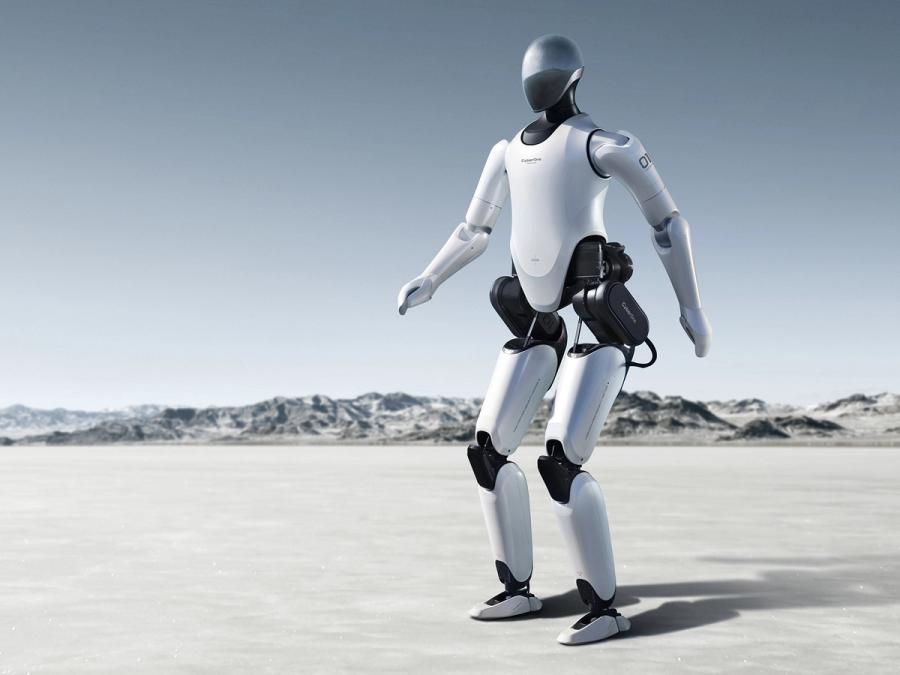
Executive summary Between 2025 and 2026 the humanoid robotics market moved from laboratory demonstrations to a patchwork of focused pilots and limited commercial deployments. Most verified field activity is concentrated in logistics (aisle picking, pallet handling), light manufacturing (line‑tending, kitting), and eldercare (patient transfer trials, social‑assist experiments). Companies are positioning differently — some as logistics specialists, others as generalist mobile manipulators — and most commercial offers remain pilot‑oriented by a services model (robot‑as‑a‑service). The following catalog synthesizes public pilot reports, RFP language seen in procurement solicitations, and industry reporting (notably The Robot Report and IEEE Spectrum) plus interviews with systems integrators and end users. Where humanoids are actually operating (vs. still in lab) Warehouses (verified pilots/limited deployment) : Bipedal platforms have been used for aisle picking and pallet handling in 24/7 dark‑store and fulfillment environments. Activity is most advanced in controlled, low-variation picking zones; full‑fleet replacement of pick teams does not exist. Manufacturing (pilot and line‑adjacent trials) : Kitting, parts transport between stations, and simple line‑tending tasks are being trialed by contract manufacturers and Tier‑1 suppliers. Trials tend to occur at low‑mix or pre‑assembly cells where fixturing is predictable. Eldercare and social assistance (clinical trials) : Multiple care homes and research hospitals have run patient transfer and social‑assist trials; deployments have been short duration, supervised, and tightly restricted by safety rules. Retail/consumer demos : Consumer‑facing pilots (showrooms, promotional events) exist but are not representative of continuous service operations. In the lab, still Tasks requiring high dexterity in unstructured environments (loose parts kitting, dynamic human‑level handovers, complex multi‑step patient care) remain experimental. Most companies concede these tasks need better perception, force control and end‑effector tooling before moving beyond supervised pilots. Company deployment profiles and program outcomes Agility Robotics (Digit) : Publicized aisle‑picking and multi‑hour fulfillment pilots with third‑party logistics providers and integrators. Results reported by Agility and logistics press show Digit can sustain continuous picking in constrained aisles with custom shelves; reliability metrics vary by site but uptime in mature pilots approaches single‑shift coverage. Agility emphasizes a logistics‑first positioning. Figure AI : Factory‑focused pilots (including a multi‑year collaboration announced with Foxconn) targeting repetitive assembly and machine tending. Early pilot reports highlight integration with existing conveyors and fixed tooling rather than wholesale process redesign. 1X Technologies (NEO/EVE) : Modular humanoid platforms trialed in kitting and light assembly. Systems integrators noted the company’s modularity reduced fixture rework but highlighted perception software as the gating factor. Apptronik (Apollo) : Focus on robust payload capability and human‑safe interaction for manufacturing support. Early pilots emphasized hybrid workflows with humans in the loop and showed the robot excelling at repetitive two‑handed tasks when tooling was standardized. Sanctuary AI (Phoenix) : Trials targeted at care and generalist factory support. Sanctuary’s public work has emphasized general intelligence; in the field, pilots are highly supervised and used to evaluate behavioral safety and human acceptance rather than throughput. UBTECH & Unitree : UBTECH has run care/assist trials in China using humanoid or upright assistants integrated into eldercare communities; Unitree’s activity is more research and campus‑pilot oriented (the company is better known for legged robots). UBTECH positions its assets as plug‑and‑play service robots for hospitality and care. Xiaomi (CyberOne) : Consumer‑facing pilots in retail environments and limited hospitality trials. Xiaomi markets CyberOne for interaction and concierge roles rather than heavy manipulation. Tesla (Optimus) : Public demos and constrained factory tests reported at Tesla production sites and trade events. Tesla’s emphasis is on scale and integration with its manufacturing stack; independent verification of continuous factory deployment remains limited. Customer and integrator perspectives — verified lessons Reliability & throughput : Systems integrators consistently report mean time between failures (MTBF) well below mature industrial robots. End users report humanoids typically operate at 30–70% of human throughput on comparable tasks, but can run night shifts and hazardous tasks where humans are scarce. Safety : No large public safety incidents have been recorded in verified pilots; however, RFPs and integrator interviews show conservative guard‑railing (speed limits, geofences, physical barriers) and daily supervised operations are common. Staffing impact : Operators see humanoids as augmentative — filling labor gaps, extending hours — rather than immediate headcount replacements. Human+robot workcells are the dominant architecture. ROI timelines : Early adopters and integrators project multi‑year ROI (3–7 years) dependent on uptime improvements and per‑unit cost reduction. Most deployments are procured under services models to shift risk. "Reliability and predictable throughputs remain the gating factors; integrators buy the promise of scale, customers buy steady uptime." — common refrain among integrators working on pilots Operational constraints and field workarounds Charging & logistics : Battery life (typical continuous operation in pilots: several hours) forces scheduled downtime; many sites use hot‑swap carts, centralized charging hubs, or tethered charging in low‑risk cells. Fixture/tooling adaptation : Most deployments minimize retooling by constraining parts presentation (standardized bins, dedicated shelves). Custom end‑effectors and simple kinematic fixtures reduce failure modes. Safety certification : Deployers rely on existing industrial standards (ISO 10218, ISO/TS 15066) and service‑robot standards (ISO 13482) while awaiting humanoid‑specific guidance; this gap drives conservative operational limits and insurance negotiation complexity. What tasks are feasible today — mapping Feasibility Tasks Typical setting Feasible now Aisle picking of standardized SKUs, pallet transport, simple kitting, machine tending with fixed fixtures Dark stores, low‑mix factories, supervised warehouse cells Hybrid (human+robot) Complex kitting, dynamic human handovers, patient transfers under supervision, multi‑step assembly Manufacturing cells, hospitals, care homes with attendant staff Waiting for performance Full customer service in unstructured retail, autonomous free‑range eldercare, dexterous disassembly of mixed parts High‑variation retail floors, unsupervised care environments Pricing, business models and competitive positioning Most vendors avoid outright list prices in pilots. The dominant commercial approach in 2025–26 is robot‑as‑a‑service (RaaS) or multi‑year lease, shifting uptime and integration risk to vendors or integrators. Publicly visible pricing signals and procurement clauses indicate customers expect multi‑year contracts with performance SLAs; where hardware pricing has been disclosed in investor material, vendors often present long‑term targets well below current pilot cost to justify scale economics. Competitive comparison (high level) Agility Robotics — logistics specialization, proven mobility in aisles. Figure AI — factory integration focus, partnerships with contract manufacturers. Apptronik & 1X — payload and modular tool strategies suited to kitting and two‑handed tasks. Sanctuary & Xiaomi — generalist behavior and consumer interaction emphasis; slower commercialization path for heavy manipulation. Tesla — scale and software integration promise; field verification remains limited to constrained tests. Conclusion 2025–26 marks the transition from spectacle to selective service: humanoids are working where environment and task geometry are constrained, predictable and instrumented. Operators and integrators favor hybrid workflows and RaaS commercial structures to minimize risk. Over the next 24–36 months the industry will be judged on improved MTBF, easier fixture integration, and tangible ROI with clear SLA metrics — the technical and commercial gates that separate laboratory novelty from industrial mainstream.