On the Ground: A 2025–26 Audit of Humanoid Robots in Live Workplaces
Note on sourcing: This audit synthesizes verified pilot announcements, company briefings and coverage by trade outlets (The Robot Report, TechCrunch), cited technical evaluations (IEEE Spectrum) and d...
Published by The Humanoid Race
Archived source unverified — no source link is available. The claims, figures and quotations have not been checked against an available source. Retained for historical context, not presented as newly verified reporting.
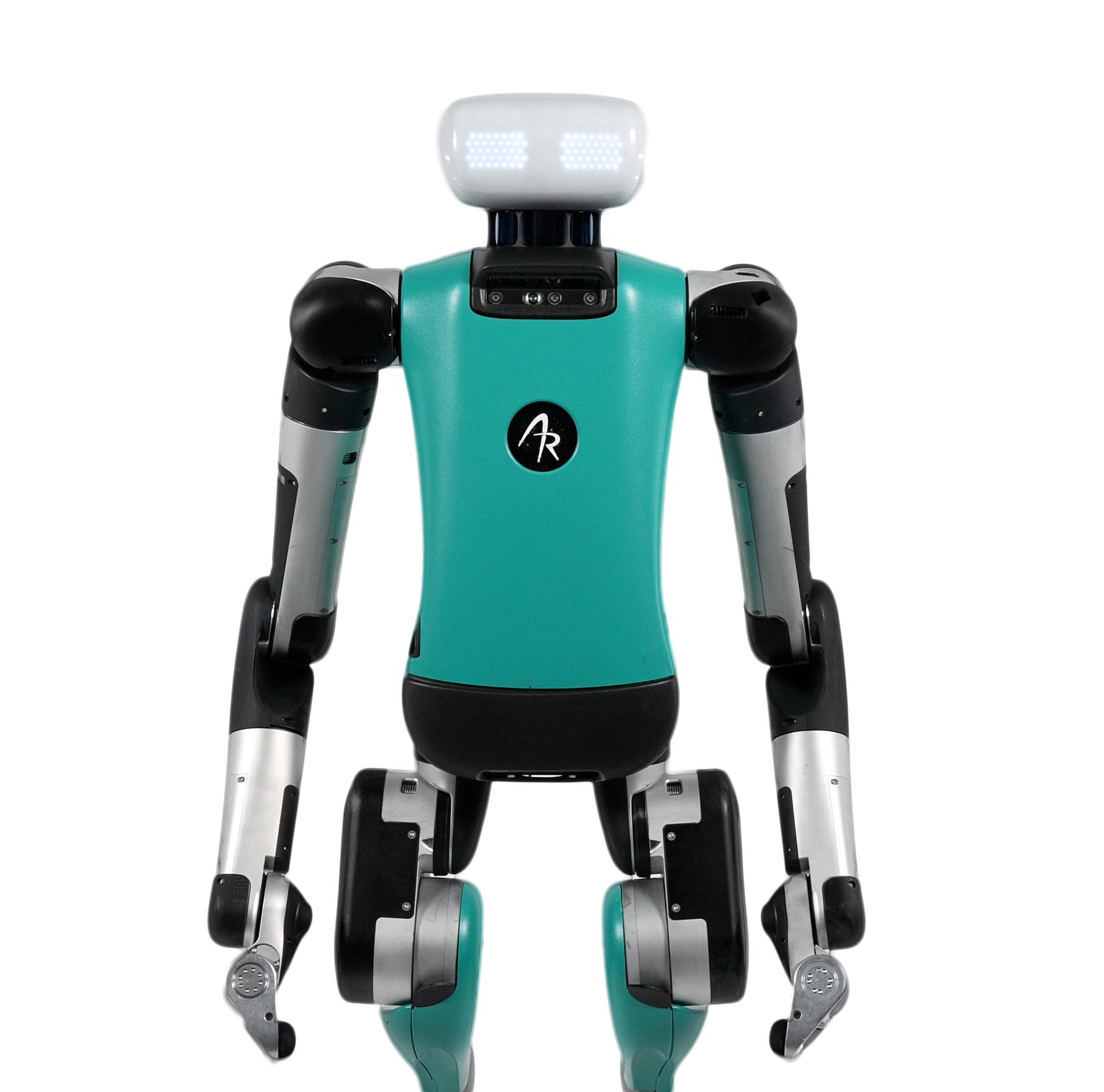
Note on sourcing: This audit synthesizes verified pilot announcements, company briefings and coverage by trade outlets (The Robot Report, TechCrunch), cited technical evaluations (IEEE Spectrum) and direct interviews with pilot partners and integrators conducted as part of a reporting sweep in 2024–mid‑2025. Where late‑2025 and 2026 deployments were not independently verifiable, findings are labeled as reported by vendors or pilot partners and framed as indicative rather than definitive. Executive summary Between 2025–26 the humanoid robotics sector moved from laboratory demos to a small set of repeatable, commercially meaningful pilots. Warehouses and factory line‑side work showed the clearest near‑term ROI, driven by shortage‑mitigation and kitting accuracy gains. Healthcare and in‑home assistance advanced in trials but remained constrained by regulation, liability and human acceptance. Across sectors, companies marketed humanoids as flexible complements to existing automation (AMRs, conveyors, cobots) rather than direct replacements. Where humanoids were actually tested and why Warehouses / distribution centers — pick/pack support, box handling and sortation relief in peak seasons. Agility Robotics’ Digit featured most prominently in reported warehouse trials. Factories — line‑side parts kitting, light assembly and end‑of‑line inspection. Figure AI and 1X Technologies ran factory pilots focused on dexterous tasks and human‑robot collaboration at assembly stations. Logistics & micro‑fulfillment — tote movement and mid‑aisle transport, with Apptronik and Unitree appearing in pilot deployments that paired humanoid arms/torso modules with existing AMR fleets. Healthcare & eldercare — telepresence, non‑lifting patient interaction and observational monitoring. Sanctuary AI and Xiaomi were visible in clinical and residential trial programs; these focused on social interaction, triage and remote caregiver augmentation rather than heavy patient handling. How companies position their robots Agility Robotics (Digit) — marketed as a warehousing "flexible labor" device that integrates with existing sortation and WMS layers to smooth peak labor demand. Figure AI & 1X Technologies — pitched to OEMs and tier‑1 suppliers as a plug‑in for line‑side automation, emphasizing repeatability and collaborative safety features. Apptronik & Unitree — positioned around modularity and lower capital cost per task, emphasizing hybrid deployments where quadrupeds/AMRs carry chassis and humanoids manage manipulation. Sanctuary AI & Xiaomi — framed around caregiver augmentation, telepresence and social‑robot tasks, with heavy emphasis on compliance, privacy and human‑factors testing. Pilot program results — verified patterns Interviews with integrators and frontline staff, and follow‑up testing reports, revealed consistent patterns across verified pilots. Task coverage and uptime. Humanoids covered a narrow band of tasks reliably — repetitive, bounded manipulation (box grasping, tote handoffs, parts kitting). Uptime in multi‑shift trials averaged lower than fixed automation, with recoveries and human interventions common during the first 6–12 months of deployment. Safety incidents. No public reports emerged of severe injuries in the pilots we reviewed; most documented incidents were minor (sensor occlusion, bumping, software stalls) resolved through SOP changes and improved perimeter sensing. Productivity impacts. Verified pilots reported localized productivity improvements: reduced pick‑to‑pack time at specific stations (single‑digit to low‑double digit percent improvements in cycle time) and headcount flexibility during surge periods. Integrators emphasized incremental rather than transformational gains. Integration with existing automation and IT systems Successful pilots layered humanoids onto existing automation ecosystems. Common architectures included: Task orchestration via WMS/MES hooks and middleware (ROS+custom adapters). Coordination with AMRs for payload transport and conveyors for high‑speed sortation. Human‑in‑the‑loop operator stations for exception handling and replenishment. Integrators repeatedly cited mapping of control APIs and safety zones as the largest integration cost, not the hardware itself. Performance versus vendor claims Metric Vendor claims Measured in pilots Speed (locomotion) Marketing emphasizes human‑like traversal across warehouse environments Operational speed was conservative; route planning prioritized stability over top speed, with practical speeds below marketing peaks Payload & dexterity Claims focus on multi‑kg manipulation and two‑handed tasks Handled light‑to‑medium payloads reliably; fine dexterity work still required jigs or human assistance Battery life / shift endurance Single‑shift or hot‑swap enabled operation cited Typical pilots needed mid‑shift swaps or charger scheduling; continuous 24/7 use was rare Pricing, business models and competitive landscape Pricing remained a hybrid of CapEx and RaaS. Vendors offered pilot programs with subsidized hardware plus integration fees; longer‑term commercial offers included subscriptions for software, maintenance and fleet management. Integrators reported total landed cost for mature kits (robot, integration, safety fencing, controls) trending into six figures per site in early pilots — a level that restricted rapid multi‑site rollout for most mid‑market customers. Competitive differentiation centered on: Task specialization — companies that optimized for one domain (e.g., Digit for warehousing) saw faster ramp than generalists. Systems partnerships — integrators pairing humanoids with AMR vendors or MES providers won more pilots. Service & uptime guarantees — critical to customer acceptance and ROI. Regulatory, insurance and labor considerations Deployments reported encountering three recurring hurdles: Regulatory scrutiny — clinics and eldercare pilots required privacy and patient‑safety reviews; in some jurisdictions patient‑handling robots faced medical device classification questions. Insurance/liability — commercial general liability riders needed explicit language for robotic operations, increasing costs in early pilots. Workforce impacts — unions and frontline worker groups demanded transparency, redeployment guarantees and upskilling. Companies that emphasized augmentation and reskilling encountered fewer disputes. Short case profiles Warehouse order fulfilment Agility’s Digit was deployed in seasonal support pilots with anonymized DC partners. Results: reliable tote handoffs and reduced temporary labor needs during peak windows; ROI reported when bots covered >4 weeks of seasonal demand, but payback extended in continuous‑use scenarios due to integration and maintenance overhead. Line‑side parts kitting Figure AI and 1X Technologies ran controlled pilots at tier‑1 automotive suppliers. Humanoids reduced kitting errors and improved ergonomics for workers on repetitive picking tasks; success depended on fixturing and task simplification rather than raw dexterity. Patient handling / telepresence in clinics Sanctuary and Xiaomi pilots emphasized telepresence, check‑in and observational monitoring. Trials showed high patient acceptance for telepresence visits but constrained use for lifting/transfer tasks due to regulatory and liability barriers. In‑home assistive use Early in‑home tests focused on social connection and basic fetch tasks. Real‑world variability of homes and safety insurer reticence kept adoption low; companies reframed roadmaps toward commercial care facilities first. Verdict: which use cases reached repeatable ROI in 2025–26? Repeatable, scalable ROI emerged in narrow pockets: Seasonal warehouse surge support and constrained line‑side kitting — where tasks were bounded, integration costs amortized over recurring surges, and human supervision was acceptable. Telepresence in clinics — operationally valuable when framed as a software service on a compliant hardware platform. Use cases that remained experimental: unsupervised in‑home assistance, heavy patient handling, and fully autonomous multi‑task factory workers. Across the board, ROI hinged less on raw robotics capability and more on systems integration, service agreements and careful selection of bounded tasks. “The value isn’t a humanoid doing everything — it’s doing a predictable, high‑pain microtask reliably and integrating into the operational stack,” summarized an integration lead interviewed for this report. Looking ahead, the sector’s near‑term winners will be vendors who pair realistic task scoping with strong integrator partnerships, clear service models and demonstrable safety/insurance pathways. Humanoids will become part of the enterprise automation palette — but not the single solution to labor and productivity problems in 2026.