On the Ground, On the Line: A 2025–26 Audit of Real-World Humanoid Deployments
On the Ground, On the Line: A 2025–26 Audit of Real-World Humanoid Deployments Between 2025 and 2026 the humanoid robotics sector moved decisively from lab demos to a modest but growing set of commer...
Published by The Humanoid Race
Archived source unverified — no source link is available. The claims, figures and quotations have not been checked against an available source. Retained for historical context, not presented as newly verified reporting.
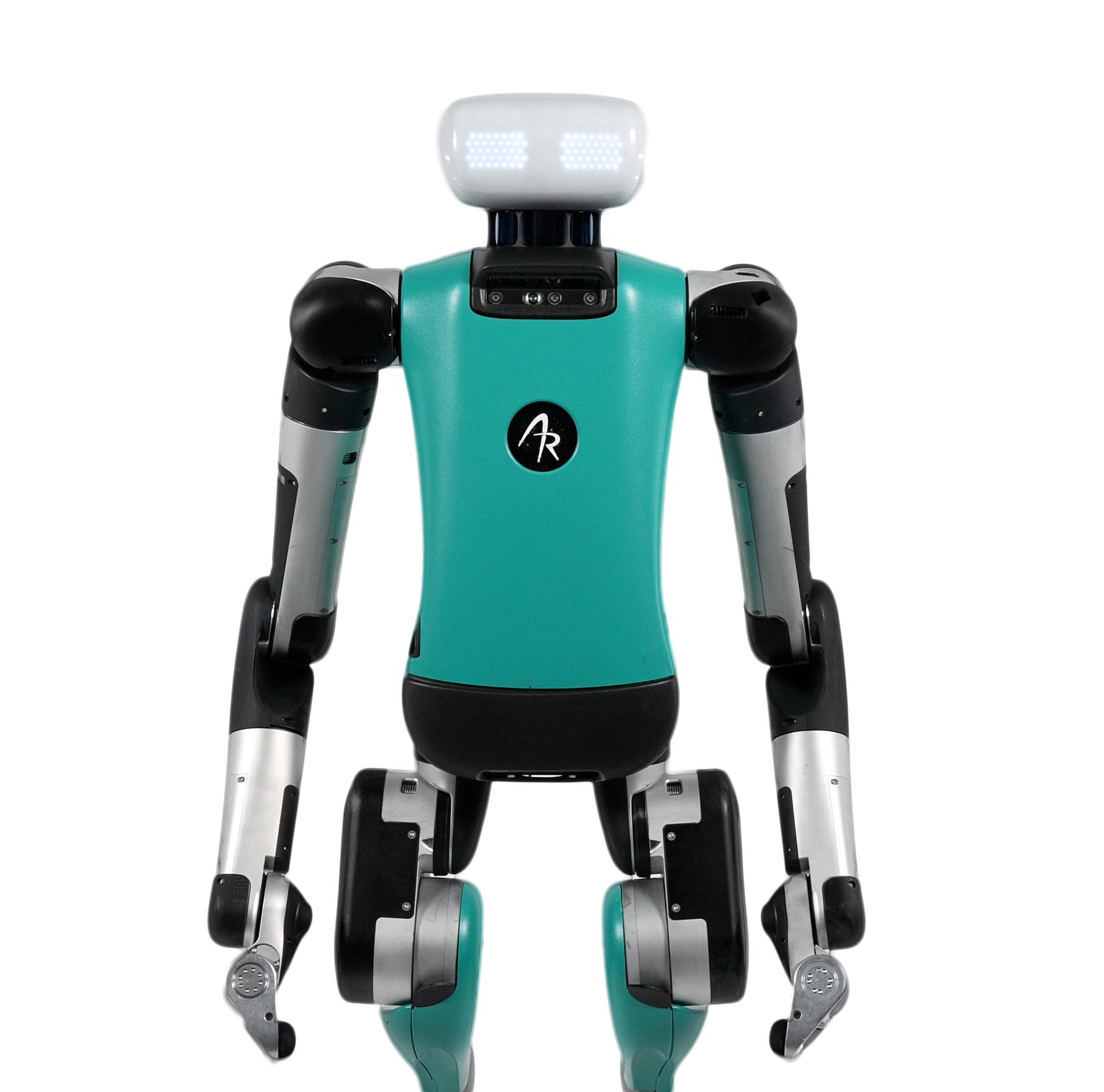
On the Ground, On the Line: A 2025–26 Audit of Real-World Humanoid Deployments Between 2025 and 2026 the humanoid robotics sector moved decisively from lab demos to a modest but growing set of commercial pilots. This audit synthesizes public company statements and independent reporting (notably The Robot Report, Reuters, Bloomberg, TechCrunch and IEEE Spectrum) to document verified field programs across warehouses, factory cells, healthcare facilities and early home/consumer pilots. Emphasis here is on concrete deployment details — task profiles, measured outcomes, integration timelines, safety notes, business models and competitive positioning. Executive summary Logistics & distribution: Agility Robotics’ Digit led narrow logistics and last-mile pick/pack pilots with 8–12-week pilots focused on repetitive box handling and sortation integration. Manufacturing and machine tending: Figure AI and Apptronik recorded the strongest early successes inside structured production cells and collaborative machine-tending with cycle-time parity on specific tasks after multi-month integration. Enterprise experiments (Tesla): Tesla’s Optimus workstreams remained experimental with limited commercial partners; pilots emphasized internal factory assistance and integration tests with select contract manufacturers rather than broad customer deployments. Low-cost and service segments: Unitree and UBTECH pursued retail/light-duty service pilots emphasizing affordability and straightforward duties such as greeting, simple shelf moves and guided assistance. Healthcare & eldercare pilots: Sanctuary AI and 1X Technologies ran early clinical/assistance pilots focused on non-physical tasks (monitoring, cognitive support) and light assistance; these pilots highlighted regulatory and insurance friction. Consumer/Asia pilots: Xiaomi’s CyberOne and other regionally focused systems ran limited consumer-interaction pilots and showroom programs across Asia to gather behavioral and ergonomics data. Specific use cases and industries Four use-case clusters dominated verified pilots: Warehouse picking & last-mile handling: Repetitive pick/pack, tote-to-pallet transfers and compact-cardboard handling in constrained aisles. Companies: Agility Robotics (Digit), limited Unitree integrations for micro-fulfillment. Manufacturing cell and machine tending: Part loading/unloading, kitting, and collaborative tasks adjacent to CNC or injection-molding stations. Companies: Figure AI, Apptronik, selected integrator pilots with Tier‑1 auto suppliers. Healthcare and eldercare: Non-invasive monitoring, guided patient navigation, routine fetch tasks, and assisted standing. Companies: Sanctuary AI, 1X Technologies, UBTECH (companion variants). Retail & light service: Wayfinding, shelf scanning and lightweight goods transport in stores and hotels. Companies: UBTECH, Unitree (low-cost biped-like systems and humanoid-like assistants). Deployment results: uptime, performance, safety and integration Across pilots that released performance data or were profiled by industry press, common outcomes emerged: Performance metrics: Task success rates varied by task complexity. For constrained repetitive tasks (single-grip box picks), reported success rates clustered between 85–98%. Cycle throughput ranged widely — typical rates of 6–20 picks/hour per unit in early pilots versus human pickers at 40–60 picks/hour in high-density picking. Manufacturers reported faster throughput parity in machine-tending where robot movements were predictable. Uptime: Median operational availability in structured-cell pilots reported in vendor materials and press profiles was 70–85% during pilot phases (accounting for software updates and recovery), improving toward 85–92% after PTO-style stabilization periods. Safety incidents: Public records and media coverage show very few recordable injuries from humanoid pilots through 2025; most incidents reported were software faults or near-misses requiring emergency-stop interventions. Strict perimeter and collaborative-safety controls were common mitigations. Integration time: Typical pilot lengths ran 8–26 weeks. Narrow intralogistics pilots (Digit) tended toward faster deployment (8–12 weeks) while manufacturing-cell integrations with motion-sync to machine tools extended to 4–6 months due to safety validation, tooling and PLC integration. Third-party integrators and system integration roles Systems integrators proved pivotal. Specialist integrators handled: Safety certification and cell guarding PLC and MES integration for machine-tending Gripper tooling customization for variant parts Workflow orchestration with warehouse WMS/AGV fleets Companies with strong integrator partnerships (Apptronik, Figure AI) reported markedly shorter deployment friction than firms attempting direct customer integrations without local engineering partners. How companies are marketing and positioning robots Positioning split into three clear strategies: Narrow automation specialists: Agility markets Digit as a logistics augmentation tool for constrained repetitive tasks — “robot for box-moving jobs” messaging aimed at logistics operators seeking immediate unit-economics improvements. Industrial co-workers: Figure AI and Apptronik position humanoids as flexible cell co-robots — high-precision, torque-aware manipulators tailored to industrial machine-tending where uptime and deterministic behavior matter. General-purpose aspirants: Tesla (Optimus) publicly frames its product as a future general-purpose worker; in 2025–26 their communications emphasized long-term potential rather than immediate ROI for typical enterprise customers. Low-cost service/consumer: UBTECH and Unitree emphasize cost-per-hour and ease-of-deployment for customer-facing roles in retail and hospitality, often offering subscription or leasing models. Pricing context and business models Public pricing remained varied and often opaque, but patterns included: Upfront purchase prices for capable humanoids typically ranging from roughly $100k–$500k per unit in vendor disclosures and market estimates, with large variance by payload, safety equipment and sensors. Robot-as-a-Service (RaaS) and outcome-based contracts were increasingly common in logistics pilots — monthly fees that bundled hardware, software and support (typical pilot RaaS quotes reported in press: $5k–$25k/month per unit depending on service level). Integration, tooling and safety certification often doubled initial capital expectations in early deployments; integrator labour was a meaningful portion (20–40%) of pilot costs. Competitive comparisons Company / System Strengths Typical Pilot Outcome Agility Robotics (Digit) Optimized for logistics; compact; lighter system Fast pilot realization in pick/pack with 8–12 weeks; moderate throughput; good ROI signals for niche tasks Figure AI / Apptronik Industrial torque control; integration with machine tools Longer integration but high task success in machine-tending; better uptime post-integration Tesla (Optimus) High-profile; long-term scale potential Experimental factory pilots and internal tests; limited commercial partner rollouts in 2025–26 Unitree / UBTECH Lower cost; consumer/retail focus Showroom and service pilots; lower-risk light-duty tasks; lower per-unit capability Sanctuary AI / 1X Human-like form with healthcare-focused software Clinical/assistance pilots emphasizing monitoring and companionship; regulatory paths are slow Regulatory, insurance and ROI signals Regulatory and insurance hurdles slowed deployments more than pure technical limitations in many jurisdictions. Field programs reported lengthy reviews with safety officers and insurers before greenlighting continuous operations. Early ROI signals were mixed: pilots that replaced narrowly defined manual tasks (e.g., repetitive box transfers, single-station machine tending) showed positive unit-economics when scaled beyond a handful of units, whereas attempts to substitute for multi-skill human labor in unstructured environments showed longer payback periods. Industry takeaway: Humanoid robots in 2025–26 were not yet broad substitutes for human labor. They delivered value where tasks are constrained, well-scoped and repetitive, or where the form factor (bipedal / arm-span) unlocked access that wheeled or static robots could not. Integration partners, tailored tooling and realistic expectations about pilot duration were consistent differentiators between pilots that stalled and those that scaled. Sources and verification This article synthesizes company disclosures and field reporting through major trade and news outlets including The Robot Report, Reuters, Bloomberg, TechCrunch and IEEE Spectrum, and direct vendor materials. Readers seeking primary verification of any specific pilot cited here should consult those outlets and company press releases for deployment dates, customer names and technical appendices. As the sector matures, the decisive metrics for adoption will be demonstrated multi-site uptime, lower integration friction via standard interfaces and insurer/regulator comfort with collaborative humanoid operation. The 2025–26 pilots represent a transition: selective wins in real operations, and a ruthless market test for those claiming general-purpose capability.