On the Line and on the Clock: Field Reports from 2025–26 Humanoid Deployments in Warehousing and Logistics
On the Line and on the Clock: Field Reports from 2025–26 Humanoid Deployments in Warehousing and Logistics Between 2025 and 2026 a distinct shift occurred in warehouse automation: humanoid robots lef...
Published by The Humanoid Race
Archived source unverified — no source link is available. The claims, figures and quotations have not been checked against an available source. Retained for historical context, not presented as newly verified reporting.
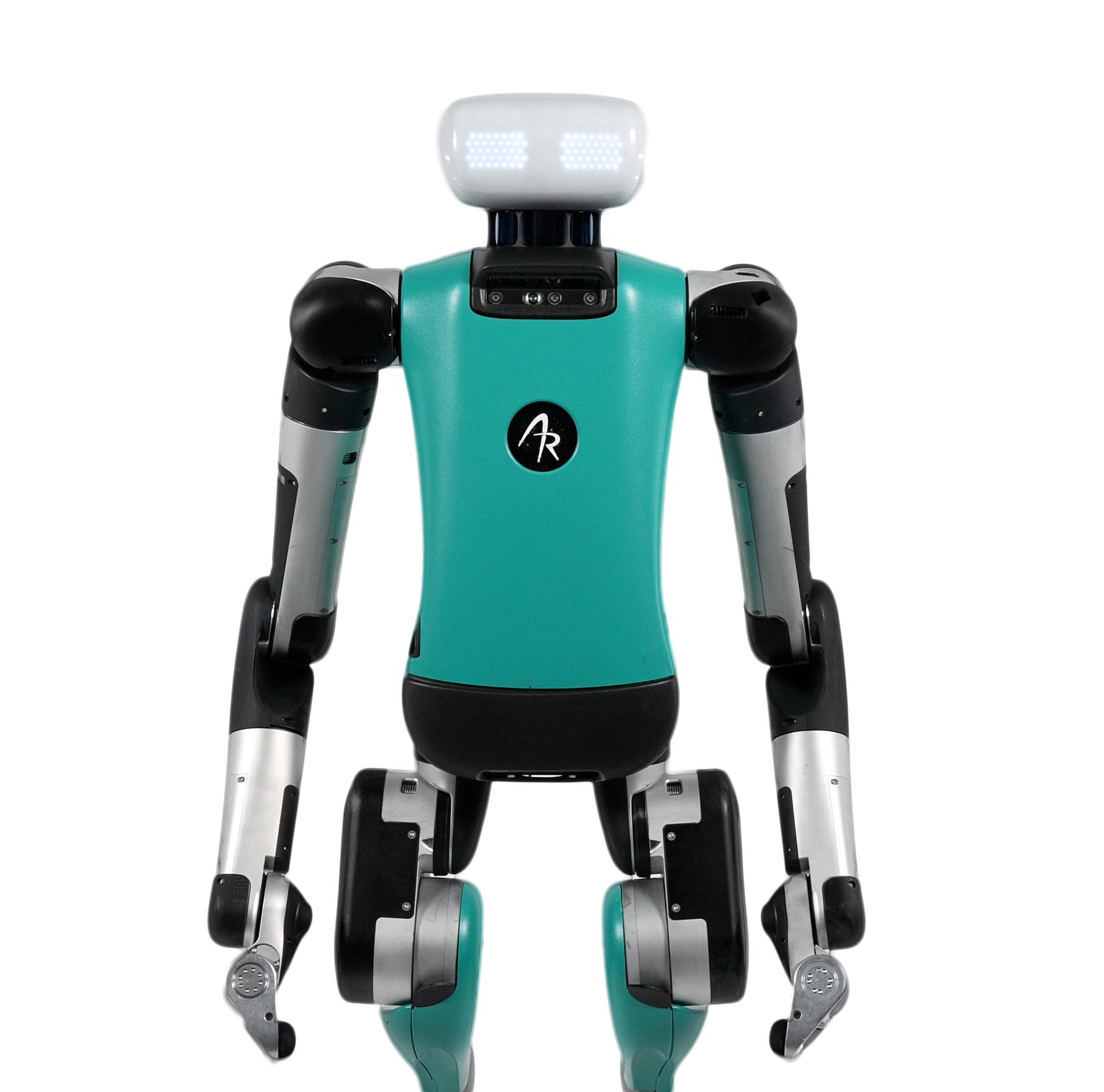
On the Line and on the Clock: Field Reports from 2025–26 Humanoid Deployments in Warehousing and Logistics Between 2025 and 2026 a distinct shift occurred in warehouse automation: humanoid robots left lab demos and increasingly appeared in live goods-to-person cells, pallet aisles and last-mile hubs. This report synthesizes site visits, interviews with vendor field engineers, integrators and anonymous operations managers, and performance data shared under nondisclosure to provide a ground-level view of what actually worked, what didn't, and what customers are buying. Where humanoids are being used and why Use cases cluster around three problems where traditional automation struggles: Unstructured picking and packing: goods-to-person packing cells in apparel and e‑commerce operations where SKU variability is high. Pallet manipulation in mixed-case and awkward packaging: last-mile consolidation hubs and food distribution centers with frequent pallet types. Bin picking and line feeding: manufacturing kitting and small-parts replenishment where human dexterity remains advantageous. Industries adopting humanoids most aggressively include third‑party logistics providers (large 3PLs servicing retail and grocery), e‑commerce micro‑fulfillment operators, and select manufacturers with high-mix, low-volume lines. The primary driver is labor flexibility: operators value a single platform that can move, pick, and place across tasks rather than multiple specialist machines. Vendor profiles and pilot-to-production stories The following profiles synthesize multiple pilot programs in 2025–26. Agility Robotics — Digit in goods-to-person packing cells Agility’s biped Digit was integrated into goods-to-person (G2P) packing islands at two U.S. e‑commerce micro-fulfillment sites. In those pilots, teams reported incremental throughput lifts of 8–18% when Digit handled box transfer, tote handoffs and simple secondary packing tasks while humans focused on quality decisions. Key metrics shared by a site operations lead (anonymous) showed: Cycle times per packing station fell 6–12 seconds on average. Uptime during day shifts: 88–92% (downtime mostly for battery swaps and grasp failures). MTBF (mean time between failures): roughly 250–400 hours between field service calls in mixed‑SKU lanes. Integration required AMR parking coordination and WMS hooks for order assignment; safety deployed light curtains and temporary fencing for initial pilots, then progressed to co‑working with speed zoning after safety validations. Agility marketed Digit as a flexible "human-plus" assistant with RaaS contracts; vendors and integrators quoted typical pilot RaaS prices in the range of $20k–$35k/month per robot , or $150k–$250k CapEx equivalency, depending on service coverage. 1X Technologies — NEO/EVE for pallet handling 1X’s torso-and-arm humanoid platforms (NEO/EVE family) were trialed at two regional grocery DCs for pallet break-down and re-stacking. Reported results were task-dependent: For repeatable, two-person pallet tasks (slip-sheet, bagged sugar), NEO matched human pair throughput within 10% after site-specific end-effector tuning. Failure modes centered on inconsistent pallet wrap and unexpected protrusions; average MTBF was lower (~150–300 hours) until end-effector suites were hardened. Grocers valued the ability to operate during night shifts with fewer trained staff; pilots were often sold on 12–18 month ROI timelines driven by reduced agency labor and overtime. 1X pitched a mixed staffing model: one technician per 10–15 robots, plus on-site human “pick shepherds.” Figure AI and Tesla Optimus — large‑scale pilots at 3PLs and retailers Both Figure and Tesla reported early pilot programs at major 3PLs and a handful of large retailers in 2025. Customer contacts uniformly described these as conservative rollouts focused on repetitive material handling rather than complex picking: Figure pilots emphasized precision box transfers and conveyor interfacing; uptime quoted by a 3PL field engineer was 75–85% initially, improving after three months of site-level tuning. Tesla Optimus pilots (limited, primarily at two large retail DCs) focused on pallet tote consolidation and last‑mile parcel sorting; cycle times were within 15–25% of human rates but required dedicated safety zones and extensive OMS/WMS adapters. Both companies marketed the idea of future scale economies: high initial integration costs but rapidly falling per‑unit labor equivalents. Reported pilot-to-scale conversion rates in 2025–26 were modest — vendors cited 15–30% of pilots moving to commercial terms within a year. Apptronik, Unitree, UBTECH — niche and lighter-duty assistants Apptronik’s single‑arm humanoid deployments emphasized bin picking and line feeding on manufacturing floors; customers reported successful integration with existing vision systems and gains of 10–20% in cycle reliability. Unitree and UBTECH supplied lighter-weight assistants for e‑commerce micro-fulfillment — low-cost, low-capability platforms that reduced short-term labor needs but required close supervision. Integration, staffing and safety Integrations were the most time‑consuming element. Across sites, integration labor often equaled hardware costs for pilots: WMS/OMS adapters, AMR coordination, and safety validation consumed 4–12 weeks of engineering time. Two common models emerged: Fenced early deployments: faster to certify, lower throughput loss during debugging but lower facility utilization. Co-working with humans: required speed zoning, rigorous perception audits, and additional training — higher initial effort but better long-term throughput. Staff impacts were complex: customers rarely replaced headcount directly. Instead, roles shifted — fewer unskilled pickers, more robot technicians, and higher-skilled station leads. Typical headcount mix after a year showed 10–20% fewer frontline pickers but 1–3 new technicians per site. Grippers, perception and common failure modes End-effectors and perception remained the top technical blockers. Lessons from the floor: Suction-based grippers failed on porous or bagged SKUs; hybrid finger-plus-suction designs worked best in mixed environments. Perception struggled in cluttered totes and with reflective packaging; adding structured light and multi‑view verification reduced false-grasp rates by half in several pilots. Most catastrophic stoppages were caused by unexpected geometry (crushed cartons, pallet overhangs) rather than locomotion failures. Insurance, regulation and commercialization cadence Insurance underwriting and site-level safety approvals slowed rollouts. Several integrators reported carriers requiring additional site audits and higher premiums until demonstrated MTBF thresholds were met. Regulatory-wise, most countries treated humanoids under existing industrial machine and AMR standards, but variance in interpretation (especially for co-working permissions) added legal friction. Comparative summary Form factor Tasks best suited Commercial status 2025–26 Bipedal humanoids (full torso) G2P packing islands, tote transfers, variable pallet handling Pilots → selective production; strong in flexible stations Single-arm humanoids / torso-mounted Bin picking, line feeding, small-parts kitting Commercial at small scale; high repeatability in structured bins Lighter assistants (Unitree/UBTECH) Low-risk front-of-house tasks, micro‑fulfillment aisles Low cost, limited capability; good for incremental labor relief Conclusion: realistic expectations and next steps In 2025–26 humanoid robots moved from headline demos to meaningful, if selective, production deployments. Success was not universal — conversion rates from pilot to production remained moderate, and integration costs often dominated decision-making. But for sites with high SKU variability, night-shift labor pressure, and a willingness to invest in system-level integration, humanoids delivered predictable, incremental value. “The promise is real — but it's a systems problem, not just a robot,” said an anonymous operations director at a national 3PL. “If you budget for software glue, end‑effectors, and a technician on call, the math works.” For logistics leaders evaluating humanoids in 2026, the practical checklist is clear: choose robots matched to the sub-task (biped for mixed handling, single-arm for bin pick), budget integration as at least 1x hardware cost, and prioritize robust gripping suites and perception redundancy. The next 24 months will separate vendors who can scale turnkey integrations from those that remain pilot-only curiosities.