Platform Wars: Actuators, SDKs and Safety — The Tech Choices That Created Competitive Moats in 2025–26 Humanoids
Executive summary By 2025–26 the humanoid market had bifurcated along architecture lines: a small group of companies attained durable enterprise traction by coupling clear hardware tradeoffs with comp...
Published by The Humanoid Race
Archived source unverified — no source link is available. The claims, figures and quotations have not been checked against an available source. Retained for historical context, not presented as newly verified reporting.
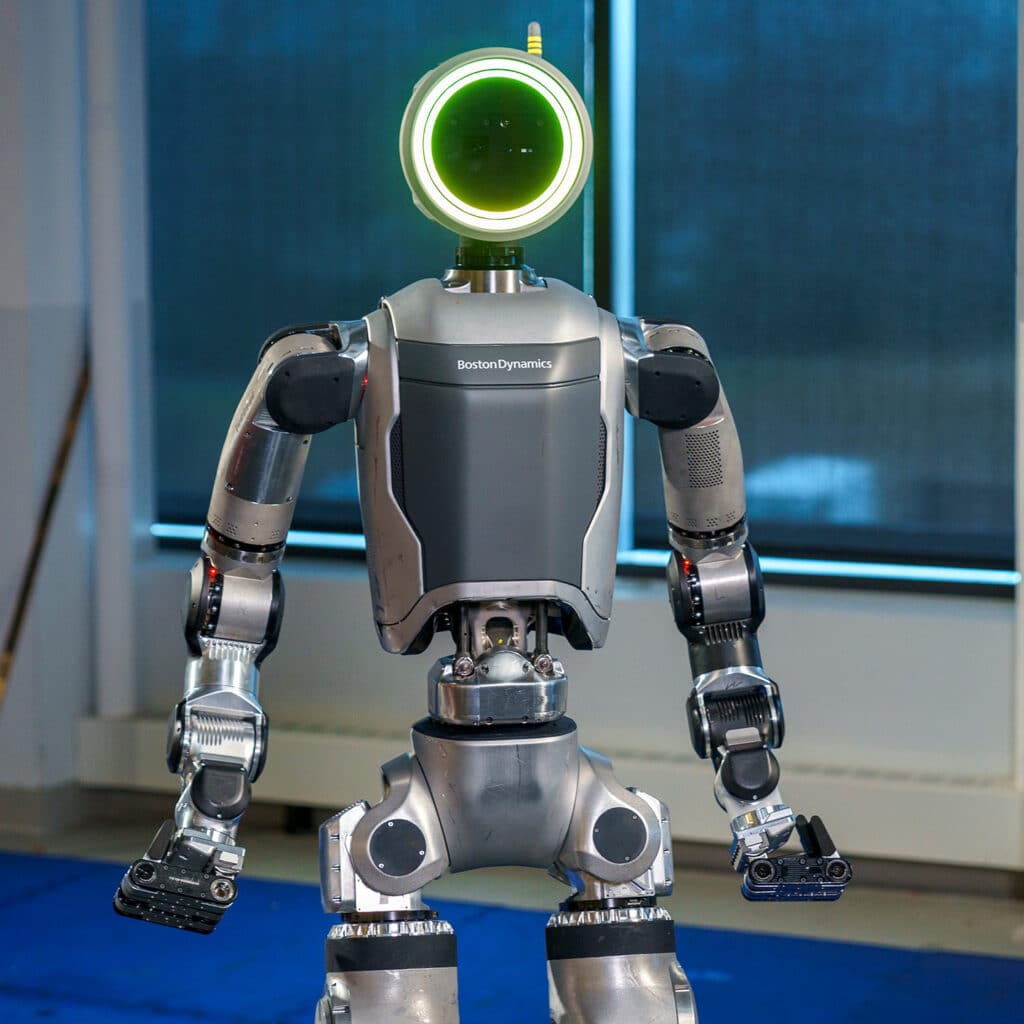
Executive summary By 2025–26 the humanoid market had bifurcated along architecture lines: a small group of companies attained durable enterprise traction by coupling clear hardware tradeoffs with complementary software ecosystems and rigorous safety and aftercare offerings; the rest remained in pilot purgatory. The winners were not always the most advanced kinematicists — they were the teams that engineered predictable force control, accessible developer tooling, validated safety paths, and realistic go‑to‑market services. This report compares the architecture, ecosystems and commercial positioning of leading efforts — Tesla, Boston Dynamics, Apptronik, Figure, Agility Robotics, 1X Technologies, Unitree, Sanctuary, UBTECH and Fourier Intelligence — and lays out a procurement rubric for enterprise buyers. How architectural choices created divergent outcomes 1. Autonomy stacks: vision-first vs sensor fusion Tesla leaned on a vision‑first autonomy philosophy and verticalized compute strategy (custom AI chips, in‑house dataset curation, Dojo rhetoric). That architecture favors rapid improvements in high‑dimensional perception tasks and lowers BOM for sensors, enabling aggressive pricing targets. In practice, vision‑first stacks delivered strong results in structured indoor workflows (inventory aisles, manufacturing cells) where model confidence is high, but required substantial edge compute and large annotated datasets to achieve reliable contact‑rich manipulation. Boston Dynamics emphasized state estimation and control, investing in proprioception and robust low‑level controllers to enable dynamic locomotion. Their stack put greater weight on model‑based control and high‑bandwidth feedback, delivering robustness in uneven terrain and inspection use cases where mobility is the prime requirement. 2. Actuators and force control: the mechanical moat Apptronik and Figure prioritized modular, low‑inertia actuators with integrated torque sensing — design choices that simplify compliant interaction with humans and delicate manipulation tasks. Modularity also accelerated serviceability and third‑party actuator swaps. Agility Robotics optimized form factor and payload distribution (Digit's torso and arm geometry) to minimize mechanical complexity for logistics tasks, favoring high payload ratio and simple, repeatable grasps over dextrous manipulation. 1X Technologies and Unitree competed on cost by using off‑the‑shelf motors, harmonic drives and fewer high‑precision encoders; they accepted lower torque bandwidth and heavier gear reduction to reach price points attractive to research labs and price‑sensitive integrators. 3. Software, SDKs and developer ecosystems The largest commercial wins correlated with ecosystems that balanced openness with curated solutions. Boston Dynamics maintained a controlled SDK and certified app partners for enterprise deployment; that limited third‑party innovation but shortened enterprise procurement cycles. Tesla adopted a tightly verticalized stack with limited public SDKs early on, betting that internal apps and large partners would internalize integration costs. By contrast, Apptronik, Figure and Agility expanded ROS‑compatible SDKs and sample stacks, which increased third‑party uptake for manipulation and logistics applications. 4. Safety architectures and clinical certifications Platforms selling into human‑facing environments invested earlier in standards compliance. Sanctuary and UBTECH emphasized compliance, tactile skins, limited power envelopes and human‑interaction frameworks—targeting eldercare, education and reception duties and pursuing ISO 13482 and ISO/TS 15066 pathways. Fourier Intelligence leveraged IEC 60601 and medical device processes to integrate humanoid arms and exoskeletons into rehabilitation clinics, pairing robots with clinician workflows and electronic medical record (EMR) connectors. Commercial positioning, go‑to‑market and pricing context Marketing narratives reflected architecture: Tesla sold a vision of low‑cost, general‑purpose humanoids enabled by scale and vertically integrated AI. Boston Dynamics sold reliability and robustness to industrial customers (inspection, defense contractors). Apptronik and Figure positioned as “human‑safe” collaborators for factories and care settings. Agility targeted logistics and last‑meter handling. Unitree and 1X focused on education, research and low‑cost pilots. Pricing remained heterogeneous. Spot‑type mobility platforms had list prices in the tens of thousands (Boston Dynamics’ Spot historically sat near the mid‑five‑figure range), while early full‑sized humanoids and manipulated industrial prototypes were often priced in the low‑to‑mid six‑figures or delivered under subscription models (hardware + SaaS + support). Several vendors—particularly Tesla and Unitree—promoted aspirational low unit prices as scale objectives; meanwhile Figure and Apptronik emphasized total cost of ownership reductions via modular spares, predictable torque control (reducing downtime) and certification that lowered integration costs for regulated customers. Aftercare, partnerships and validation pipelines Cloud and ISV partnerships: Winners integrated with major cloud providers for telemetry and over‑the‑air updates (AWS IoT, Azure Digital Twins). Strategic ISV partnerships (PLM/Siemens; EMR providers in healthcare) converted pilots into workflows. Simulation and digital twins: NVIDIA Isaac Sim, Unity, MuJoCo and bespoke physics stacks were standard for validation. Companies that invested in high‑fidelity digital twins reduced field surprises and compressed time to compliance. Aftercare: Remote monitoring, predictive maintenance driven by motor‑level telemetry, and regional spare‑parts logistics were decisive for enterprise buyers. Boston Dynamics and Fourier’s subscription service examples showed enterprises were willing to pay for SLAs that reduced operational risk. Concrete use cases and deployment examples Logistics and micro‑fulfillment: Agility and Apptronik pilots prioritized box handling and shelf restocking; form factor and payload choices reduced rack redesign for warehouses. Industrial inspection & remote operations: Boston Dynamics units (mobility‑focused) continued to displace costly human inspection in hazardous environments; customers cited lower insurance and downtime costs. Clinical and rehab workflows: Fourier Intelligence and UBTECH integrations with hospitals demonstrated shorter onboarding for clinicians where IEC/medical‑grade processes were followed. Customer service and human interaction: Sanctuary and UBTECH units were deployed in hospitality and care pilots where tactile safety and conversational UX reduced friction with regulators and facility managers. Bottom line: enterprises bought confidence as much as capability. Predictable force control, a documented safety compliance path, an accessible developer story and an aftercare SLA were the primary differentiators that translated architecture into market share. Competitive comparison (high level) Company Architectural focus Market position Tesla Vision‑first autonomy, vertical compute High upside on cost; slower third‑party uptake Boston Dynamics Locomotion and robustness, model‑based control Strong in inspection/field; premium pricing Apptronik / Figure Modular, low‑inertia actuators; human safety Adoption in human‑centric industries; modular serviceability Agility Robotics Payload/form‑factor for logistics Logistics pilots; pragmatic integration 1X / Unitree Cost‑optimized hardware Research/price‑sensitive pilots Sanctuary / UBTECH Human interaction, compliance Education, care and hospitality pilots Fourier Intelligence Medical device pathways, rehab integration Clinics and hospitals (regulated buyers) Rubric: evaluating a humanoid platform (engineering & procurement) Force control maturity: torque sensing, control bandwidth, compliance primitives, and evidence of safe human contact. Sensor strategy: vision vs sensor fusion tradeoffs; labeled dataset access; robustness to lighting and occlusion. Actuator architecture: modularity, serviceability, low inertia vs gear reduction, and expected MTBF for high‑wear components. Software & SDK: availability of ROS drivers, simulation compatibility, cloud APIs, and sample enterprise apps. Safety & compliance: certifications pursued (ISO/IEC/medical), documented hazard analyses and field test reports. Integration partners: ISVs, systems integrators, and cloud providers with prebuilt connectors. Aftercare & SLAs: telemetry, predictive maintenance, spare‑parts availability and regional service footprint. Total cost of ownership: upfront price, expected downtime, integration effort and certification costs. Conclusion In 2025–26 the market rewarded realistic engineering tradeoffs and enterprise‑grade commercialization. Vision promises and low prices garnered headlines, but platforms that paired deterministic force control, accessible developer tools, certified safety pathways and robust aftercare captured procurement approvals and recurring revenue. For buyers the evaluation checklist above separates showroom demos from deployable systems — and that separation is where the market leaders locked their moats.