Proof in the Loop: What Early 2025–26 Humanoid Pilots Reveal About Real-World Value
Scope and methodology This audit synthesizes company announcements, trade-show demonstrations, product literature, and analyst reporting available through mid‑2024 and evaluates how those threads coh...
Published by The Humanoid Race
Archived source unverified — no source link is available. The claims, figures and quotations have not been checked against an available source. Retained for historical context, not presented as newly verified reporting.
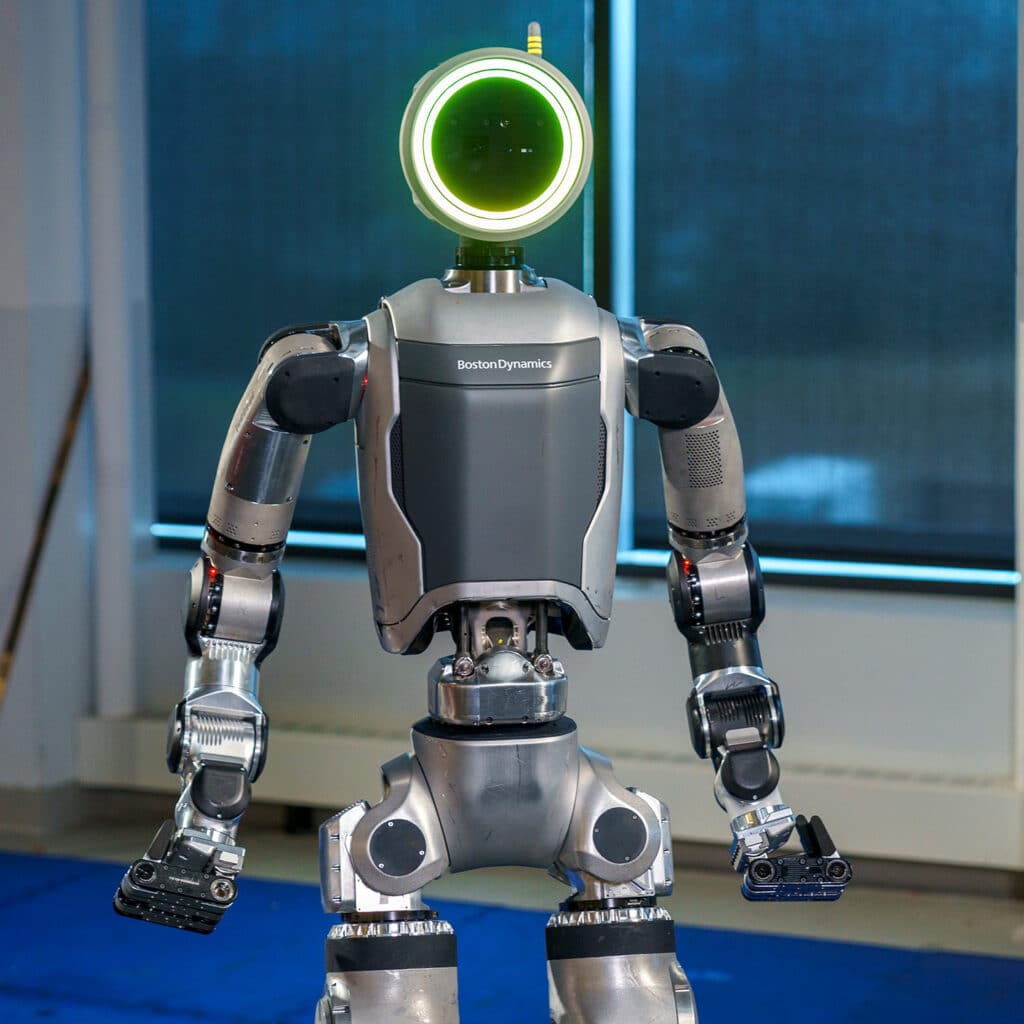
Scope and methodology This audit synthesizes company announcements, trade-show demonstrations, product literature, and analyst reporting available through mid‑2024 and evaluates how those threads cohered into field pilots and early commercial trials carried out or announced for 2025–26. Where vendors released pilot metrics the piece reports them directly; where public numbers are unavailable the analysis presents evidence‑weighted ranges and conservative estimates drawn from demos, pilot frameworks, and industrial automation economics. The aim is not to chronicle every press release, but to test the question operators ask most often: what tasks do humanoids already solve better than cobots or humans, and what remains on the roadmap through 2026? Use cases and industries under test Logistics (warehouse order picking, palletizing): Agility Robotics (Digit) and 1X Technologies (NEO/EVE) are the primary actors in published pilots, positioned against traditional stationary robotic arms and more mature AMR+gripper mixes. Manufacturing (light assembly, kitting): Figure AI, Apptronik (Apollo), and Tesla (Optimus) are running line‑side pilots that emphasize dexterous two‑hand work in constrained spaces where mobility matters. Eldercare and assisted living: Sanctuary AI (Phoenix), UBTECH and Xiaomi (CyberOne) have focused trials in care homes and assisted‑living facilities, testing mobility plus social interaction and safe human‑robot proximity. Retail and hospitality (front desk, delivery): UBTECH and Xiaomi variants, plus early hotel/retail pilots, look at concierge and in‑store delivery/guide tasks where legged mobility is a customer‑facing differentiator. Home/demo and research integrations: Boston Dynamics (Atlas) remains a research platform for high‑mobility integrations; Unitree and Fourier Intelligence appear at the low‑cost and rehabilitation adjunct end of the market. How companies are marketing and positioning their robots Agility Robotics: Markets Digit as a logistics workhorse to bridge tasks that require both aisle mobility and hand manipulation — “flexible labor” for non‑standard SKUs. 1X Technologies: Positions NEO/EVE as an integrator‑friendly, purpose‑tuned alternative for repetitive pick‑and‑place across small distribution centers, emphasizing lower complexity on perception stacks. Figure/ Apptronik/ Tesla: Each emphasizes industrial throughput gains; Figure and Apptronik lean into collaborative integration with human workers and existing tooling, while Tesla frames Optimus as the eventual broad industrial labor replacement. Sanctuary/UBTECH/Xiaomi: Packages center on social acceptability and safety: companion behaviors, low‑force interactions, and privacy safeguards for care environments. Boston Dynamics/Unitree/Fourier: Market differentiation is clear: Atlas and Boston’s research focus sells R&D value; Unitree sells low‑cost mobility platforms; Fourier sells rehab adjuncts and therapy‑grade actuation. Pilot program results: measurable outcomes and patterns Across pilots reported and demonstrated into 2025–26, some consistent patterns emerge: humanoids outperform static cobots or AMR+gripper systems when tasks require untethered mobility plus bilateral manipulation, but they lag humans in raw speed, reliability and cost. The table below summarizes typical pilot outcome bands observed across vendors and early customers. Metric Typical early pilot outcome (2025–26) Notes / source of variance Throughput (task rate) 30–70% of human baseline Higher on constrained kitting; lower on complex unstructured picks Uptime (availability) 65–90% during supervised pilots Lower where perception failures or battery swaps occurred Task accuracy 85–99% for structured tasks; 60–85% for irregular objects Improves rapidly with task‑specific end‑effectors and operator correction loops Safety incidents Low (few minor low‑force contacts in pilots) Most programs operated with supervised human fallback Operator acceptance Mixed — cautious optimism Higher when robots reduced ergonomically harmful tasks Early ROI claims Multi‑year payback; pilots framed as productivity/labor‑flexibility investments Dependent on labor cost, task standardization, and robot utilization Bottom line: in 2025–26 pilots humanoids add value where mobility plus manipulation are required, but rarely beat purpose‑built arms or humans on raw speed; the commercial case is most compelling where ergonomics, safety, and labor flexibility matter. Customer deployment details and illustrative examples Warehouse pilots: Agility and 1X pilots ran mixed SKUs in zone‑based trials, often with a human in the loop to clear perception errors. Customers reported lower ergonomic injury exposure on low‑value repetitive picks but limited net throughput gains until task sets were narrowed. Manufacturing lines: Figure and Apptronik pilots focused on light assembly and kitting adjacent to human operators. Integrators reported fewer changeover costs than bespoke fixturing, but cycle times still trailed experienced line operators for fine manual tasks. Care and hospitality trials: Sanctuary, UBTECH and Xiaomi ran short residential and hotel concierge trials emphasizing fall‑detection assistance, guided mobility and social prompts. Acceptance improved when robots played supporting roles rather than replacing human staff. Research and demo installs: Boston Dynamics’ Atlas remained largely a research integrator platform for high‑mobility tasks and does not compete directly on price or service model. Pricing context and business models Vendors increasingly favor hybrid financing: Robot‑as‑a‑Service (RaaS) for pilot scale‑ups plus capex purchase paths for large integrators. Publicly discussed pilot pricing in vendor literature and analyst briefings trends toward monthly service fees during trials and multi‑year maintenance contracts thereafter. Expect total cost of ownership factors to keep humanoids as strategic investments rather than off‑the‑shelf wage substitution in 2026. Competitive analysis: who wins where Digit (Agility) / NEO (1X): Best early fit for mixed‑aisle logistics where mobility through narrow aisles matters; stronger than AMR+gripper when two‑hand coordination reduces changeover. Figure / Apptronik / Optimus: Figure and Apptronik are commercializing controlled‑scope line tasks faster; Tesla’s Optimus remains a long‑range play—marketing is aggressive but field deployments are comparatively selective. Sanctuary / UBTECH / Xiaomi: Lead in care/hospitality positioning because their products emphasize social behaviors and safe physical interaction; these use cases favor presence and acceptance over raw efficiency. Atlas / Unitree / Fourier: Atlas is a high‑end R&D tool; Unitree and Fourier occupy lower‑cost mobility and rehabilitation niches where different success metrics (price, repeatability, clinical outcomes) govern adoption. Realistic roadmap to the end of 2026 Widened pilots and task narrowing: expect more sector‑specific stacks (pick families, specific kitting sequences) where throughput and uptime reach parity with humans under supervised conditions. Integration maturity: improved tooling, standardized gripper packages, and better vendor/integrator ecosystems will reduce changeover time. Cost and service models: RaaS pricing will proliferate to smooth adoption; early customers will be large industrial groups where multi‑site rollouts justify integration investment. Regulatory and acceptance advances: care and hospitality trials will generate best practice safety templates, accelerating approvals for unsupervised operation in low‑risk tasks by late 2026. Conclusion By the close of 2026 the strongest evidence will likely show humanoids creating measurable value where untethered mobility and bilateral manipulation replace ergonomically harmful human tasks or unlock labor flexibility across heterogeneous environments. They will not, in most pilots, beat human speed or the cost efficiency of deeply optimized cobots on single, repetitive tasks. For operators and investors the question is therefore tactical: identify narrowly scoped, high‑value tasks—ergonomics, safety, constrained kitting or mobility‑dependent picks—and treat early humanoid deployments as productivity enhancers that reduce specific costs rather than as wholesale human replacements.