Specs that Matter: How Design Trade-offs Today Will Decide the 2026 Humanoid Landscape
Technical trade-offs that decide commercial advantage Humanoid robotics is less about a single engineering breakthrough than a set of design trade-offs. The combination of locomotion, actuation, powe...
Published by The Humanoid Race
Archived source unverified — no source link is available. The claims, figures and quotations have not been checked against an available source. Retained for historical context, not presented as newly verified reporting.
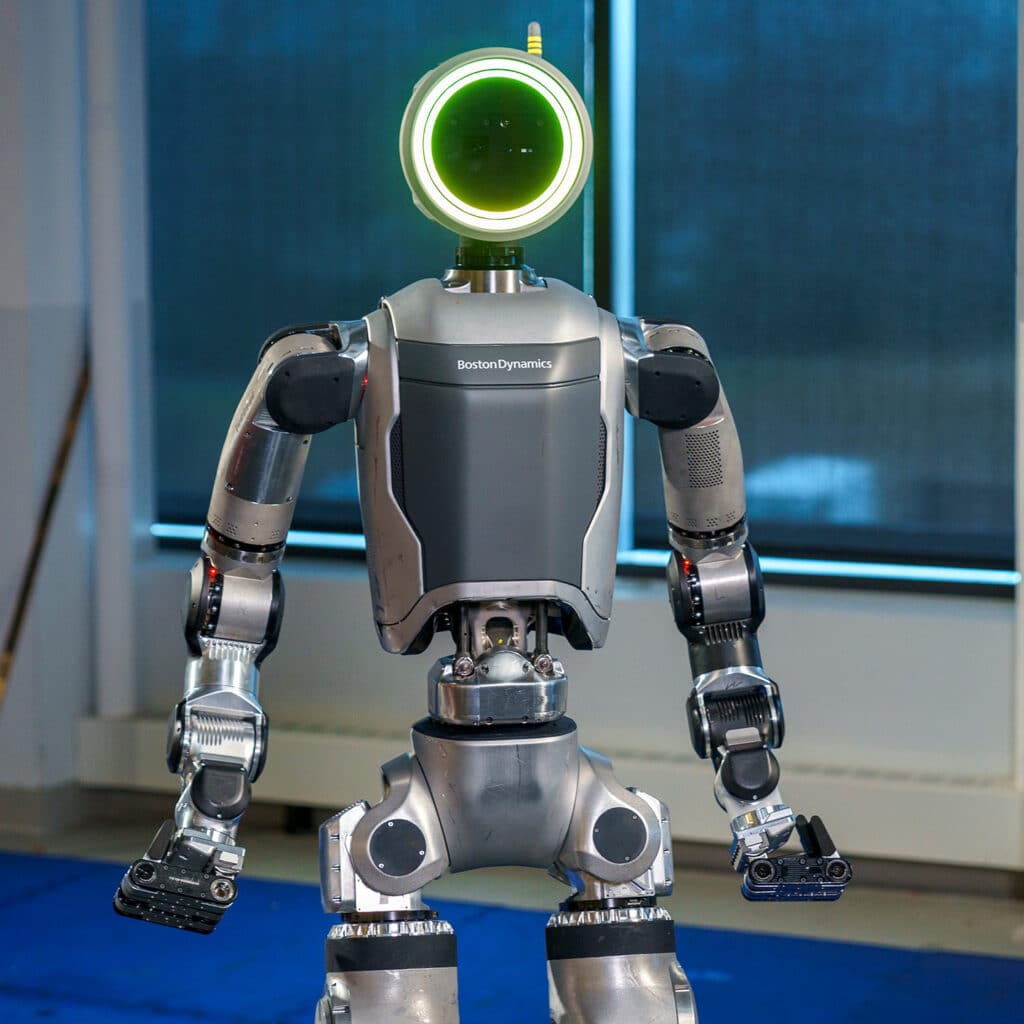
Technical trade-offs that decide commercial advantage Humanoid robotics is less about a single engineering breakthrough than a set of design trade-offs. The combination of locomotion, actuation, power, perception and serviceability determines which industries a platform can economically serve. Locomotion: bipedal vs. hybrid wheeled Bipedal designs (Boston Dynamics’ Atlas demos, research platforms) offer unmatched environmental flexibility — stairs, cluttered factory floors, and human-centric spaces — but demand advanced control, high-power actuators and frequent maintenance. Hybrid wheeled approaches (wheeled base with humanoid arms) dramatically improve energy efficiency and payload endurance at much lower cost and complexity. Many commercial solutions favor hybrids for logistics and manufacturing. Payload, reach and force control Payload and accurate force control separate industrial workhorses from concierge robots. High payloads (15–40+ kg per arm) plus compliant torque control enable case handling, machine tending, and safe contact tasks in manufacturing. Lower payloads with capacitive/soft grippers are sufficient for eldercare, retail stocking and hospitality. Battery life and duty cycle Long-duration batteries and hot-swappable packs favor 24/7 roles (eldercare monitoring, in-home assistance, security rounds), while short duty-cycle robots that return to charging docks work for task-based logistics (pick-and-place, pallet case handling). Perception stacks and autonomy level Robust autonomy reduces onsite integration cost. Full autonomy needs a high-fidelity sensor suite (lidar, stereo, event cameras), edge compute and advanced scene understanding. Companies focused on controlled environments (warehouses) can get by with simpler perception and structured maps; eldercare requires semantic understanding and safety-certified perception. Safety and redundancy Redundant sensors, dual motor channels and predictable fail-safe modes are critical for healthcare and clinical settings where regulatory compliance and liability appetite are low. Safety-first architectures add cost but unlock regulated markets. Modular end-effectors and maintainability Interchangeable hands and standard interfaces (ISO-style flanges, ROS control profiles) accelerate application development. Serviceability—field-replaceable actuators, remote diagnostics, and established service networks—drives TCO down for industrial adopters. Design is not just capability: it is the combination of capability, uptime and service economics that determines whether a robot pays for itself. Mapping specs to industry fit Manufacturing and machine tending : Favor high payload, force control, and ruggedized maintenance. Hybrid wheeled bases with heavy arms can outperform full bipeds in throughput and cost. Logistics and warehousing : Low-cost chassis, fast cycle times, and simple task automation win. Robots like case handlers and wheeled humanoids focused on ergonomics perform well. Eldercare and home assistance : Long battery life, soft interaction, compliant actuation and high-level autonomy matter more than raw payload. Safety redundancy and clinical compliance are mandatory for institutional deployments. Retail and hospitality : Moderate autonomy and lower payloads; aesthetics and cost-sensitive pricing are primary factors. Comparative spotlights Company Engineering focus / advantage Market positioning & examples Tesla Powertrain, battery integration, vertical supply chain Positioned as cost leader via automotive-scale manufacturing; marketing emphasizes low per-unit cost and energy efficiency. Limited public deployments as of 2025; strategy depends on leveraging scale from vehicle business. Boston Dynamics Dynamic mobility, advanced control systems Known for class-leading balance and agility (Atlas demos); commercial focus diversified to Stretch and Spot for warehouses/inspection. Marketing emphasizes capability in unstructured environments. Apptronik & Figure Actuation quality, human-safe manipulation, compliant torque control Both pitch humanoid arms/whole-body platforms to environments that require safe human interaction — manufacturing co-bots and care settings. Positioning stresses human-safe force control and modular tooling. Agility Robotics Ergonomics for case handling, practical end-to-end logistics Digit is marketed toward repetitive material handling tasks where human-like kinematics add value (doorways, staircases). Sales focus: pilots with logistics providers and integrators. Sanctuary / 1X (NEO) Safety, clinical-compliance chemistry, regulatory focus Companies emphasizing healthcare/clinical markets position their platforms around safety assurances, validation corridors and human-centered interaction design. Xiaomi & UBTECH Cost-optimized consumer hardware, productization Target consumer and education markets with low-cost, mass-market designs and app ecosystems. Marketing emphasizes price/performance and household-friendly form factors. Unitree Volume manufacturing economics, rapid hardware cycles Known for low-cost quadrupeds and scaling manufacturing; ability to undercut competitors on hardware price benefits cost-sensitive markets and large-scale fleet pilots. Developer ecosystems, maintenance and pricing models ROS, simulator integration (Gazebo, Ignition, Nvidia Isaac, Unity), and vendor SDKs are now decisive purchasing criteria. Platforms with mature simulators and digital twins dramatically reduce integration time. Maintenance networks — certified technicians, spare parts logistics, remote diagnostics — turn prototypes into reliable floor assets. Pricing falls into two camps: CapEx sales (one-off purchase, typical for industrial buyers familiar with ROI modelling) and RaaS (robot-as-a-service) subscription models tailored to operations teams. RaaS is attractive where integration and uptime are uncertain; it shifts risk to vendors but requires robust service infrastructure. Typical market signals in 2024–25: hardware-oriented vendors pushing CapEx; newcomers and integrators leaning RaaS to lower adoption friction. Total cost of ownership signals High-payload, high-autonomy robots carry higher sticker prices and maintenance; payoff requires high-utilization industrial shifts or premium labor replacement. Low-cost chassis with simpler autonomy have lower acquisition and service costs — good fits for logistics and retail where throughput is easily measured. Conclusions and 2026 scenarios Three plausible demand environments produce different winners by 2026: Labor-shortage driven : Manufacturers and logistics providers prioritize throughput and safety. Agility, Apptronik/Figure and Boston Dynamics’ industrial offerings perform best due to ergonomics and payload capabilities. Regulatory-conservative (healthcare-focused) : Firms emphasizing safety certification and clinical compliance (Sanctuary-style players, established industrial partners) win smaller but higher-margin healthcare contracts. Price-sensitive volume market : Tesla (if it scales vertically), Xiaomi/UBTECH and Unitree capture large consumer and low-end commercial segments through low-cost hardware and manufacturing scale. Competitive map (industry fit, qualitative) Firm Best fit industries Tesla Price-sensitive commercial, scaled fleet deployments (if realized) Boston Dynamics Unstructured industrial sites, inspection, advanced logistics Agility Robotics Warehousing/logistics, case handling Apptronik / Figure Manufacturing, safe human-robot collaboration, select service roles Sanctuary / 1X Healthcare, eldercare, clinical environments Xiaomi / UBTECH Consumer, education, low-cost retail applications Unitree Cost-sensitive pilots, research and low-end commercial By 2026, the market will be stratified: high-end dynamic mobility and force-capable platforms serving manufacturing and unstructured sites; low-cost, high-volume chassis taking logistics and consumer roles; and safety/clinical-specialists carving out healthcare niches where certification and trust trump raw capability. Vendors that pair the right hardware trade-offs with mature developer tools and service networks will command commercially meaningful share.