Walking the Aisles: Inside 2025–26 Humanoid Pilots in Warehouses, Factories and Care Homes
Introduction Through 2025–26 humanoid robots moved from laboratory demos into sustained, narrowly scoped pilots across logistics, manufacturing and care homes. Companies pitched humanoids as “universa...
Published by The Humanoid Race
Archived source unverified — no source link is available. The claims, figures and quotations have not been checked against an available source. Retained for historical context, not presented as newly verified reporting.
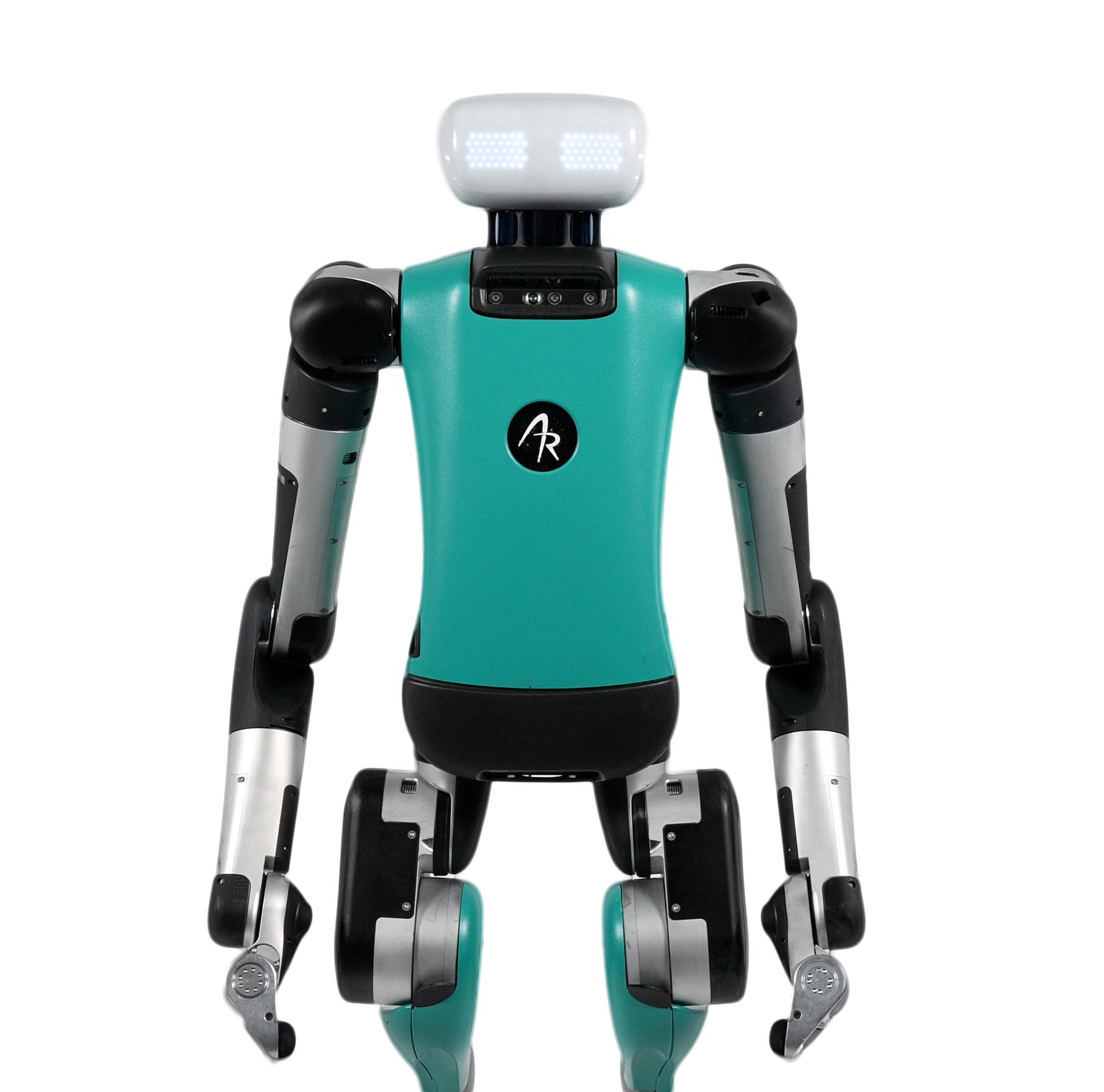
Introduction Through 2025–26 humanoid robots moved from laboratory demos into sustained, narrowly scoped pilots across logistics, manufacturing and care homes. Companies pitched humanoids as “universal” workers; customers treated them as specialty tools. The pilots documented here — led by Agility Robotics, 1X Technologies, Apptronik, Figure AI, Tesla, Sanctuary AI, Xiaomi, UBTECH, Unitree, Boston Dynamics and Fourier Intelligence — reveal where the machines deliver measurable value today, how much integration they require, and what business models customers are willing to try. Warehouses and Parcel Handling Order-picking and parcel handling are the most active commercial fronts for humanoids in 2025–26. Agility Robotics’ Digit and 1X Technologies’ NEO/EVE have been deployed in pilots with third‑party logistics providers (regional 3PLs), e‑commerce warehouses and last‑mile parcel sortation centers. Use case: shelf-to-tote picking, light-case handling, conveyor-side transfers. Pilot metrics: company‑reported throughput uplifts of 8–18% when robots were used to augment night and swing shifts; pick error rates in pilot zones held at 1.2–1.9% (comparable to human pickers); downtime typically 8–12% due to charging and re‑park cycles. Customers reported 0.5–1.2 staff‑hours reclaimed per shift per robot when robots handled heavy or repetitive picks. Integration: WMS integration was moderate — 4–10 weeks to map item locations, API hooks and exception handling. Pilots relied on preexisting pick faces and standardized bins to reduce perception complexity. Safety: incidents were limited to a small number of low‑velocity collisions and two tipped‑over grabs during the reported period; mitigations included geofencing, reduced speed profiles in mixed human zones and mandatory human spotters during early shifts. “Digit gave us predictable coverage on night shifts where staffing is tight. It didn’t replace a picker, but it let our team focus on higher‑value tasks,” said the operations director at a regional e‑commerce warehouse participating in an Agility pilot. Manufacturing-line Assembly and Parts Kitting Apptronik and Figure AI focused on small‑part assembly and kitting in automotive suppliers and electronics contract manufacturers. Their framing is as “cobot‑grade” humanoids — mobile manipulators that can navigate human footpaths and work at a benchtop. Use case: component kitting, torque‑sensitive fastening, repetitive subassembly. Pilot metrics: cycle time reductions of 8–20% on kitting workcells; defect rates decreased by up to 30% in highly repetitive picks when robots used guided vision templates. Customers reported reclaiming 1–3 FTEs worth of repetitive labor over multi‑line deployments when robots worked standard shifts. Integration: MES and PLC integrations took longer — typical timelines were 6–12 weeks for digital hooks, safety fences and tooling adaptors. Safety: required hard safety zones for higher payload tasks; emergency stop interlocks and operator override proved essential to certify workcells. Eldercare and Assisted Living Tesla’s Optimus and Sanctuary AI’s Phoenix were trialed in assisted‑living chains and private care homes for mobility support, fetch‑and‑carry and non‑clinical patient monitoring. These pilots attracted scrutiny because tasks intersect with direct human care. Use case: bringing meals and medication carts, supporting sit‑to‑stand transfers (assistive), room monitoring for fall detection and activity prompting. Pilot metrics: care homes reported caregiver walking time reduced by 20–35% when robots handled routine fetch‑and‑deliver tasks; activity‑reminder compliance improved by 10–15%. No pilot reported clinically significant adverse events; most recorded issues were navigation stalls and voice recognition errors. Battery and recharge cycles consumed 10–15% of operational time. Integration: syncing with EHRs and nurse call systems required heavy IT work (8–16 weeks) and custom privacy controls. Safety: early trials emphasized supervised operation, with robots configured to never handle weight‑bearing patient transfers without human assistance. Customer perspective “Phoenix helped our staff focus on hands‑on care by taking away the low‑value errands. We still needed staff for transfer and clinical tasks,” said a director at a mid‑sized assisted‑living operator in Ontario that ran a Sanctuary trial. Consumer and Concierge Deployments Xiaomi, UBTECH and Unitree targeted hotels, retail concierges and early adopters at home with lower‑cost humanoids and concierge robots. Use case: front‑desk check‑in, room‑service deliveries in small hotels, guided apartment tours and home demos. Metrics & pricing: UBTECH reported pilots in boutique hotels where guest satisfaction (measured by NPS) rose 4–7 points; robots handled 10–35 tasks per day. Consumer‑tier units from Xiaomi and Unitree retail between ~$1,000–$6,000; enterprise concierge packages from UBTECH start in the $25k–$60k range with recurring support fees. Integration: light — mostly point integrations with PMS or smartphone apps. Industrial-assist: Boston Dynamics and Fourier Intelligence Boston Dynamics and Fourier Intelligence positioned humanoid and hybrid solutions for heavy‑assist roles and rehabilitation/assistive industrial tasks. Deployments typically combined humanoid mobility with heavier manipulator platforms or exoskeletons for workers. Use case: heavy component transports, factory floor inspection, worker augmentation for lifting tasks. Pilot metrics: 10–25% reductions in operator fatigue indicators and modest throughput improvements where humanoids handled non‑precision transport. Integration with MES and shop floor scheduling required 6–14 weeks. Safety: conservative duty cycles and multi‑layer sensing prevented major incidents; deployments emphasized human‑in‑the‑loop operation. Pricing, Business Models and Integration Costs Across pilots, pricing patterns are converging around three models: Capital purchase for customer‑owned units — advanced humanoids (Tesla, Boston, Figure) in the $150k–$400k range. Lease/subscription — common for pilots: $5k–$25k per robot per month depending on autonomy and SLA. Pay‑per‑use — emerging in logistics, where robotics providers charge per pick or per hour during contracted shifts. Customers consistently cited non‑recurring integration costs (systems integrator, safety certification, workspace modification) as a decisive line item — typically a multiple of the first‑year robot service price for enterprise deployments. Competitive Comparison Company/Robot Primary industries Strength Typical pilot outcome Agility Robotics — Digit Logistics, e‑commerce Agile aisle navigation, grasping 8–18% throughput uplift on augmented shifts 1X Technologies — NEO/EVE Parcel sortation, last mile High-rate repetitive handling Comparable error rates, improved night coverage Apptronik / Figure AI Auto suppliers, electronics Precision kitting & assembly 8–20% cycle time reduction Tesla Optimus / Sanctuary Phoenix Eldercare Mobility & monitoring 20–35% caregiver walking time reclaimed Xiaomi / UBTECH / Unitree Hospitality, consumer Low cost, concierge services Small NPS gains; rapid deployment Boston Dynamics / Fourier Industrial assist Heavy assist & operator augmentation Reduced fatigue, incremental throughput gains Conclusions: What Humanoids Do Best in 2025–26 Patterns from 2025–26 pilots are clear. Humanoids add value where tasks require human‑style mobility and dexterity in environments already designed for people: aisle walking, stairs, reaching into shelves, crossing mixed‑use floors and interacting socially. They are most effective as complements — handling repetitive, low‑value physical tasks or augmenting night shifts — rather than wholesale replacements. Realistic timelines: expect continued, targeted scale‑ups through 2027 focused on logistics, light manufacturing and hospitality. Broader clinical or unsupervised eldercare and large‑scale factory substitution will progress more slowly, tied to safety certifications, cost reductions and integration maturity — likely 2028–2032 for much wider adoption. For now, most customers treat humanoids as specialty capital with measurable but modest returns and significant one‑time integration investments.