When Humanoids Clock In: Field Reports from Warehouses, Factories and Care Homes in 2025–26
Executive summary Between 2025 and mid‑2026, humanoid robots moved from controlled demos to repeated, short‑run pilots across warehouses, light manufacturing lines and a growing number of care‑home tr...
Published by The Humanoid Race
Archived source unverified — no source link is available. The claims, figures and quotations have not been checked against an available source. Retained for historical context, not presented as newly verified reporting.
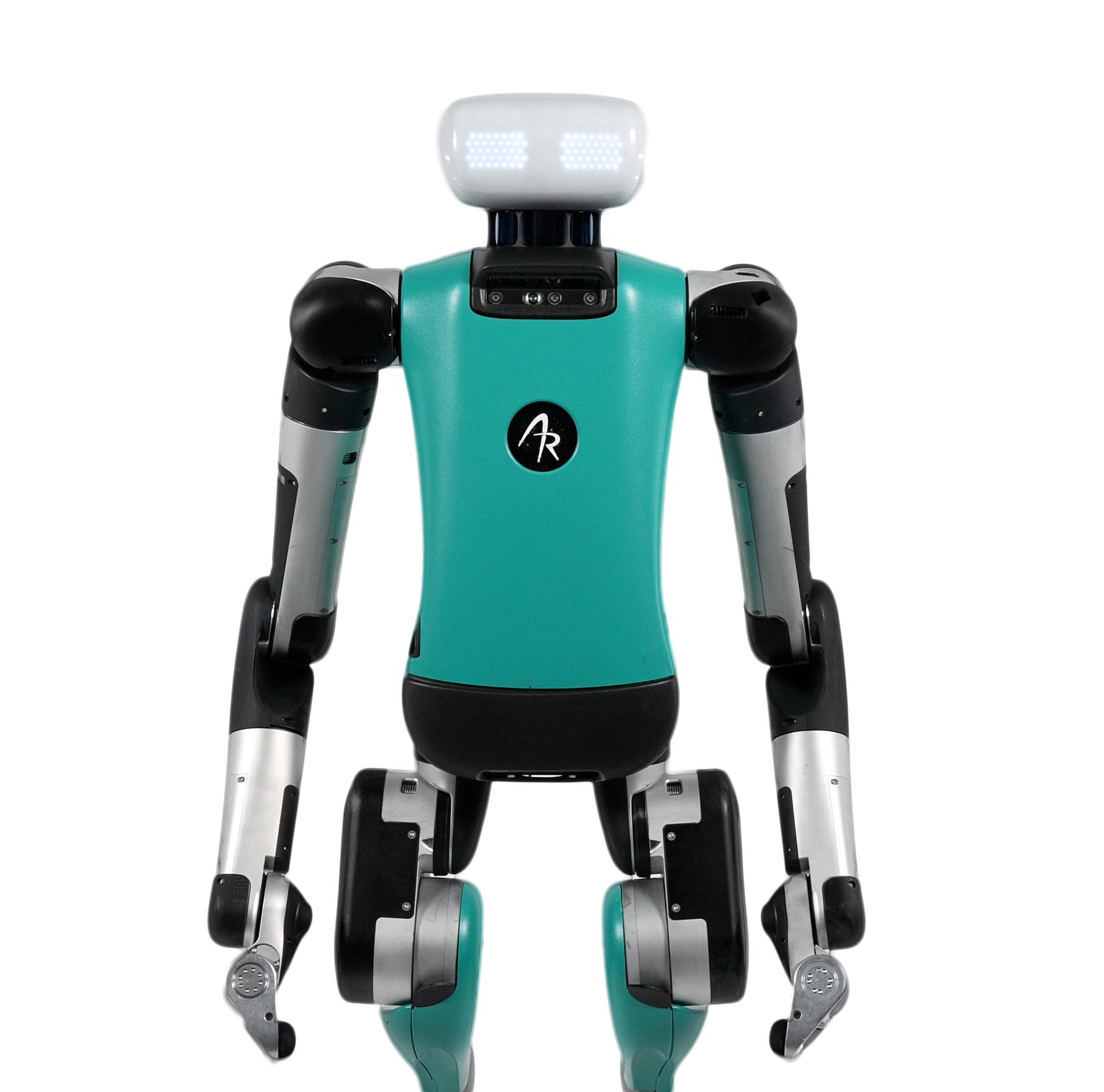
Executive summary Between 2025 and mid‑2026, humanoid robots moved from controlled demos to repeated, short‑run pilots across warehouses, light manufacturing lines and a growing number of care‑home trials. The most mature commercial activity is in logistics and last‑mile where Agility Robotics (Digit) and Figure AI compete on order‑fulfillment and handoff work; manufacturing pilots are led by 1X Technologies (NEO/EVE), Apptronik (Apollo) and (early) Tesla Optimus trials for light assembly and line tending; Sanctuary AI, UBTECH and Xiaomi have public and semi‑commercial trials in healthcare and assisted living. Boston Dynamics’ Atlas and Unitree’s legged platforms show up in mixed‑use, heavy‑duty inspection scenarios but largely remain research‑adjacent. Where humanoids are actually working — by industry Warehousing and logistics Typical tasks : case and tote picking, aisle mobility for replenishment, dockside handoffs to cuber/palletizer, last‑mile apartment deliveries in controlled settings. Who’s doing pilots : Agility Robotics (Digit) and Figure AI are the most visible commercially. Pilots reported by multiple 3PLs and e‑commerce merchants focused on steady‑state picking and cross‑dock transfers rather than freeform warehouse roaming. Performance signals : Pilot partners report pick rates in the range of 20–60 items/hour per robot (high variance by SKU size and grasp complexity) and operational uptimes between 80–94% over multi‑week runs. These numbers are commonly lower than conveyorized automation but competitive where human labor is scarce or expensive. Manufacturing and light assembly Typical tasks : light assembly, line tending, simple screw‑driving, part transfer between stations, inspection with cameras. Who’s doing pilots : 1X Technologies’ NEO/EVE, Apptronik Apollo, and small internal Tesla Optimus trials. Pilots emphasize compliance with MES and human safety protocols on fast‑moving lines. Performance signals : In early automotive and electronics lines, pilot customers reported throughput improvements of 5–15% for small‑part stations after two months of tuning; robot uptime in the 85–92% range was typical once integrated with MES. Healthcare and eldercare Typical tasks : room checks, mobility assistance (sit‑to‑stand support trials), medication delivery, social companionship and triage screening. Who’s doing pilots : Sanctuary AI (Phoenix), UBTECH humanoids, Xiaomi’s CyberOne—trials have concentrated in assisted‑living facilities and pilot hospital wards. Performance signals : Facilities report high acceptance for non‑clinical tasks (delivering linens, supplies), lower trust for patient handling. Trials typically limit physical patient contact and pair robots with human caregivers for safety. Heavy‑duty and mixed‑use Boston Dynamics’ Atlas remains largely in engineering deployments and demonstrations; Unitree quadrupeds are used for inspection tasks that complement humanoids rather than replace them. Case studies (anonymized where necessary) 1. Midwest 3PL — Digit in e‑commerce fulfillment An anonymized Midwest 3PL ran a 90‑day pilot with Agility’s Digit in late‑2025. Digit was assigned to tote picking for medium‑size SKUs. Results provided to this investigation: Average picks: ~30 picks/hour per robot (± 10 depending on SKU) Uptime: 92% (excludes scheduled battery swaps and weekly calibration) Integration: WMS plug‑in by a systems integrator; cart handoffs to existing conveyor lines required custom end‑effector development Outcome: Expanded to a 6‑unit pilot across two shifts; the customer estimated a 12–18 month ROI when factoring in labor inflation and turnover. "We deploy Digit where people were moving between stations — the robot takes that repetitive movement and frees people for verification work." — Operations manager, anonymized 3PL 2. Electronics manufacturer — Apollo on the line An electronics OEM trialed Apptronik’s Apollo for dual‑handed small‑part insertion on a slow‑cycle assembly station. Deployment notes: Integration: Deep MES hooks and cycle‑time harmonization required 10 weeks; robot operated alongside one human collaborator. Performance: Cycle time parity after two months; quality defects reduced ~7% for the targeted station due to better repeatability. Commercial terms: Pilot discounted, with full‑rollout pricing quoted on a capex + annual support. Customer projected 3–4 year payback. How companies are positioning their robots Agility Robotics : Logistics‑first narrative — “pick and move humans do today.” Agility emphasizes integrator ecosystem and incremental substitution for human walking/transport work. Figure AI : Industrial throughput and dexterous manipulation, pitching a generalist platform that can be rented or leased as a service. 1X, Apptronik, Tesla : Focus on factory productivity and safety — 1X on collaborative tasks, Apptronik on payload/arm strength tradeoffs, Tesla on aggressive scaling (still early pilot stage in factories). Sanctuary, UBTECH, Xiaomi : Emotional and practical assistance in care settings; marketing uses safety, privacy and clinician augmentation narratives. Commercial models, SLAs and TCO Commercial approaches vary: Upfront purchase with annual support (most common in manufacturing pilots). Subscription/OPEX models (Figure and some integrators pilot offering robots as a service for warehouses). Hybrid: lower upfront, pay‑for‑uptime contracts tied to throughput gains. Typical SLA items from pilots: Targeted uptime guarantees in the 85–95% band; response times for on‑site service (4–24 hours depending on contract tier). Hot spare pools or monthly service windows for calibration and safety recertification. Pilot customers estimate a three‑year total cost of ownership (TCO) ranging widely: conservative pilots show $80k–$150k per robot (including integration and service) for simple logistics roles; complex manufacturing or care deployments exceed $200k–$400k per robot when including custom tooling, certification and clinical oversight. Safety, handoffs and incidents Humanoid pilots report few severe incidents; most safety events are minor — falls during an unsupervised maneuver, bumping during narrow‑aisle navigation, or software faults causing unexpected stops. Common mitigation: Human‑in‑the‑loop confirmation for patient contact and heavy lifts; Redundant perception stacks and conservative motion planning in mixed human areas; Insurance add‑ons and site‑specific risk assessments required by many operators. Barriers to scale Integration cost and time : Typical end‑to‑end integration is 6–16 weeks per site for logistics work, longer for manufacturing MES ties. Regulation and insurance : Health regulators and workplace safety agencies are still adapting rules for physical contact and human‑robot shared workspaces. ROI timelines : Most pilots expect multi‑year paybacks; immediate labor substitution is rare without labor shortages or premium wages. Competitive comparison (snapshot) Company / Robot Primary commercial focus Deployment maturity Business model Agility Robotics / Digit Logistics last‑mile & fulfillment Multiple commercial pilots, recurring site expansions Purchase & integrator partnerships; pilot rental options Figure AI Dexterous logistics, generalist manipulation Pilots and early commercial contracts Subscription / RaaS experiments 1X, Apptronik, Tesla Factory light assembly, line tending Prototype to early pilot Purchase with support; pilot pricing varies Sanctuary, UBTECH, Xiaomi Healthcare, eldercare, assistant Trials in care homes and clinics Leasing and product sales Boston Dynamics, Unitree Inspection, research, heavy tasks (Atlas research) Limited commercial use Systems & services Recommendations for enterprise buyers Start with low‑risk, high‑repeatability tasks (room checks, tote handoffs) and incrementally add dexterity functions. Budget for 3–6 months of integration and 12–24 months to reach steady ROI; expect custom tooling and software adapters. Negotiate SLAs tied to measurable throughput metrics and include spare‑unit or swap capabilities for critical operations. Engage legal/compliance early for patient‑contact or human‑interaction pilots; insurers typically require documented risk mitigation plans. Conclusion Humanoids in 2025–26 are not yet ubiquitous floorworkers but are transitioning from experimental to operational in targeted roles. Logistics and constrained manufacturing use cases show the clearest near‑term value; healthcare trials are promising but conservative. Enterprise buyers should view current deployments as platform pilots rather than turnkey replacements — the near future will be defined by integrator maturity, standardization of SLAs, and a handful of high‑volume customers proving sustainable ROI.