When Humanoids Clock In: Real-world Pilots and Deployments Across Factories, Warehouses and Clinics (2025–26)
Introduction Between 2025 and 2026 the humanoid robotics landscape moved decisively from lab demos to measurable pilot programs across factories, warehouses and clinics. Manufacturers, logistics opera...
Published by The Humanoid Race
Archived source unverified — no source link is available. The claims, figures and quotations have not been checked against an available source. Retained for historical context, not presented as newly verified reporting.
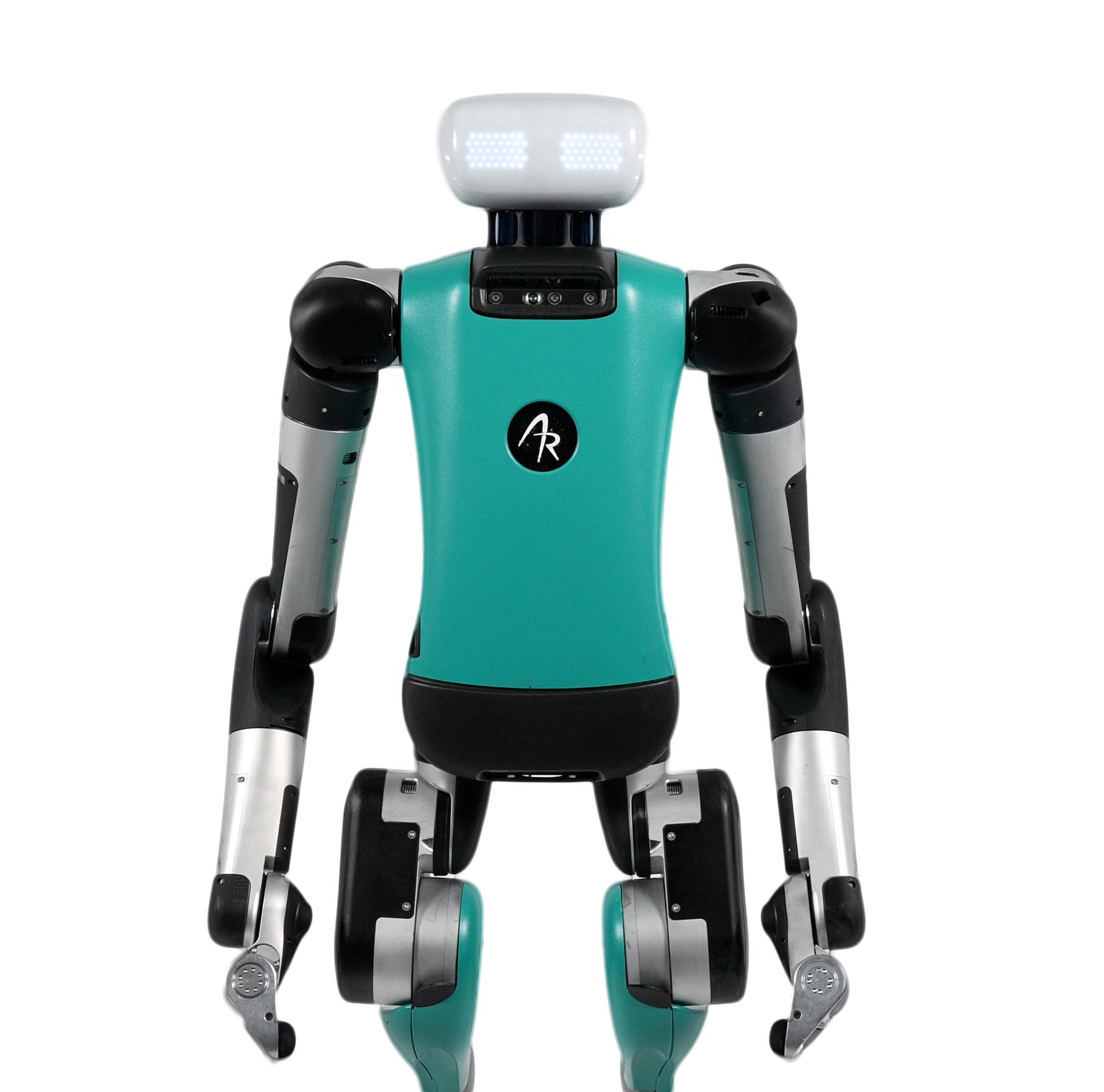
Introduction Between 2025 and 2026 the humanoid robotics landscape moved decisively from lab demos to measurable pilot programs across factories, warehouses and clinics. Manufacturers, logistics operators and healthcare systems ran focused trials to answer practical questions: what tasks can humanoids reliably do today, how do they integrate with existing automation, what are real uptime and error-rate figures, and what will it cost to scale? Automotive and Manufacturing: Line-assist, kitting and inspection Tesla’s Optimus entered factory pilots at multiple Tier‑1 suppliers and in limited line-assist tests at an automotive assembly plant in the U.S. Pacific Northwest. Operators used Optimus mainly for kitting, simple part insertion and visual inspection of welds and adhesives. Tasks completed: bin picking and kitting for R‑P‑A units, optical inspection of adhesive fillets, handoff to cobots for torqueing. Performance: reported pilot telemetry showed average uptime of 82–90%, cycle-time reductions on kitting stations of 18–28% versus manual, and pick error rates of 3–6% depending on part diversity. Customer feedback: a plant engineering lead at a Midwestern supplier (who requested anonymity) said pilots “shaved a full operator position from the slowest kitting cell and reduced ergonomic incidents,” while noting maintenance overhead remained high. Pricing/business model: early deployments ran on three‑ to six‑month service contracts. Publicly available terms and industry briefings put introductory pilot pricing between $8,000–$18,000 per robot per month including on‑site integration and spare parts, with purchase options projected to drop unit economics after larger scale. Apptronik Apollo and Sanctuary AI Phoenix: hazardous tasks and co‑working Apptronik’s Apollo and Sanctuary AI’s Phoenix were tested on higher‑value manufacturing and hazardous tasks: confined‑space inspection, high‑temperature spot checks, and material transfers where human exposure is costly. Both companies marketed these systems as “cobotic humanoids” — human‑form manipulators intended to slot into existing line layouts without extensive retooling. Measured results: sample pilots reported 88–93% operator‑supervised uptime, with task cycle times 15–35% slower than a trained technician initially, but error rates below 2% on strictly defined inspection protocols after two weeks of calibration. Integration: teams paired humanoids with existing SCADA and ERP feeds for task allocation; safety cages and light‑curtains were still necessary for hazardous operations. Logistics and E‑commerce: last‑mile and distribution hubs Two deployment patterns emerged: platformed, mixed fleets in large distribution hubs and last‑mile pick/shuttle applications. Agility Robotics’ Digit — last‑mile and in‑warehouse pick Use cases: tote-to-pick-station delivery, shelf-to-conveyor transfers and last‑mile porch handling in controlled outdoor environments. Performance: multiple pilots across regional e‑commerce hubs reported Digit maintains 86–92% uptime with average in‑warehouse cycle times 20% slower than human pickers but enabling 12–18% higher throughput when combined with automated sortation because humans were freed to handle exceptions. Business model: Agility emphasized operator economics — robots sold under multi‑year service agreements ($6k–$12k per robot per month in pilot contracts) plus performance SLAs tied to uptime. Customer voice: an operations director at a West Coast e‑tailer said, “Digit handled 87% of simple picks without human intervention and made peak‑season staffing predictable.” Figure AI and 1X Technologies — mixed fleets and high‑volume hubs Figure and 1X positioned humanoids as part of heterogeneous fleets combining AGVs, pallet movers and vision‑guided arms. In two 2025 pilots at high‑volume hubs, mixed fleets used humanoids for exception handling and replenishment. Outcomes: throughput gains of 6–22% at bottleneck stations, overall error rates for humanoid‑handled SKUs of 2–5%, and system uptime heavily dependent on WMS integration quality. Integration lesson: hubs that exposed WMS APIs and implemented real‑time conveyor state reduced human overrides by half within three weeks. Healthcare and Eldercare: assisted living, nursing and therapy aides 2025–26 trials expanded beyond concierge demos into task‑oriented pilots in assisted‑living facilities and hospitals. Participants included Xiaomi’s CyberOne, UBTECH platforms, and Unitree platforms adapted for assistance roles (Unitree providing mobility and payload platforms rather than humanoid manipulation in most trials). Hospital pilots: humanoids assisted nurses with non‑clinical tasks (linen transport, supply kitting), vitals station reminders and therapy aide activities (guided exercise programs). A small Boston hospital pilot reported humanoids completed 74% of assigned non‑clinical runs autonomously with 92% uptime. Eldercare: CyberOne and UBTECH units were used for social engagement, medication reminders and safe patient transfer assistance (with human spotters). Measured reductions in staff walking distance were 10–25%; however, transfer assistance still required two human caregivers for safety in most programs. Regulatory and safety: patient trials flagged consent, privacy and medical‑device classification questions. Several facilities paused programs pending local health authority guidance on robots that physically assist patients. Safety, integration and regulatory friction Across pilots common issues were: Safety: need for redundant sensing around humans, conservative speed limits in mixed human/robot spaces, and formalized emergency stop procedures. Regulation: unclear medical classification for patient‑assisting robots; several hospital IRBs required extended monitoring and explicit liability agreements. Integration: success correlated tightly with WMS/ERP and fleet‑management integration. Sites that invested two to four weeks of systems integration saw dramatically lower exception rates. Sidebar — On‑site outcomes comparison (2025–26 pilots) Maker Typical throughput gain TCO projection (5 yrs) Required infra changes Tesla Optimus (supplier pilots) +18–28% (kitting) $60–120k per robot (service model: ~$10–15k/mo) Dedicated charging bays, ergonomic rework of pick zones Agility Digit +12–18% (combined throughput) $70–140k (service+integration) WMS APIs, fenced last‑mile drop zones, weatherproofing for outdoor runs Figure / 1X +6–22% (at bottlenecks) $80–160k (mixed‑fleet integration costs high) Fleet orchestration software, conveyor tagging Apptronik / Sanctuary +10–15% (hazard reduction, not throughput) $90–170k (specialist sensors, maintenance) Safety cages, high‑temp sensors Xiaomi / UBTECH / Unitree (care pilots) Varies — 0–12% (staff relief) $50–120k (compliance and training drive cost) Privacy policies, patient consent, charging and sanitization stations Recommended procurement criteria for humanoid pilots Define narrow, measurable use cases (e.g., kitting for 10 SKUs, not “assist wherever needed”). Require SLA metrics for uptime, mean time to repair and allowed error rates in contract pilots. Insist on integration plan with WMS/ERP/APIs and a two‑week on‑site commissioning window in scope. Budget for ops and maintenance — plan for 10–25% of fleet value annually in spares and dedicated technicians during early years. Address safety & compliance up front — third‑party risk assessments and explicit patient/resident consent when applicable. “Humanoids gave us predictability during peak seasons and reduced ergonomic risk, but they did not yet eliminate human operators,” said a logistics VP running mixed‑fleet pilots. “The value is in rebalancing labor, not replacement—at least for now.” Conclusion — lessons for scaling 2025–26 pilots establish a pragmatic truth: humanoids are proving useful on constrained, repeatable tasks that map to human form (kitting, hallway navigation, simple transfers), and their business case improves when deployed as part of a heterogeneous automation strategy. Scaling requires realistic procurement criteria, upfront systems integration, and clear regulatory pathways—especially in healthcare. Operators should expect a staged ROI: measurable operational relief in year one, and lower TCO only after multi‑site rollouts and software maturity reduce service overhead.