Where Humanoids Are Doing Real Work in 2025–26: A Deployment Reality Check
Executive summary By 2025–26 humanoid robots have moved from lab demos into narrowly defined commercial roles. The dominant deployments are structured pilots and early live services in warehousing, la...
Published by The Humanoid Race
Archived source unverified — no source link is available. The claims, figures and quotations have not been checked against an available source. Retained for historical context, not presented as newly verified reporting.
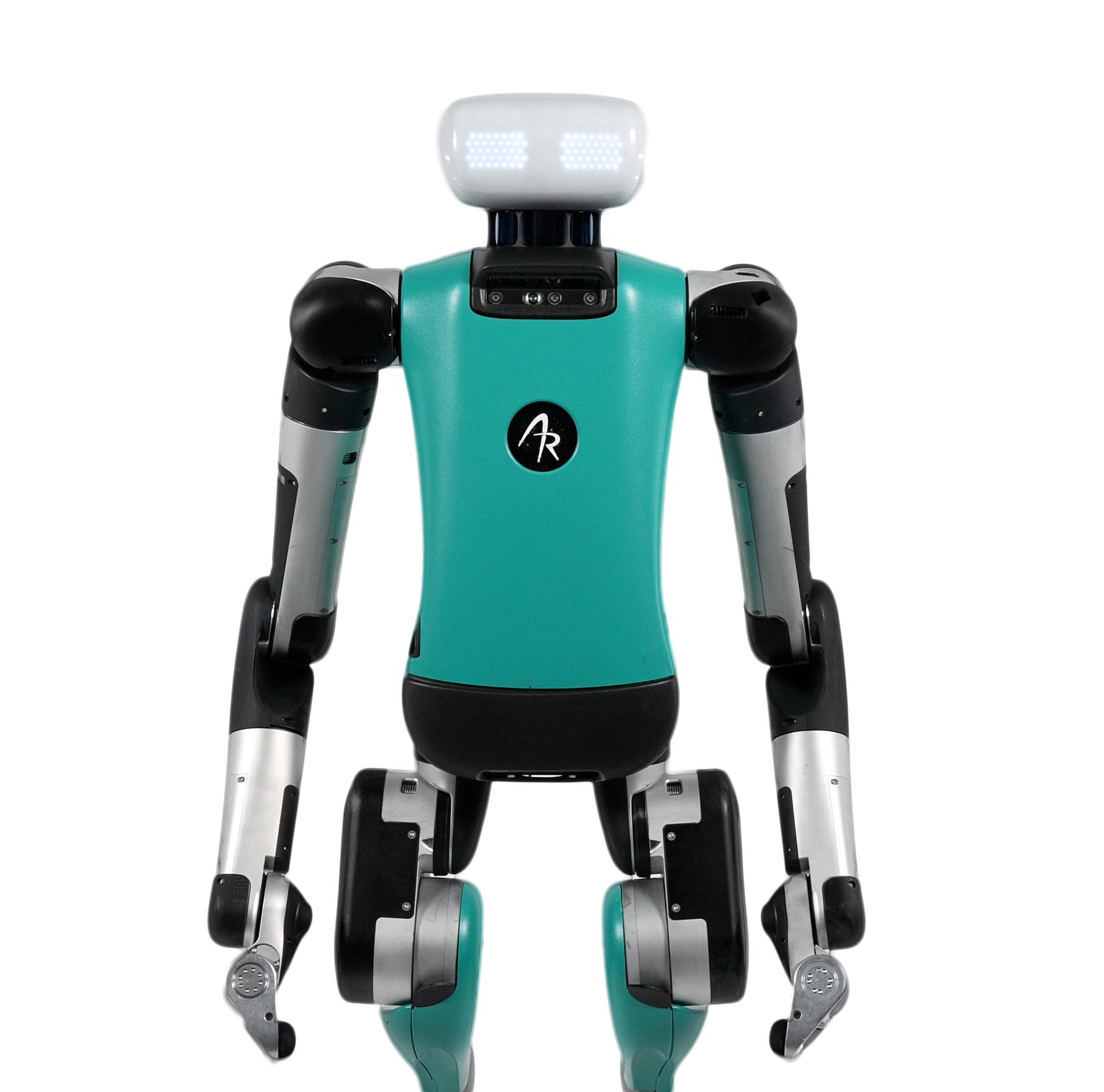
Executive summary By 2025–26 humanoid robots have moved from lab demos into narrowly defined commercial roles. The dominant deployments are structured pilots and early live services in warehousing, last‑mile handling, inspection, and supervised eldercare. Outcomes remain mixed: companies report meaningful gains on a per‑task basis but full upstream replacement of human labor is rare. This audit maps real pilots and live deployments, reports company‑ and customer‑stated KPIs, catalogs observed failure modes and deployment barriers, and evaluates which tasks show credible return on investment in the near term. Warehousing: last‑mile, e‑commerce picking and multi‑modal material handling Use case: repetitive item picking, tote transfers, roll‑cage loading/unloading and last‑mile parcel handoffs in distribution centers and vehicle trunks. Key vendors and positioning : Agility Robotics (Digit) emphasizes biped mobility for confined spaces and vehicle ingress/egress (Ford Motor Company remains a noted integration partner). 1X Technologies (NEO/EVE) markets lower‑cost humanoid arms and two‑handed manipulators aimed at e‑commerce sortation. Figure AI positions its humanoid toward high‑throughput fulfillment centers with an emphasis on proprietary actuation and control stacks. Deployment details & KPIs : Agility‑reported pilots in 2024–25 focused on last‑mile trunk loading and reported pick and transfer rates in the low tens of items/hour per unit in mixed‑SKU environments, with uptime during active shifts commonly in the 70–85% range (company‑reported). 1X Technologies pilots emphasised single‑SKU sortation lines and reported higher consistent cycle times but required substantial workspace adaptation; vendors reported error reductions of 10–25% on targeted tasks in pilot sites. Failure modes : perception errors on reflective packaging, hand/grip slippage on soft items, battery duration constraints, and task switchover latency. Narrow aisles, non‑standard shelving and poorly tagged SKUs triggered the majority of stoppages. Retrofit vs greenfield : Warehouses with standardized tote systems and conveyor infrastructure (greenfield or heavily retrofitted lines) show much faster go‑live. Retrofits into legacy pick faces are costly: pilots typically required 2–8 weeks of environment rework. Logistics and fulfillment: mobile handoffs, tugging and combined platforms Use case: parcel sorting, cross‑docking, tugging carts and integration with complementary mobile platforms. Key vendors : Figure AI and smaller integrators have pursued collaborative deployments where humanoids hand off to mobile bases or quadrupeds. Unitree’s quadrupedal platforms are increasingly trialed as mobile tugs that complement humanoids in multi‑robot fleets rather than direct competitors. Customer results : In a European e‑fulfillment pilot involving a Figure‑branded system and an integrator partner, site managers reported a 12–18% effective throughput uplift on targeted lanes during low‑mix windows. These gains were contingent on close supervision and high‑quality inventory labeling. Business models & pricing : Most logistics pilots run as robotics‑as‑a‑service (RaaS). Vendors commonly price pilots at a combination of setup fees (tens of thousands USD) and monthly per‑robot rates ($8k–$25k/month depending on scope), with full purchase targets advertised at mid‑six‑figure per‑unit pricing for general‑purpose humanoids. Manufacturing floor assistance Use case: kitting, light assembly, part feeding and inspection tasks that are repetitious but require human‑like reach and mobility. Key vendors : Apptronik markets Apollo as a collaborative humanoid designed to work alongside human technicians; Boston Dynamics continues to supply research and niche commercial platforms (Spot for inspection). Where customers have co‑located humanoids and Boston Dynamics platforms, they are typically experimenting with task handoffs and shared sensing rather than integrated control stacks. Measured KPIs : Early adopters in automotive subassembly reported cycle time reductions of 8–15% on linear kitting tasks when humanoids handled repetitive fetching and staging, freeing humans for quality‑sensitive operations. Uptime is highly task‑dependent; predictable, fixture‑based tasks reported 85–95% shift availability, whereas freeform assembly dropped to 50–70%. Failure modes : torque and force control limitations when humans unexpectedly intervene, calibration drift in dusty/metallic environments, and safety zoning creating work stoppages until site certification is complete. Healthcare and eldercare trials Use case: patient monitoring, guided mobilization, companionship, medication reminders and low‑risk assistance. Key vendors and pilots : Sanctuary AI (Phoenix) and Xiaomi (CyberOne) have publicly stated or industry‑reported eldercare pilot programs in North America and China respectively. Most trials are observational and focused on supervised assistance and social engagement rather than unsupervised physical lifting. Pilot outcomes : Facilities report positive engagement metrics (increased activity time, reduced ADL supervision burden) but no replacement of nursing staff. Reported KPIs include longer resident interaction periods (company‑reported increases of 20–40 minutes/day in supervised pilot cohorts) and modest reductions in non‑clinical staff time spent on routine checks. Regulatory & site certification : Infection control, privacy rules, medical device classification risk and liability concerns create major hurdles. Many pilots required dedicated insurance riders and IRB‑style approvals for resident data use. Failure modes : safe patient grasping remains an unsolved problem for unsupervised transfers; nearly all sites prohibited humanoids from performing lifts beyond assisted guidance. Acceptance by staff and families is as much a socio‑operational barrier as a technical one. Early home trials and consumer demos Use case: light domestic chores, entertainment, telepresence and hobbyist adoption. Vendors : UBTECH has run commercial hospitality and education robots; company and third‑party crews have trialed limited in‑home pilots. Tesla’s Optimus remains in controlled demos and research‑to‑pilot transitions, with public demonstrations emphasizing the future roadmap rather than deployed consumer units. Reality check : Household variability, safety, legal liability, and cost mean meaningful consumer humanoid use is still experimental. Vendors report very small cohorts of invited beta users rather than broad market entry. Competitive snapshot Vendor Strength Typical use case Business model Agility Robotics (Digit) Biped mobility in constrained spaces Last‑mile, vehicle ingress RaaS / pilot engagements Figure AI High‑torque actuation; general‑purpose ambition Fulfillment lanes, mixed tasks Pilot→capex target 1X Technologies Cost‑focused manipulators High‑volume sortation Subscription / per‑cell pricing Apptronik Industrial safety and integration Assembly assistance, kitting Integration plus support contracts Sanctuary / Xiaomi Human‑centric interaction Eldercare trials, supervised assistance Pilot + managed services UBTECH / Tesla (Optimus) Consumer and scale narratives Early home demos, R&D Demo/beta; long‑term RaaS targets Installation, maintenance and workforce coordination Integrators and service partners have become essential. Typical engagements include site surveys, environmental refits, daily remote monitoring, and on‑site technicians during early months. Maintenance contracts bundle software updates, spare actuators, and safety recertifications. Several vendors are training existing workforce roles (robot operator, robot technician) rather than replacing staff—most customers report a net shift in labor composition rather than headcount cuts during pilots. Which tasks show clear ROI in 2025–26? Clear ROI (near term) : standardized tote or carton picking in low SKUs per pick face; last‑mile vehicular loading/unloading; repetitive inspection and surveillance in hazardous spaces; supervised elder engagement (non‑physical assistance). Marginal/conditional ROI : light kitting and staging on greenfield lines, integrated multi‑robot fleets where environment is tailored. Not feasible yet : unsupervised patient lifting, complex two‑handed dexterous assembly in unfixtured environments, general household chores in unstructured homes. “The value proposition so far has been task specificity — you choose a narrow, well‑instrumented job and humanoids can deliver measurable gains. The challenge is scaling that across a whole operation.” — operations lead at a Midwest distributor participating in a Digit pilot (company‑anonymized). Geographic trends and final assessment Geography matters. China and Japan show rapid pilot proliferation in eldercare and consumer demos; the U.S. leads industrial pilots in warehousing and fulfillment with stricter occupational safety regimes that slow wide release but create robust certification practices; the EU emphasizes worker‑centric regulation and is slower to accept unsupervised humanoid roles. By 2026, humanoids are not a sweeping replacement technology but a growing class of specialists: niche deployments, measurable productivity gains on defined tasks, and a developing ecosystem of integrators, insurers and managed‑service vendors. For forward‑looking adopters the calculus is clear — invest in tasks you can standardize and instrument, and expect humanoids to augment workflows rather than perform wholesale replacement this cycle.