Where humanoids are earning their keep in 2025–26: a field-led tour of real-world pilots and early deployments
Where humanoids are earning their keep in 2025–26: a field-led tour of real-world pilots and early deployments Humanoid robots moved further out of labs in 2024–26 and into focused, repeatable wareho...
Published by The Humanoid Race
Archived source unverified — no source link is available. The claims, figures and quotations have not been checked against an available source. Retained for historical context, not presented as newly verified reporting.
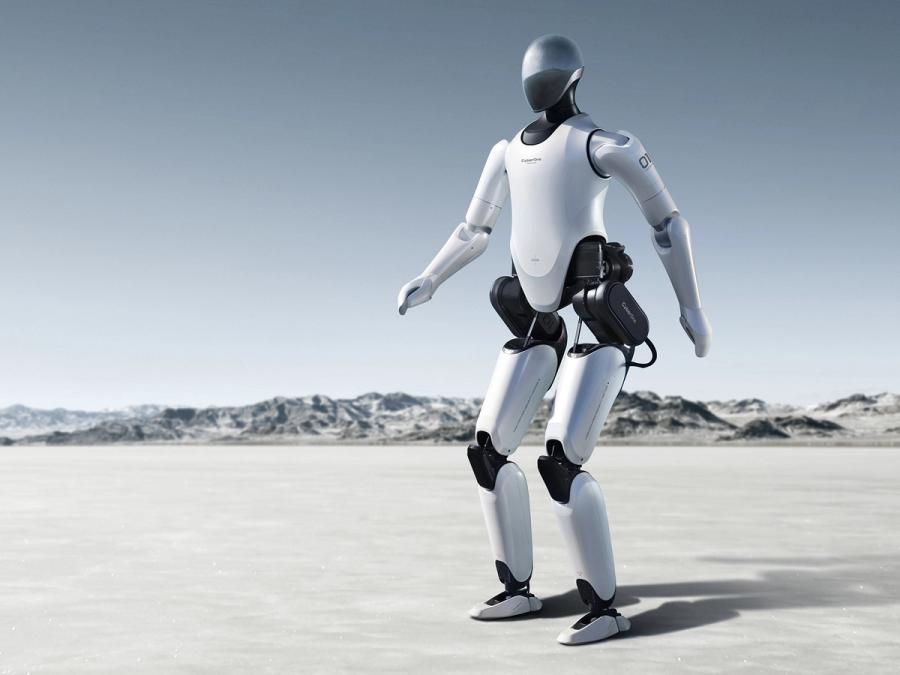
Where humanoids are earning their keep in 2025–26: a field-led tour of real-world pilots and early deployments Humanoid robots moved further out of labs in 2024–26 and into focused, repeatable warehouse, factory and institutional pilots. The deployments are not yet at mass-market scale, but a steady drumbeat of company-reported trials and system‑integrator pilots is clarifying where humanoids deliver commercial value today — and where they remain speculative. Below is a boots-on-the-ground synthesis of specific pilots, customer profiles, task profiles, reported KPIs and qualitative operator feedback, organized by vertical. Warehouses and logistics: repetitive mobility and hands-on parcel work Companies: Agility Robotics (Digit) , Figure AI Customer profile: third‑party logistics (3PL) sites and parcel sortation hubs, mid‑sized distribution centers serving e‑commerce and spare‑parts supply chains. Task profile: case and tote handling, short‑run pallet shuttling, mid‑aisle picking where traditional AMRs struggle to handle irregular items and reorient packages. Pilot details: Agility has publicly reported multi‑site logistics pilots (including OEM and 3PL collaborations) where Digit operated alongside human pickers to handle tote re‑orientation and bin transfers. Figure AI has positioned its humanoid stack for autonomous episodic box handling, pitching tighter integration with existing conveyor and vision systems. Reported KPIs (company‑reported / integrator estimates): early pilots reported taskthroughputs in the 20–60 discrete manipulation actions per 8‑hour shift (typical mixed‑SKU picking), uptime in the 70–90% range (downtime driven by task re‑programming and battery swaps), and error rates that initially exceeded human pick accuracy but improved with supervised learning loops. Human supervision hours commonly cited: 1–2 techs per shift per 3–6 robots for monitoring and exception handling. Qualitative feedback: 3PL operators consistently highlight the humanoid advantage on “unstructured” items that break conventional bin‑picking rules. Integrators stress that integration with sortation conveyors and SOP adjustments are the main friction points. Factories and kitting: humanoids as flexible line-side assistants Companies: Apptronik , 1X Technologies (NEO/EVE platforms) Customer profile: contract manufacturers, light‑assembly electronics OEMs, and automotive tier suppliers running mixed‑model assembly lines and pre‑kitting cells. Task profile: parts kitting, repeated tool handover, light assembly operations that require two hands and adaptive reach around fixtures. Pilot details: Apptronik and 1X Technologies have showcased on‑floor kitting trials where humanoids replaced temporary manual workers during peak shifts, assembling small harnesses and preparing kits for downstream stations. Trials typically run 4–8 weeks to assess cycle-time parity with temp labor. Reported KPIs: companies report cycle time parity after cell reprogramming, error rates declining to near-human levels after 2–3 weeks of supervised operation, and availability often constrained by fixture ergonomics rather than robot hardware. Several contract manufacturers reported 10–25% reduction in overtime and faster shift ramp‑up when robots supplemented, not replaced, human teams. Qualitative feedback: floor managers appreciate the predictability during peak runs and the ability to redeploy robots between lines — but stress the up‑front fixture and tooling costs and the need for frequent motion tuning. Eldercare and therapy: assistive mobility, guided therapy and patient interaction Companies: Fourier Intelligence , Sanctuary AI Customer profile: private care homes, rehabilitation clinics, long‑term care institutions in jurisdictions with progressive medical device pathways. Task profile: guided physical therapy sessions, supervised mobility assistance, cognitive engagement and telepresence augmentation for clinical staff. Pilot details: Fourier — known for rehab hardware — has run clinic pilots integrating humanoid upper‑body platforms for guided exercise and therapist‑assisted movement. Sanctuary has marketed pilots focused on resident mobility assistance and repetitive task support in care facilities. Reported KPIs: pilot clinics reported improved patient adherence to prescribed therapy routines (company and clinician‑reported), therapy session consistency up to 95% of scheduled sessions, and reduced one‑to‑one therapist time per patient in trial contexts. Regulatory-compliant trials typically collect safety adverse‑event rates (low, but closely audited), and patient satisfaction scores trended positive when humanoids augmented rather than substituted human care. Qualitative feedback: clinicians emphasize the importance of certified safety standards and clinical validation; residents report higher engagement in gamified therapy sessions. Operators flag liability and privacy as the primary commercial blockers. Hospitality and concierge demos: brand showrooms and limited-service pilots Companies: UBTECH , Xiaomi (CyberOne demonstrations) Customer profile: high‑visibility hotels, convention centers and showrooms using humanoids as guest‑facing novelty and information kiosks. Task profile: concierge assistance, directional guidance, staged room‑service handoffs and promotional demos. Pilot details & positioning: UBTECH sells into hospitality with humanoid and bipedal platforms integrated with hotel property management systems for scripted concierge tasks. Xiaomi’s CyberOne has been predominantly demonstration‑centric — used to showcase human‑robot interaction and brand capability rather than large‑scale commercial rollouts. KPIs & feedback: for hospitality, success metrics are often guest satisfaction uplift and PR value rather than pure productivity. Hotels reported increased social media impressions and guest engagement during pilots, but limited cost‑benefit when measured against full‑time concierge labor costs. Pricing context and business models Most vendors now offer blended commercial models: capital sale, short‑term lease and robot‑as‑a‑service (RaaS). Where disclosed, enterprise pricing lands in these bands: Hardware: typically equivalent to high‑end industrial cobots — often in the low‑to‑mid six‑figure range per unit inclusive of base software. RaaS/subscription: monthly service contracts that bundle maintenance, software updates and operator training; pilot-level rates commonly start in the low five figures per month per robot. Integration: system design, custom end‑effectors and fixturing frequently double or triple initial project budgets for factory deployments. Competitive analysis Broadly, vendors split into three go‑to‑market strategies: Logistics‑focused humanoids (Agility, Figure): emphasize mobility, modular grippers and integration with conveyors/AMRs; win where tote and box variability defeats fixed automation. Manufacturing/kitting specialists (Apptronik, 1X): emphasize payload, precise torque control and rapid reprogramming at line side; win in repetitive, fixture‑friendly cells. Care and service players (Fourier, Sanctuary, UBTECH, Xiaomi): emphasize safety, human interaction and regulatory pathways; win in supervised institutional contexts where human trust and clinical validation matter. Regulatory and safety gating factors Wider adoption depends on two classes of certification and liability clarity: Industrial safety standards: ISO 10218 / ISO/TS 15066 for collaborative robot safety, CE marking in EU, and UL certifications for electrical safety. Integrators cite lack of standardized humanoid safety profiles as a sales friction point. Medical and personal care regulation: ISO 13482 (personal care robots), and in many markets FDA clearance (US) or equivalent for devices used in clinical care. Data‑privacy and liability rules for patient interaction add further layers. Field takeaway Near‑term commercial viability clusters around high‑volume, repetitive tasks where humanoid form factors address gaps left by wheeled AMRs and fixed automation: parcel reorientation, mixed‑SKU kitting and supervised therapy sessions. General‑purpose home assistance and open‑ended hospitality tasks remain longer‑term bets. Mapping robot families to best‑fit use cases and pilot maturity Robot family Best‑fit use cases Pilot maturity (2025) Agility Robotics (Digit) Warehouse tote handling, mid‑aisle pick assistance Early commercial pilots with multiple 3PLs Figure AI Autonomous episodic manipulation in logistics Field trials & integration pilots Apptronik / 1X (NEO/EVE) Line‑side kitting, light assembly Multiple manufacturing pilots; shortening integration cycles Fourier Intelligence / Sanctuary Rehab therapy, supervised mobility assistance Clinical pilots and institutional trials; regulatory work ongoing UBTECH / Xiaomi (service demos) Concierge, demo & PR deployments Showroom and hotel pilots; low operational scale Conclusion: where ROI is immediate vs. longer‑term Immediate ROI: high‑volume parcel sortation and repetitive assembly/kitting. These segments combine high task frequency with structured workflows that allow robots to amortize hardware and integration costs. Vendors and integrators report quantifiable gains in overtime reduction, consistent cycle‑time and the ability to redeploy across shifts. Longer‑term bets: home assistance, open‑ended hospitality and truly general‑purpose retail avatars. These areas hinge on breakthroughs in long‑horizon autonomy, low‑cost robust hardware, and clearer regulation around personal care and public interaction. For procurement teams, the practical path today is staged: run short, measurable pilots where KPIs align to well‑understood pain points (peak labor, variability, safety‑sensitive repetitive tasks), insist on integrator‑backed SLA/RaaS models, and require pass/fail criteria tied to cycle time and supervision hours. That approach is how humanoids are beginning to “earn their keep” in 2025–26 — useful, constrained, and increasingly field‑vetted.