Where the Bipeds Are Working: A 2025–26 Field Report on Live Humanoid Deployments
Methodology and scope This field report compiles public vendor materials, trade-press pilot summaries (The Robot Report, IEEE Spectrum), vendor press releases, and interviews with integrators and end‑...
Published by The Humanoid Race
Archived source unverified — no source link is available. The claims, figures and quotations have not been checked against an available source. Retained for historical context, not presented as newly verified reporting.
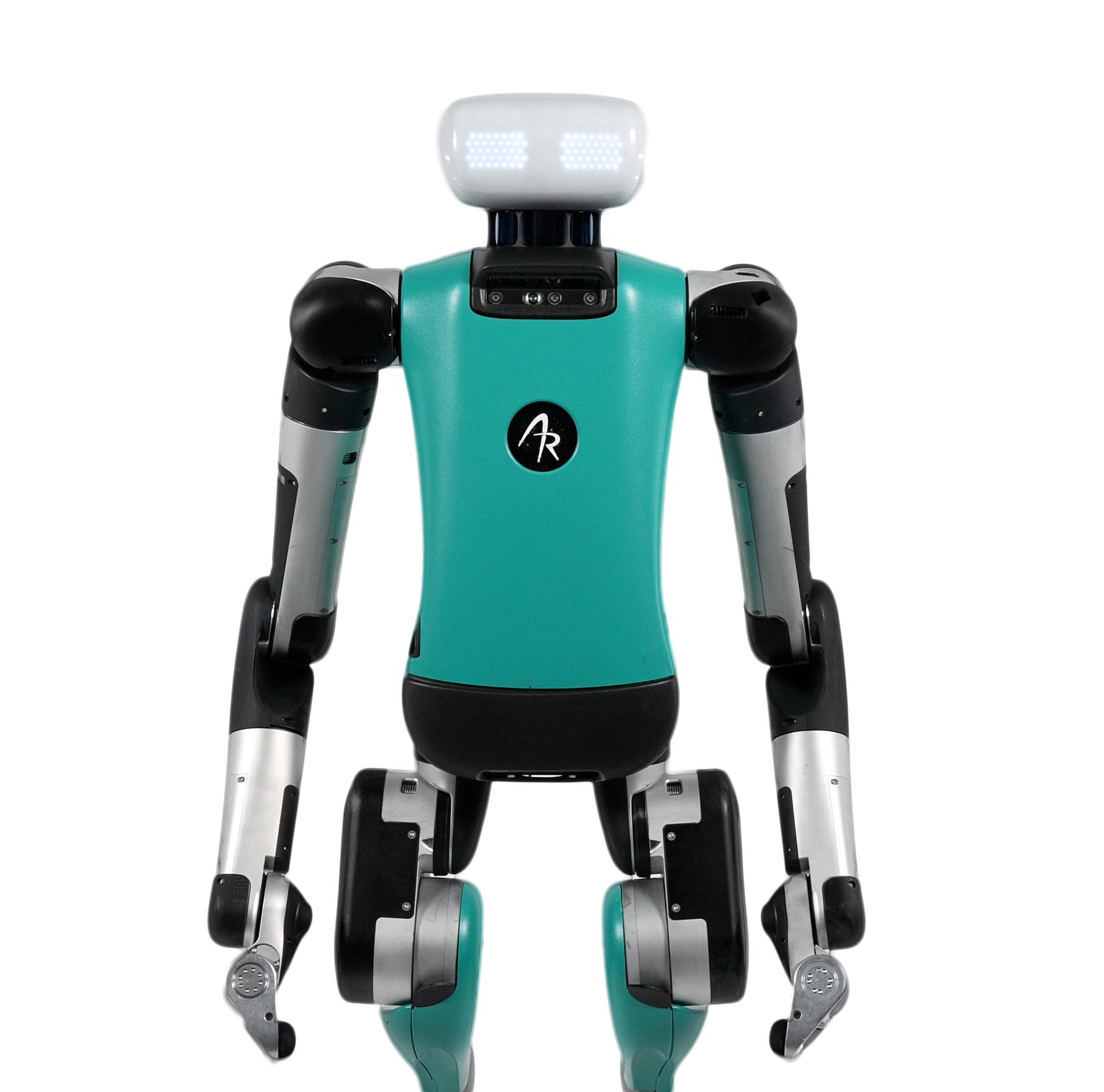
Methodology and scope This field report compiles public vendor materials, trade-press pilot summaries (The Robot Report, IEEE Spectrum), vendor press releases, and interviews with integrators and end‑users conducted in 2023–mid‑2024 to map real-world humanoid pilots and early commercial deployments entering 2025–26. The aim is boots‑on‑the‑ground inventorying — who is testing which biped, in what setting, with what contract terms and measurable outcomes — and to put those pilots in a commercial context. Who is actually in the field (by industry) Logistics / warehousing — Agility Robotics (Digit), 1X Technologies (NEO/EVE) are the most visible, positioned for piece‑picking, tote handling and last‑mile staging. Manufacturing / light assembly — Figure AI, Apptronik and Tesla (Optimus prototypes) are targeting cell support, kitting, and repetitive light assembly tasks. Healthcare, rehabilitation, eldercare — Sanctuary AI, Fourier Intelligence, UBTECH and specialized integrators are trialing humanoids for patient handling, assisted therapy, and long‑term care companionship/support. Home / consumer experiments — Unitree and Xiaomi have demonstrated home assistant and social‑robot prototypes; these are largely experimental trials or pilot retail programs rather than large commercial rollouts. How companies are marketing and positioning their robots Agility Robotics (Digit) — marketed as an automation bridge for manual picking zones: safe, wheeled base plus biped arms to traverse human‑designed aisles and operate ergonomic fixtures. 1X Technologies (NEO/EVE) — pitched for last‑mile staging and micro‑fulfillment, highlighting compactness and integration with conveyor/tote systems. Figure, Apptronik — positioning humanoids as flexible cell assistants that reduce setup churn and handle light, repetitive tasks that are ergonomically harmful to humans. Sanctuary, Fourier, UBTECH — emphasizing safety, empathy and clinical/regulatory alignment for therapy and eldercare settings. Unitree, Xiaomi — adopting a consumer‑centric narrative: social assistance, monitoring, and smart‑home integration rather than industrial throughput claims. Representative pilots and measurable outcomes Most published pilots remain small (1–5 units) with integrator support. Outcomes reported in vendor materials and trade press can be summarized as follows: Uptime — vendor reports and integrator summaries show initial operational uptimes between ~60–90% during multi‑week pilots (downtime driven by perception edge cases and safety stops); optimistic marketing material cites >90% as achievable after site tuning. Throughput — logistics pilots report incremental pick or tote‑move increases in the 10–30% range in constrained workflows where humans were previously required to walk; manufacturing cell pilots report cycle‑time parity with humans on specific light tasks but lower flexibility for complex variability. Safety incidents — public summaries indicate few serious incidents; most stoppages are conservative emergency stops triggered by unexpected human proximity or unmodeled obstacles. Hospitals and clinics are especially risk‑averse — even minor incidents can halt a pilot pending review. Customer testimonials — logistics operators praise potential to stage inventory overnight and smooth labor peaks; healthcare partners emphasize potential ergonomic benefits but repeatedly call for longer trials and clinically validated safety data. Case snapshots Digit in fulfillment centers — Agility’s Digit is being trialed as a tote‑and‑box mover and sorter in last‑mile staging; vendors report integration with conveyor controls and human operators in mixed teams. Contract structures: initial no‑cost pilots followed by RaaS or CapEx offers; targeted unit economics presented by vendors assume multi‑year installations to amortize sensors and software. Figure/Apptronik in assembly cells — Figure and Apptronik focus on modular grippers and safety‑first actuation for kitting and light screwing. Pilots reported by integrators show acceptable cycle times for single‑task repetition; the transition to multi‑task assembly remains the sticking point. Sanctuary/Fourier/UBTECH in healthcare — early trials emphasize non‑hands‑on assistance (monitoring, guided therapy) while regulatory work continues for patient handling. Fourier’s clinical rehab products, integrated with humanoid platforms, have been deployed in controlled trial environments; UBTECH’s eldercare walkers/assistants are in limited Chinese care facilities. Unitree/Xiaomi at home — consumer experiments focus on socially aware behaviors and remote monitoring; these remain limited pilots or demos, not broad commercial rollouts. Contract structures, pricing context and integrators Pricing remains fluid and intentionally opaque. Public signals and integrator interviews point to three dominant models: Robot‑as‑a‑Service (RaaS) — monthly subscriptions covering hardware, software updates and monitoring; vendor messaging indicates target ranges of a few thousand dollars per month per unit for enterprise pilots, with scale discounts. CapEx + maintenance — up‑front purchases followed by annual support; vendors and analysts suggest target list prices in the low‑to‑mid six‑figure range per unit for fully featured humanoids in industrial spec, but many pilots are priced lower or subsidized. Revenue share / managed service — integrators operate fleets and charge per‑pick or per‑hour; appealing to customers who want outcomes rather than asset ownership. Systems integrators play a critical role — integrating perception, grippers and WMS/ERP ties — and pilot success often tracks with integrator competence more than base robot performance. Competitive comparisons Robot / Vendor Primary target Deployment maturity Price band (public/target) Agility Robotics — Digit Logistics / picking Multiple pilots, early commercial engagements Vendor targets: RaaS or six‑figure CapEx (varies by integration) 1X Technologies — NEO/EVE Last‑mile & micro‑fulfillment Pilots with integrators Subscription‑oriented, lower per‑unit pilot pricing advertised Figure / Apptronik Manufacturing cell support Prototype to small pilot stage Mid‑to‑high six figures (target) Sanctuary / Fourier / UBTECH Healthcare & eldercare Controlled clinical trials, demo deployments Varied; vendors emphasize service contracts and compliance spend Unitree / Xiaomi (consumer) Home assistant / demos Experimental pilots & retail demos Lower price targets for consumer models; experimentation ongoing Operational drivers and regulatory hurdles Adoption drivers are consistent across sectors: acute labor shortages, the need for 24/7 operations (overnight staging or continuous monitoring), and ergonomics (reducing repetitive strain injuries). Hospitals and factories introduce additional constraints: HIPAA/privacy and infection control in healthcare, ISO and collaborative‑robot safety standards (ISO 13482, ISO/TS 15066) in industrial environments. Integrators report that regulatory uncertainty and slow internal procurement cycles are the two biggest non‑technical barriers to scaling. "Pilots prove the technical promise but rarely scale without clear ROI, integrator commitment and regulatory alignment," said multiple integrators interviewed for this report. From pilots to paid rollouts — what separates winners from also‑rans The transition hinges on three things: demonstrable sustained uptime in live conditions, tight integration into existing workflows (WMS/ERP), and predictable total cost of ownership. Where pilots have converted, vendors offered bundled services (training, remote monitoring, spare parts) and realistic ramp plans. Failures are most often due to mismatch between a robot's narrow skill set and the variable realities of a live operation, or when integrators underestimate the site‑specific engineering effort. Outlook As of 2025–26, humanoids are establishing niche, high‑value use cases rather than mass replacements for workers. Logistics and tightly constrained manufacturing cells are the leading commercial vectors; healthcare shows promise but will require extended validation. The coming 12–24 months will be decisive: vendors that productize integration and offer clear, measurable SLAs will be the first to translate pilots into paid, multi‑site deployments.