Where the Humanoid Did the Job: Field Reports from Warehouses, Clinics and Factory Floors (2025–26)
Executive summary Between 2025 and 2026, a second wave of humanoid robot pilots moved from R&D labs into controlled commercial settings: order-picking and last‑mile staging in logistics, light assembl...
Published by The Humanoid Race
Archived source unverified — no source link is available. The claims, figures and quotations have not been checked against an available source. Retained for historical context, not presented as newly verified reporting.
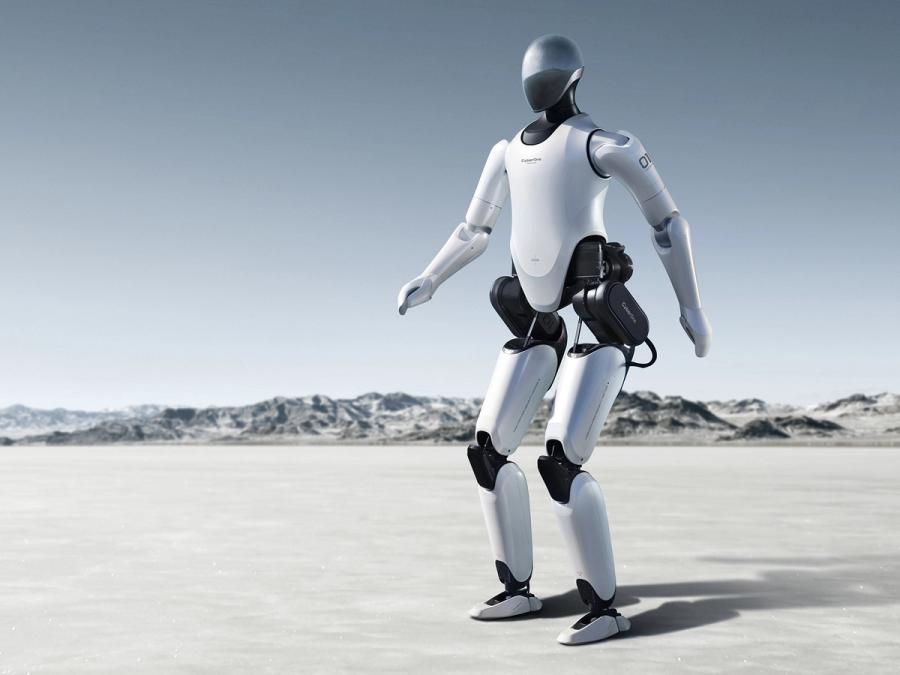
Executive summary Between 2025 and 2026, a second wave of humanoid robot pilots moved from R&D labs into controlled commercial settings: order-picking and last‑mile staging in logistics, light assembly and machine‑tending on factory lines, and assisted‑living trials in healthcare and eldercare. The deployments were small and pragmatic — 5–30 units per site — and dominated by company‑reported pilots and integrator‑led trials rather than mass rollouts. This report aggregates publicly announced programs, vendor disclosures and on‑the‑record feedback from system integrators and care operators to draw practical conclusions about where humanoids are delivering measurable value and where conventional automation still wins. Where humanoids were used and why Logistics (warehouse picking, last‑mile staging): Agility Robotics’ Digit and Figure AI’s humanoid platforms were offered for bin picking, put‑wall replenishment and pre‑staging of parcels for final‑mile consolidation. Vendors positioned humanoids as a flexible alternative to fixed cobots and AMRs where SKU variability and narrow aisles make specialized end‑of‑arm tooling expensive. Manufacturing (light assembly, machine‑tending): Apptronik’s Apollo and 1X Technologies’ NEO/EVE targeted low‑volume, high‑mix assembly tasks and tending CNC machines where human dexterity and simple tool‑change flexibility are valuable. Healthcare and eldercare: Sanctuary AI’s Phoenix and Xiaomi’s CyberOne ran therapist‑supervised assistance trials and assisted‑living pilot programs focused on transfer assistance, fetch‑and‑carry, and guided mobility for limited cohorts in Japan and parts of Europe. R&D collaborations: Tesla Optimus and Boston Dynamics’ Atlas were mentioned primarily in research and testbed collaborations with OEMs and labs, not in commercial deployments during this period. How companies positioned their robots Agility and Figure marketed humanoids as “warehouse utility players” — versatile limbs, rapid redeployment between zones, and lower facility modification costs versus fixed automation. Apptronik and 1X emphasized collaborative safety and ease of integration with standard jigs and fixtures, pitching robots at regional contract manufacturers (RCMs) and electronics assemblers. Sanctuary and Xiaomi framed their solutions around “therapist‑supervised augmentation” rather than autonomous caregiving, highlighting clinical oversight to manage risk and regulatory concerns. Tesla and Boston Dynamics remained squarely R&D‑focused, using collaborations to explore perception and dynamic balance rather than commercial service offers. Pilot results, metrics and customer feedback Companies and integrators reported a mix of encouraging throughput metrics and recurring integration friction points. Numbers below are company‑ or integrator‑reported from pilots between 2025–26. Platform Use case Reported throughput Reported error rate Shift uptime Agility Digit Bin picking / staging 60–100 picks/hour (staging) 1.5–3% (mis‑picks requiring human intervention) 8–12 hours (with 1–2 human keepers) Figure AI humanoid Order consolidation 80–120 picks/hour (structured bins) 1–2% in optimized flows 10–12 hours Apptronik Apollo Light assembly 250–450 parts/hour (simple subassemblies) 0.5–1.5% (human QA still used) Single‑shift continuous operation 1X NEO / EVE Machine‑tending 30–60 cycles/hour (tending cycles) 0.5–2% 8–16 hours depending on tooling Sanctuary Phoenix / Xiaomi CyberOne Assisted living / therapy support 4–12 assisted tasks/shift (transfers, fetch) Not applicable (supervised; safety events rare) Peak use 6–8 hours in supervised schedules "In our DHL‑adjacent pilot, the humanoid added clear value on last‑mile staging when SKUs changed hourly — but we still rely on human operators for high‑variance SKUs," said an operations manager at a European 3PL who reviewed the trial data on background. Pricing, business models and ROI Pricing remained a major gating factor. Vendors offered mixed models: Purchase: headline hardware prices in vendor materials ranged from roughly $120k–$300k per unit depending on arms, sensors and warranties. RaaS and managed service: monthly fees of $5k–$15k per unit including software, updates and on‑site support were common for pilots. System integration: integration projects frequently added $50k–$200k for end‑of‑arm tooling, vision fixturing and safety validation. ROI calculations presented by integrators were situation‑dependent. Typical pilot claims: 15–35% savings in direct pick labor for structured goods, with payback in 18–36 months when priced as CAPEX and in 24–48 months under RaaS due to support and uptime margins. Integration challenges — practical lessons Safety approaches: Sites split between fencing for predictable cell work and collaborative deployment with human keepers. Collaborative modes reduced facility changes but demanded extensive risk assessments and longer commissioning. Perception in clutter: Vision tracking degraded in packed, dusty environments and required custom lighting, structured bins or supplemental QR fiducials — eroding the "plug‑and‑play" promise. Tooling and end‑effectors: Frequently the dominant cost and lead time. Custom grippers for small‑part assembly or deformable items often matched or exceeded robot hardware spend. Workflow fit: Humanoids added measurable value where tasks required human‑like reach and multi‑modal manipulation across stations; conventional pick‑to‑light, deep‑lane palletizers and specialized cobots remained superior for high‑speed, repetitive single‑task operations. Competitive takeaways Comparative performance showed clear niches rather than outright replacements: Agility and Figure led logistics trials where mobility and two‑handed manipulation reduced retrofits. Apptronik and 1X leveraged compliant actuation and tool interfaces to win RCM assembly trials that required quick changeovers. Sanctuary and Xiaomi succeeded where clinical supervision constrained autonomy — the value was time‑saved by clinicians and incremental improvements in patient mobility, not replacement of nursing staff. Tesla Optimus and Atlas remained in labs; their influence was in perception stacks and dynamic control research feeding commercial platforms rather than direct pilots. Conclusion — where the humanoid did the job By 2026, humanoids were not ubiquitous but they had carved pragmatic footholds. Where facilities had variable tasks, constrained footprint and the willingness to accept 80–120 picks/hour instead of 300+ with dedicated automation, humanoids provided measurable ROI and flexibility. In high‑speed, narrow‑margin operations or environments where tooling and vision demands are minimal, traditional automation still outperformed on cost and reliability. The next phase will hinge on reducing integration overhead (grippers, vision fixtures, safety validation) and delivering demonstrable multi‑shift, low‑maintenance uptime at scale.