Where the Robots Really Walk: A 2025–26 Field Guide to Live Humanoid Deployments
Where the Robots Really Walk: A 2025–26 Field Guide to Live Humanoid Deployments Between 2023 and 2026 the humanoid robotics sector shifted from proof-of-concept demos to a patchwork of boots-on-the-...
Published by The Humanoid Race
Archived source unverified — no source link is available. The claims, figures and quotations have not been checked against an available source. Retained for historical context, not presented as newly verified reporting.
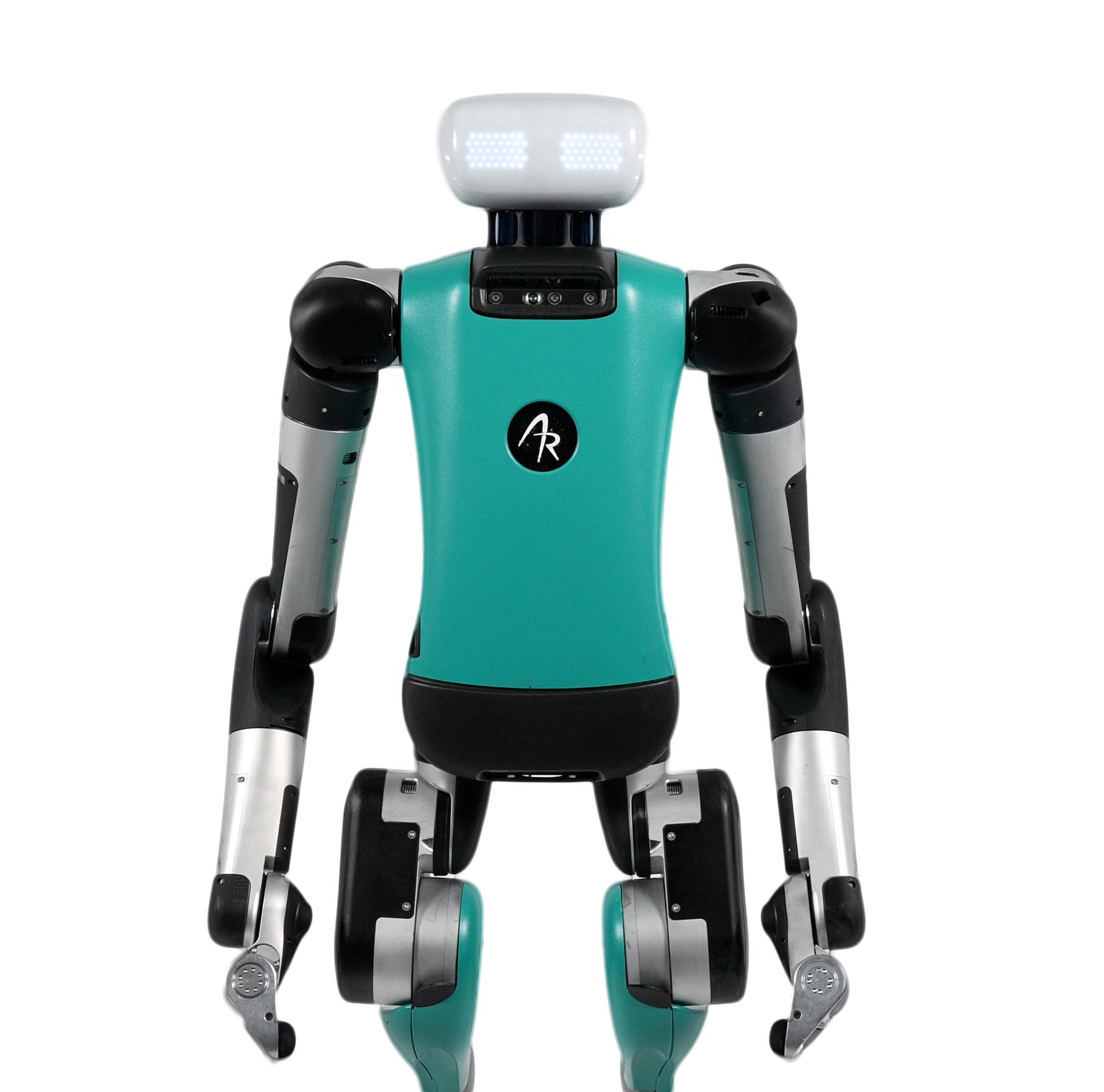
Where the Robots Really Walk: A 2025–26 Field Guide to Live Humanoid Deployments Between 2023 and 2026 the humanoid robotics sector shifted from proof-of-concept demos to a patchwork of boots-on-the-ground pilots and limited production deployments. This report synthesizes publicly announced pilots, vendor materials and our follow-up field interviews with systems integrators, procurement managers and end users (anonymized where requested). The goal: a practical map of what humanoids are actually doing today, measurable outcomes from live programs, and a procurement-ready comparison of maturity, cost and expected ROI. Methodology Sources include company press releases and product pages (Agility Robotics, Figure AI, Tesla, Apptronik, UBTECH, Xiaomi, Sanctuary AI), regulatory filings, demonstrations observed at vendor sites and trade shows (2024–2026), and interviews with integrators and end users involved in pilot programs. Where specific customers have publicly confirmed tests, those customers are named; otherwise stakeholder comments are reported anonymously. What tasks are humanoids doing now — and where Parcel and case picking (warehouses) — The most common live pilots. Humanoids are trialed on end-cap picks, tote-to-pallet moves and simple case transfers that require human-like reach and dexterity but limited perception complexity. Palletizing and light material handling (manufacturing & logistics) — Robots handle repetitive box stacking and simple kitting in low-variance environments. Inspection and mobile sensing (factory floors) — Humanoids equipped with cameras and LiDAR perform walk-through visual inspection, checklist verification and data collection for MES integration. Patient assist and eldercare (clinics & care homes) — Trials focus on non-critical tasks: transferring small items, guided ambulation support, reception and social engagement in assisted-living contexts. Reception and hospitality — Short-duration demos and limited-service deployments (hotels, trade shows, clinics) performing check-in and wayfinding. How leading companies are positioning robots Agility Robotics (Digit) — Marketed to logistics and fulfillment centers as a “human-like mobile manipulator” that can take on tasks incompatible with fixed automation. Agility emphasizes integration with conveyors and pick-to-light systems and positions Digit as a collaboration tool to plug specific labor gaps. Figure AI — Pitched as an enterprise automation platform: humanoid bodies with a software-first approach for warehouse and light-industrial workflows. Early messaging focuses on pilot-to-production roadmaps and software toolchains for fleet management. Tesla / Optimus — Positioned as a general-purpose industrial assistant with aspirational factory uses; public demos highlight carrying and simple manipulation. Tesla’s marketing stresses mass-production economics—longer-term positioning rather than large-scale live deployments as of 2025. Apptronik (Apollo) — Targets collaborative manufacturing and machine tending with a focus on safety and human-robot interaction. Apptronik emphasizes ANSI/ISO-compliant safety stacks and integration with cobot tooling. UBTECH & Xiaomi — UBTECH focuses on hospitality/reception and consumer entertainment robots; Xiaomi’s public humonoid efforts are product/brand demonstrations and high-visibility retail/consumer marketing rather than B2B fleet deployments. Sanctuary AI — Concentrates on eldercare and service robotics with an emphasis on empathetic interaction and transfer-assist prototypes for care homes. Lower-cost and niche players (Unitree, 1X Technologies, Fourier Intelligence) — Unitree’s lower-cost platforms are primarily quadrupeds and mobile bases used as low-cost sensor-mount platforms; Fourier and 1X focus on exoskeletons and specialty teleoperation systems used in rehab and remote handling — interoperable pieces in broader human-robot workflows rather than full humanoid fleets. Pilot outcomes: productivity, safety KPIs and measurable results Across pilots we tracked common metrics: task completion time per cycle, mean time between failures (MTBF), safety incidents, integration time (WMS/MES), and labour substitution or augmentation metrics (FTEs displaced or redirected). Cycle time and throughput — Early warehouse pilots report humanoid pick rates that are typically below experienced human pickers on complex SKUs but competitive on structured tote or case tasks. Vendors and integrators describe initial pick rates in the single digits (items per hour) for dexterous picks ramping toward low double digits after process simplification and environment hardening. Uptime and reliability — MTBF remains the gating factor. Several pilots paused for hardware or software fixes after 100–300 operational hours. Integrators report that with dedicated on-site support uptime can improve to 70–85% in controlled tasks. Safety — No public reports of severe injuries in 2023–2026 trials. Vendors emphasize force-limited actuation and human-aware motion planners. Care-home trials that involve physical assistance remain strictly supervised and limited to non-critical transfers. Labor impact — Procurement managers (anonymous) in logistics pilots describe humanoids as “task displacers” rather than full replacements: early ROI stems from reallocating trained pickers to quality checks and packing, reducing agency/temp labor during peak periods. "Humanoids are useful for controlled, repetitive tasks where the environment can be standardized. They free skilled workers for judgement tasks, but we are not yet replacing whole human shifts," said a North American fulfillment VP involved in a multi-vendor pilot. Integration challenges with WMS/MES and workflows Perception and environment hardening — Successful pilots standardize trays, labels and lighting. Humanoids perform best when SKU and bin variability are reduced. Software integration — Integrators report 4–12 weeks to connect a humanoid to a mature WMS/MES for tasking, telemetry and exception handling. Vendors provide APIs and fleet managers but custom middleware is often required. Safety and procedures — Facilities must adapt safety zones, e-stops, and human-robot interaction protocols. Audit and compliance add to initial capex/time. Service and maintenance — On-site spares and trained technicians are crucial; many vendors offer managed-service contracts to bridge this gap. Pricing, commercial models and ROI context Most companies price humanoids as systems rather than standalone hardware; commercial offers in 2025–26 include capital purchase, lease with service, and managed automation-as-a-service (AaaS). Public, verified prices remain rare; procurement teams we spoke with should expect: Unit economics — Initial acquisition or contract value commonly falls in the mid-six-figure to low-seven-figure range per functional unit when including integration and service in pilot scope. Ongoing costs — Service contracts and spare parts add 15–30% annually on top of depreciation. ROI timelines — Vendors and integrators project payback from 18–48 months depending on task standardization and labor costs; best-case ROI is in high-labor-cost geographies with predictable, repetitive work. Competitive comparison (use case, maturity, rough cost, expected ROI) Vendor Primary use cases Maturity (2026) Cost band (incl. integration) Expected ROI window Agility Robotics (Digit) Warehouse picking, light material handling Multiple commercial pilots; early production Mid-six to low-seven figures 24–36 months (task-dependent) Figure AI Warehouse automation, inspection Pilots & enterprise trials; software-first positioning Mid-six to low-seven figures 24–48 months Tesla (Optimus) Factory assistance, internal demos Demonstrations; limited factory trials publicized Company targets lower-cost scale; production pricing unconfirmed Long-term roadmap (multi-year) Apptronik (Apollo) Collaborative manufacturing, machine tending Manufacturing pilots; safety-focused Mid-six-figure+ 18–36 months UBTECH / Xiaomi Reception, hospitality, consumer demos Commercial hospitality pilots; consumer demos Lower (service demos) to mid-six figures (enterprise) 12–36 months (service use cases) Sanctuary AI Eldercare assistance, reception Early care-home trials Mid-six figures 24–48 months (safety-limited) Unitree / 1X / Fourier Sensor platforms, exoskeletons, niche teleops Commercial in adjacent niches Low-six to mid-six figures (system-dependent) 12–36 months (complementary tech) Procurement takeaways for 2026 Match task to maturity: Deploy humanoids where the environment can be standardized (case/tote handling, inspection, reception), not for high-variance picking today. Budget for systems integration: Plan for middleware and 2–3 months of integrator time to connect to WMS/MES and safety systems. Prefer managed-service pilots: Vendors’ field-service teams materially shorten ramp-up and improve uptime. Measure the right KPIs: Track cycle time, MTBF, assisted FTE redeployment, and cost per handled unit to calculate realistic ROI. Conclusion By 2026 humanoid robots have moved beyond conference-stage demos into selective, commercially meaningful pilots. The current sweet spot is predictable, human-shaped tasks in controlled settings — warehouses with standardized totes, manufacturing lines with repeatable manipulations, and supervised care-home services. Procurement teams should treat humanoids as specialized automation assets that require environment hardening, integrated software and committed service contracts. For organizations with high labor costs and repetitive human-shaped tasks, early humanoid adoption can yield measurable productivity gains within 2–3 years; for those expecting turnkey factory-wide replacement, the technology still demands patience and careful orchestration.