Who Wins the Factory Floor? Comparative Analysis of Humanoid Platforms, Costs and Integration (2025–26)
Executive summary As humanoid platforms move from labs to factory floors, buyers face hard choices: which hardware profile matches a production task, how much integration and service will be required,...
Published by The Humanoid Race
Archived source unverified — no source link is available. The claims, figures and quotations have not been checked against an available source. Retained for historical context, not presented as newly verified reporting.
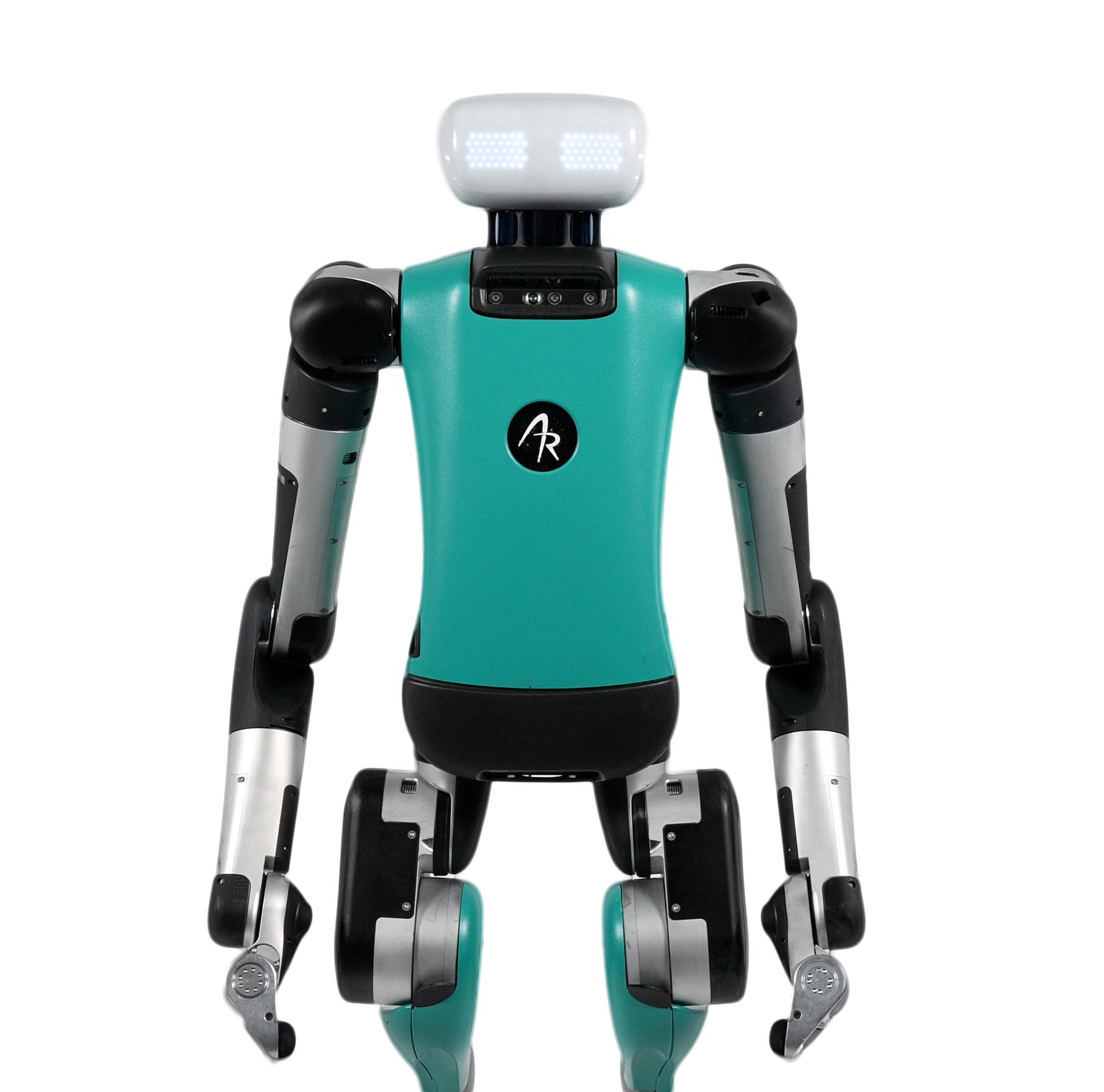
Executive summary As humanoid platforms move from labs to factory floors, buyers face hard choices: which hardware profile matches a production task, how much integration and service will be required, and when does automation deliver positive ROI versus hiring or cobots? This analysis benchmarks leading humanoid platforms—Figure (Figure AI), Apptronik, Sanctuary AI, Agility Robotics, Tesla (Optimus), 1X Technologies—and lower-cost entrants (Unitree, UBTECH) against manufacturing requirements and total-cost-of-ownership (TCO) metrics. It synthesizes public company disclosures, industry interviews and realistic deployment scenarios (automotive kitting, electronics insertion, pharmaceutical secondary packaging) to produce practical purchasing guidance for 2025–26. Feature-by-feature benchmark (summary) Feature Figure Apptronik Sanctuary AI Agility Robotics Tesla (Optimus) 1X Technologies Unitree / UBTECH Typical payload (kg) 20–40 (targeted) 15–30 10–20 10–20 (Digit ~18) 20–40 (targeted) 10–25 2–10 Reach / workspace (m) 1.2–1.6 1.0–1.5 1.0–1.4 0.8–1.2 1.2–1.6 0.9–1.4 0.6–1.1 Balance / stability Active dynamic bipedal control (lab-stage) Hybrid passive/active; emphasis on smooth pick/place Robust, conservative gait for stability Proven dynamic walking (warehouse trials) High-focus R&D on balance; production readiness TBD Engineered for stability in industrial gait Lower—often quasi-static, limited dynamic balance Repeatability ±2–5 mm (arm joint-level targets) ±1–3 mm (cobot-grade) ±2–4 mm ±3–6 mm (body sway affects end-effector) Target ±2–5 mm ±2–4 mm ±5–15 mm Battery / endurance 2–8 hours (task-dependent) 3–8 hours 3–6 hours 2–6 hours (hot-swap options) Target full-shift / battery swap plan 2–6 hours 1–4 hours Tool compatibility Standard wrist tooling, pneumatic/hydraulic adaptors Cobot-like tool flange; pneumatic/electric tools Custom tooling, modular end-effectors Foldable hands; cargo/caging interfaces Standardized flange planned Industrial tool interfaces Limited; consumer-grade manipulators Safety certifications Working toward ISO/TS, functional safety ISO/TS & cobot safety practices Focused on certification; programmatic plans Safety-integration in pilots; certification evolving Regulatory path in progress Designed to industrial safety norms Limited industrial safety approvals Autonomy vs. tethered control Onboard autonomy + edge/cloud Onboard autonomy; ROS + industrial SDK Onboard generalist autonomy (ML-heavy) Edge autonomy with tethered supervision High on-device autonomy ambition Hybrid; industrial orchestrator friendly Primarily teleop / scripted behaviors Notes on the table Numbers above are compiled from company disclosures, press demos and industry interviews; many platforms are still pre-scale. Estimates reflect production-intent platforms in 2025–26 and should be validated with vendors for specific end-effector, safety and certification needs. How vendors are positioning themselves Figure / Tesla / Apptronik: Premium, general-purpose humanoids pitched as direct human substitutes for manual tasks that demand both mobility and dexterity. Messaging emphasizes payload and endurance for heavy-industry use. Sanctuary AI / Apptronik: Emphasize software-first “generalist” autonomy for high-mix, low-volume work where adaptability is the differentiator. Agility Robotics: Markets Digit as practical for logistics and non-invasive line tasks—repeatable pick/place, case handling—focusing on rapid deployment and proven field trials. 1X, Unitree, UBTECH: Lower-cost entrants pursue low-risk, scripted tasks and RaaS pilots for smaller manufacturers or research partners, trading capability for price. Integration, system-integration costs and timelines Integration is the dominant line item in TCO for humanoids. Typical integration elements include PLC/SCADA connectivity (OPC UA, Modbus), MES orchestration, ROS-Industrial adapters, safety fencing and cell redesign, and end-effector tooling. Practical numbers from integrators and OEMs: Pilot (single cell): $50k–$250k, 3–6 months to deploy (safety proof-of-concept, tooling, limited PLC work). Line roll-out (5–20 robots): $250k–$1.5M+, 6–18 months (MES integration, cell redesign, operator training). Enterprise-scale program (50+): $2M+, 12–36 months (spares network, on-site service, custom SW). Training, maintenance and support economics Factory customers should budget for: Support contracts: 10–20% of unit CAPEX per year for SLA, remote support and software updates. Spare parts: common wear items (hands, batteries, actuators) equal ~5–15% of CAPEX per year depending on utilization. Training: 1–3 weeks of on-site operator/maintainer training per site; O&M headcount of 0.05–0.2 FTE per active robot depending on reliability. Financial models: CAPEX vs. OPEX Vendors offer a mix of outright sale, leasing and RaaS. Market indications: Sale price estimates (public/private discussions): early production humanoids range from $40k–$250k per unit depending on capability and certification. Lower-cost entrants can be Leasing / RaaS: $2k–$15k per robot per month (row-of-scale, includes some support), attractive to SMEs to shift cost to OPEX. Payback drivers: labor cost, utilization (shifts/day), task complexity (downtime due to failures), and integration amortization. ROI scenarios: three factory use cases (simplified) Scenario Key assumptions Break-even (years) Automotive line kitting (high payload) Labor $35/hr (skilled kitting), 2 robots replace 3 FTEs, unit cost $150k, SI $300k, utilization 2 shifts 3–5 years at 80% uptime; sensitive to reliability: +1 year per 10% downtime Electronics component insertion (high precision) Labor $28/hr, cobot-level repeatability required, unit cost $120k incl. tooling, SI $180k, 3 robots 2.5–4 years if repeatability ≤ ±2mm; ROI collapses if rework increases >5% Pharma secondary packaging (clean-room) Labor $30/hr, compliance+validation $350k, unit $100k, 4 robots, utilization continuous 3–6 years; CAPEX-heavy due to qualification; RaaS lowers time-to-live but increases lifetime OPEX Across scenarios, sensitivity analysis shows labor cost and uptime are the largest levers. In low-wage geographies ( Analyst note: “Humanoids add the most value where mobility + dexterity are required in semi-structured environments. For pure, repetitive, high-precision work, cobots and vision-guided arms remain cheaper to certify and faster to deploy.” — Robotics industry systems integrator Competitive positioning and remaining gaps High-mix / low-volume: Sanctuary AI, Apptronik, and software-oriented startups are advantaged because of onboard autonomy and modular tooling that reduce cell changeover. They remain constrained by certification pace and field reliability. Repetitive heavy-lift / endurance: Figure, Tesla and Agility (with Digit) have leverage: their emphasis on payload, battery architectures and mobility makes them credible for kitting, logistics and heavy handling once safety pathways are completed. Cost-sensitive or scripted tasks: 1X, Unitree and UBTECH are pragmatic choices for pilot projects, education, and low-risk automation where performance tradeoffs are acceptable. Biggest gaps Software ecosystems: lack of standardized ROS-Industrial-to-MES stacks means high custom integration cost per site. Safety standards & certifications: ISO and functional-safety approvals lag hardware capability; buyers must budget for cell-specific safety engineering. Service networks: scale deployments require local spares and certified technicians—today only a few vendors have that global reach. Conclusion Humanoid platforms are maturing into viable factory assets, but they are not yet plug-and-play replacements for either humans or deployed industrial robots. Short-term winners will be vendors who pair realistic hardware specs (payload, repeatability, battery endurance) with strong integrator partnerships, clear safety certification roadmaps, and flexible commercial models (leasing/RaaS) that amortize integration risk. Manufacturers should pilot with clearly measurable KPIs (uptime, cycle time, rework rate) and expect multi-year timelines for enterprise rollouts unless leveraging existing certified software stacks or turnkey integrator programs.